
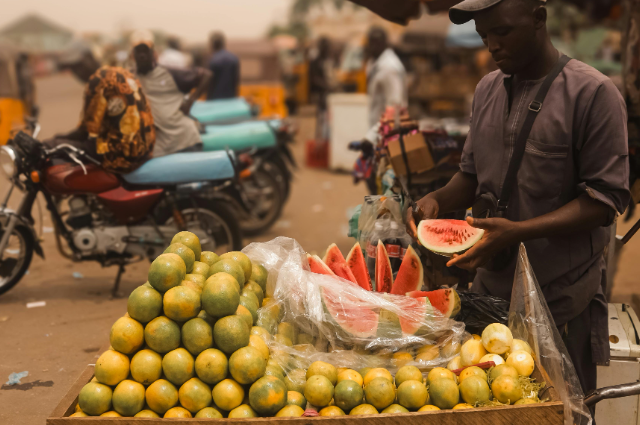
Shortly after dusk in Jogeshwari, a Mumbai neighbourhood where high-rise development rubs against narrow lane settlements, Rais Shaikh handed thirty rupees to a roadside fruit seller and received several wedges of watermelon wrapped in old newspaper. He carried them home to his mother, Rehana, who arranged the pieces on a steel plate. The family of five ate together. Within six hours, three were fighting for breath. By sunrise, Rehana Shaikh, forty-two years old, was dead. Two relatives remained in intensive care with failing kidneys.
The immediate cause was methomyl, a carbamate pesticide detected in the leftover fruit by Maharashtra's food safety laboratory. Chlorpyrifos, another agricultural poison, was also present. Both are restricted for use on food crops under Indian regulations. Neither should have been inside a melon sold for direct consumption. Yet the Shaikh family's final meal contained concentrations high enough to suppress an enzyme critical to nervous system function, leading to respiratory collapse. The watermelon itself was innocent. The system that allowed that watermelon to reach a cart, be sliced open, and be eaten without a single safety checkpoint was not.
To grasp how a piece of fruit becomes a lethal weapon requires examining Mumbai's food testing infrastructure. The city consumes approximately 3.5 million metric tons of fresh vegetables and fruit each year, according to municipal food supply estimates. Roughly seventy per cent of that volume travels through unregulated wholesale markets and tens of thousands of pushcarts. No daily testing occurs at these points. Between the start of 2022 and the end of 2024, the Maharashtra Food and Drug Administration analysed 1,200 produce samples annually across the entire greater Mumbai region. That coverage amounts to 0.03 per cent of the city's fresh food volume. Even more striking, out of all samples collected from street vendors during that period, only four per cent were screened for carbamate-class pesticides such as methomyl. These chemicals break down quickly when left at room temperature. Proper testing requires cold storage from the moment of collection until analysis. Most municipal laboratories are not equipped to provide that chain.
The vendor who sold the melon, a man named Farooq Ansari, told police he had purchased his stock from a wholesaler at the Vashi market. The wholesaler had sourced from a small farm in the Bhiwandi district. When authorities traced the route, the farmer could not show any records of what had been sprayed on the crop or when. The Food Safety and Standards Authority of India requires registered food businesses to maintain source traceability. But street vendors are not registered. In Mumbai alone, an estimated 250,000 pushcart operators fall into this legal hollow space. They buy from the same wholesale lots that supply grocery stores, but are subject to no routine checks, no mandatory documentation, and no accountability for pesticide residues.
The problem extends beyond testing into medical response. Between 2020 and 2024, the Maharashtra FDA recorded 112 suspected instances of produce-related pesticide poisoning. Only nineteen of those cases reached laboratory confirmation. In the remaining ninety-three, samples were either not preserved, not collected in time, or not tested because nearby hospitals lacked the capacity to conduct toxicology screening. When Rehana Shaikh arrived at the Jogeshwari public facility, the emergency doctor noted "acute gastroenteritis" as the preliminary diagnosis. Nearly two hours passed before a family member mentioned the watermelon. The specific treatment for carbamate poisoning, a drug called atropine, was then given, but arrived too late. No rapid pesticide detection kit existed at that hospital or at three neighbouring clinics. A survey by the Centre for Science and Environment, conducted across four Indian states between 2019 and 2023, found illegal or excessive pesticide residues in twelve per cent of all melons sampled. Methomyl, although banned for specific food crops, remains legally sold for cotton cultivation. Small farmers routinely divert it to watermelons and other fast-growing fruits to prevent mould and extend visual shelf life. No enforcement mechanism monitors the gap between spraying and harvesting.
Legal consequences are nearly impossible to impose. The Food Safety and Standards Act penalises only those who knowingly sell unsafe food. A street vendor who buys anonymously from a wholesale market cannot be expected to know the chemical history of each melon. After Rehana's death, the municipal corporation launched a cleanup drive in western Mumbai. Twenty-three fruit carts were inspected. Twelve were temporarily shut. Not one vendor faced prosecution. Ansari lost four days of earnings. He has since returned to selling watermelons purchased from the same wholesale network. No compensation has reached the Shaikh family. Rehana's husband, Salim, a daily-wage construction worker, spent 85,000 rupees on medical bills and funeral rites. He told a local reporter, "I don't want the vendor punished. I want someone to make sure this does not happen to another family."
That wish is the article's final and strongest takeaway. India's food safety framework was designed for sealed packets, barcodes, and registered retailers. But Mumbai does not eat from supermarkets. Most of the city eats from hand carts and pavement stalls. Until routine pesticide screening moves to those points of sale—until every municipal ward has low-cost carbamate testing, every public hospital carries rapid detection equipment, and every wholesale market maintains mandatory farmer spray logs—the next death is not a question of if but when. The fruit will change with the season. The infrastructure will not. And another family will learn, in the worst possible way, that the watermelon was never the killer. The absence of a system was.
References
- Times of India. (2023, August 28). Only 2k food samples tested this yr, Maharashtra FDA requires urgent upgrade.
- Chadha, N. (2025, June 6). Strengthening Food Safety in India's Informal Vendor Economy. Observer Research Foundation.
- Down To Earth. (2018, January 31). Punjab bans sale of toxic pesticides; CSE urges similar necessary action by the Centre. Down To Earth.
- Uys, F., O'Neill, M., Farina, Z., & Beiford, J. (2023). A diagnostic dilemma for a common but not-so-typical street pesticide. South African Medical Journal, 113(2).
- HCA Healthcare Scholarly Commons. (2023). From Pest Control to Poison Control: A Novel Case Report of Delayed Carbamate Poisoning. HCA Healthcare Graduate Medical Education Research Days.
- FoodTechBiz. (2026, March 16). Union Health Ministry clears major reforms for food safety and ease of doing business. FoodTechBiz.
- Elets eGov. (2026, March 20). Centre Approves Food Safety Reforms, FSSAI Licences to Get Lifetime Validity. Elets eGov.
- Indian Television Dot Com. (2026, March 16). Government eases food business rules, introduces perpetual FSSAI licences. Indian Television Dot Com.
- Zenodo. (2025, October 15). Understanding the Regulatory Landscape in India: A Comprehensive Look at Consumer Sectors (Food Safety and Healthcare).
- Times of India. (2023). Topic: Transport Commissioner Mahesh Zagade [Search result listing]. The Times of India. https://timesofindia.indiatimes.com
- FSSAI. (2023-2024). Annual Report and Compliance Data. Food Safety and Standards Authority of India. (As referenced in Chadha, 2025, ORF analysis)