
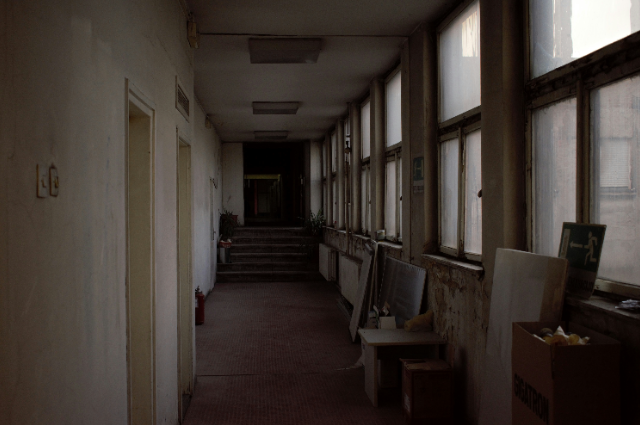
It started with something small — just a persistent feeling of nausea, occasional vomiting, and a quiet unease I couldn't quite name. I told myself it would pass. I still remember that morning clearly: an ordinary routine slowly giving way to a moment that would change every part of my life.
As the days stretched into weeks, the symptoms refused to leave. Eating became difficult. Simple tasks left me exhausted. My body was trying to tell me something, but I wasn't ready to hear it. What made everything more complicated was my medical history — I had been living with hypertension for five years, my blood pressure frequently climbing to near 200 even with medication. Something was wrong. I knew it. I just didn't know how wrong.
My parents, watching me decline, searched for answers in a different direction. They began to wonder if what ailed me wasn't a medical condition at all — but something darker. Black magic, they whispered. An unknown spirit. I understood where their fear came from. When medicine couldn't explain something, they turned to what they knew. But inside me, a quieter voice insisted there was another truth — something real, something the doctors hadn't found yet.
Eventually, there was no choice but to go to the hospital. I sat in that waiting room surrounded by antiseptic light and low murmuring, my hands in my lap, waiting for a verdict I hadn't prepared myself to receive.
The doctor looked at me steadily and said the words: chronic kidney disease. Both kidneys had failed.
I laughed.
I don't know why — it came out of me before I could stop it. The room, the doctor's face, the clipboard in his hand — none of it felt real. It felt like he was reading from someone else's file. I kept thinking: This cannot be true. This is not happening to me. And for a while, that refusal felt like protection.
But reality is patient. It doesn't raise its voice. It simply waits.
As the treatments began — the hospital visits, the medications, the long lists of what I could no longer eat or do — the truth settled in slowly, like sediment. This was real. I could not deny it anymore.
For nearly five years, I lived inside what felt like constant suffering. Needles became routine. My blood pressure remained dangerously high, my pulse racing to around 130, as though my heart was constantly bracing for something. Sleep became a stranger. Food became an obstacle. Every day felt like a negotiation between my body's limits and my will to simply continue.
In the middle of all this, I somehow completed my Bachelor of Dental Surgery. I am not sure how. My concentration was fractured, my hands often weak, my mind perpetually exhausted. There were moments — many of them — when giving up felt easier than holding on. But I kept going. Not gracefully, not confidently. Just consistently. And for that season of my life, consistency was enough.
I was admitted to the ICU four times. Each time, lying in that bed with machines humming around me, I felt the full fragility of being alive. Those rooms strip everything away — your plans, your pride, your sense of the future — and leave you with just the present moment. Just breath. Just the question of whether there will be another one.
What hurt more than the physical pain, though, was losing myself. My body has changed so much I barely recognise my own reflection. My confidence hollowed out. My joy — the easy, unthinking kind I'd always taken for granted — slowly disappeared. I was always frustrated, always irritated, always overwhelmed. I had stopped being the person I used to be, and I didn't yet know who I was becoming.
In those darkest moments, certain words returned to me again and again, like something that understood my pain better than I could express it:
Mat kar kaya ka ahankar, mat kar maya ka abhimaan…
Yeh sharir mitti ka bana hai, ek din mitti mein mil jaana hai.
Don't be proud of this body. Don't be arrogant about what you have. This body is made of earth — and one day, it will return to earth.
There was a strange comfort in those lines. A reminder that the things I was mourning — my strength, my plans, my former self — were never truly permanent. That realization didn't take the pain away, but it made it easier to carry.
And then came the moment that gave me a second life.
My mother — the woman who first gave me life — gave it to me again. She donated her kidney to me.
I have spent a long time thinking about how to describe what that means, and I keep arriving at the same inadequacy of words. It was not simply a medical procedure. It was an act of love so complete that it reshapes everything — the past, the present, and whatever future I now have. She had watched me suffer for years, and when the moment came, she did not hesitate.
My father was beside me for every single day of those five years. He did not leave. He adjusted his entire life around my illness — quietly, without complaint, without asking to be recognised for it. He made sure I slept when I could not sleep, made me eat when I had no appetite, and stayed present through every small and devastating moment. His patience was a kind of love I am still learning how to hold.
My life partner stayed too. He had been my only boyfriend, and I remember lying awake in those difficult months quietly terrified that the weight of my illness would eventually become too heavy for him — that one day I would look up and he would be gone. But he wasn't. He is still here. We have come through everything together, and soon we will begin a new chapter as husband and wife.
And my younger sister — though distance kept us apart — was always, somehow, the one closest to me. In the way she showed up, in the way she listened, in the quiet steadiness of her care, she became, in many ways, my elder. She still is.
I do not know if I am fully healed. I do not know what lies ahead. But I know who stood beside me when the road was at its worst — and I know that I am here, still. Still breathing. Still going. Still, in ways I am only beginning to understand, becoming.