
At times, controversy goes beyond the individual level and surfaces underlying issues relating to the structure of society itself and how it functions within that structure. The ongoing disputes among Shankaracharyas in India can be described as such. The surface issues involve title, process, allegations, and power; however, the underlying and more disturbing issue is:
Who has the authority to determine the meaning of faith: the believer, the tradition, or the state?
When Faith Meets FIR
It's impossible to miss the immediate trigger here, where Swami Avimukteshwaranand Saraswati was involved in a POCSO investigation in early 2026, mandated by a court due to a report about possible sexual abuse of minors at his ashram. He has denied the charges, claiming that they are made up and that the investigation itself is politically motivated.
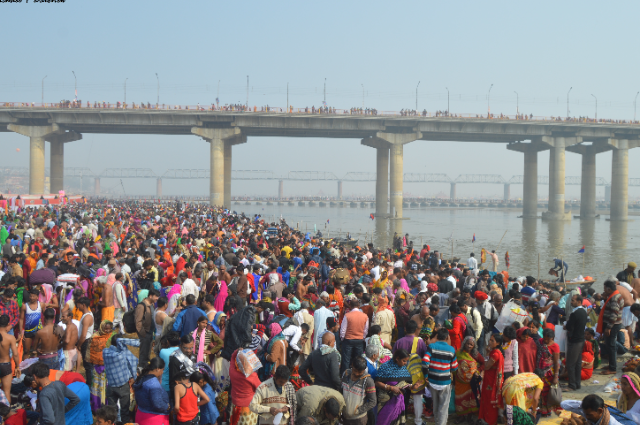
At that time, another controversy erupted in relation to him; the state administration questioned his claim to be the “Shankaracharya” based on the fact that there is an ongoing legal dispute over this matter in the Supreme Court. Alongside this point, he also alleged that officials humiliated him by stopping him from taking a ritual dip during a large statewide religious function in late 2025.
As a result, political leaders and various religious organisations created a deep divide, with members of each group claiming the other side is attacking their faith, while members of both groups believe that this controversy is simply a matter of law and order.
What we have here is not just a scandal but rather a collision event that has hints of being orchestrated.
It is a Pattern
India has seen this before. In 2004, the arrest of Kanchi Shankaracharya Jayendra Saraswati in connection with a murder case triggered nationwide outrage. Many saw it as an assault on Hindu tradition, while others insisted it proved a vital principle that no one is above the law. Going further back, courts have repeatedly been drawn into disputes over who can legitimately claim the title of “Shankaracharya,” revealing that even sacred hierarchies are not immune to legal scrutiny. This is the uncomfortable truth that faith may claim eternity, but institutions built around it are deeply human, and therefore are equally contestable.
The Constitutional Tightrope
The Constitution of India appears to codify the existing tension – for example, while Article 25 guarantees you the right to practice your religion, it also authorises the state to regulate that practice for the sake of "public order, morality, and health”. There is a contradiction that
the law alone cannot resolve, it's that the state is not supposed to interfere in religious practice; however, the state must interfere when religion intersects with potential for harm. The line between the two concepts is often blurry and difficult to distinguish.
Argument 1: The Case for State Intervention
Those who advocate for government intervention generally do so based on factual evidence and logical reasoning, rather than on ideology alone.
Religious institutions do more than provide spiritual services; they are also places of commerce, society, and education for many vulnerable populations, including children. Once any accusations arise under the POCSO Act, the discussion surrounding state intervention becomes quite compelling.
What would the State lose by not becoming involved?
When the law protects all citizens, including those who frequent ashrams and temples, there will be little need for accountability if the law stops at or near the entrance to these spiritual venues. No evidence of accountability = No evidence of consequences. Without some mechanism of accountability, power becomes unchecked, and faith may become a conduit for future abuse and an asylum for abusers. Historically, through space and time, all faiths have demonstrated that when spiritual leadership is not held accountable, it has invariably resulted in enabling an environment for the exploitation of the people within their respective faiths.
Therefore, any government-supported intervention provided to protect those within that faith is merely a defence to them.
Argument 2: The Case Against State Control
Many feel uncomfortable about the Government's interference in matters of divinity. Who has the right to say which Religion is valid or not? Can any Government or bureaucracy give an appropriate response to the question as to who is a legitimate Shankaracharya? Many use this thing to argue, and very few are happy to have Holy Traditions reduced to bureaucratic categories that can be approved, rejected, regulated, etc.
Recently, there has been a lot of fuss over the nature and legitimacy of God and God's relationship with mankind; this comes into view through the demands for proof of spiritual position. Most view this as completely out of place and even humiliating. While many Religious Leaders feel that these issues belong to the realm of Lineage, Tradition and Scriptural Authority versus Statutory Certification, but there is an even deeper fear lurking beneath the surface that most people will either not verbalise out loud or do not even recognise in themselves: If the Government can regulate your Faith today, how will they not change it tomorrow?
The Political Undercurrent
In addition, these disputes almost never remain limited simply to the legal or spiritual realm but transition into the political realm as well.
While governments portray their actions as legal interventions, opponents categorise them as interference in matters of faith. Furthermore, divisions begin to arise within faith traditions themselves, where some directors are supportive of administrative sanctions, and others view them as damaging to traditionalist notions of respect for tradition.
Thus, instead of faith being viewed as a unifying concept, the evidence suggests that it is a composite, negotiated, and, in some cases, even militarised field of view.
The Deeper Question: What Is Being Protected?
The question of whether or not to prevent the State from regulating faith is far less of an issue than the uncomfortable reality of what is actually being protected. What are we trying to protect? Are we trying to protect the sanctity of belief, the power of religious leaders, the safety of individuals in institutions or the political relationship between religion and government?
The ultimate conclusion may be quite different depending on what is being protected.
If we provide no State intervention of any sort, then faith could easily turn into an unaccountable "power" that can operate supremely and autonomously. Conversely, if we give The State complete authority to intervene in matters concerning faith, then "power" can turn into an authoritarian form of control over the expression of a faith.
The truth is somewhere in between too much or too little State intervention, but finding that "truth" or "middle ground" is not only a legal conundrum, but also has significant moral implications.
The Line That Cannot Be Drawn
The Shankaracharya controversy does not provide solutions, but rather demonstrates how an absolute answer is unattainable. Faith encompasses not only belief, but also identity, community, and authority. This authority cannot be challenged without being questioned, regardless of whether that authority is secular or sacred.
The question should therefore not be: Can the State control one's faith?
The more important question should be: Who holds accountable the nature of worldly powers when they utilise faith to hide, and who provides protection to believers from worldly powers encroaching on their faith?
As long as this question is avoided, instances such as these will not be infrequent... They will always occur.
References:
- https://indiankanoon.org
- https://www.constitutionofindia.net
- https://m.economictimes.com
- https://timesofindia.indiatimes.com
- https://www.newsonair.gov.in