
The numbers are striking, but they don’t stand alone. They sit atop a long history of how tobacco entered, spread, and settled into everyday life in India, especially among those with the least economic security.
According to India’s Household Consumption and Expenditure Survey (2023–24), rural households spend about 4 per cent of their consumption on tobacco, compared to roughly 2.5 per cent on education. At first glance, it looks like a simple imbalance, but when placed against the historical and social context of tobacco use in India, the picture becomes more layered.
A Habit With Deep Roots
Tobacco is not indigenous to India. It arrived in the subcontinent in the 16th century through Portuguese traders, who brought it from the Americas. Within a few generations, it had spread across regions and social groups, adapting to local customs. Smoking took different forms, from hookahs in northern courts to bidis among working populations. Chewing tobacco was incorporated into mixtures with areca nut and lime, eventually evolving into products like gutka.
By the colonial period, tobacco was already embedded in daily life. The British administration taxed it, but never seriously attempted to curb its use. Instead, production and consumption expanded among labouring classes who relied on cheaper forms like bidis. These products required little processing, could be manufactured in informal settings, and were accessible even to those with minimal income.
After independence, tobacco remained economically significant. India became one of the world’s largest producers and consumers of tobacco. On one hand, public health concerns were acknowledged. On the other hand, millions depended on tobacco cultivation, processing, and sale for their livelihood. Regulation moved slowly, and consumption patterns remained largely undisturbed.
The Shift to Gutka
The rise of gutka is a more recent development, but it follows this longer trajectory.
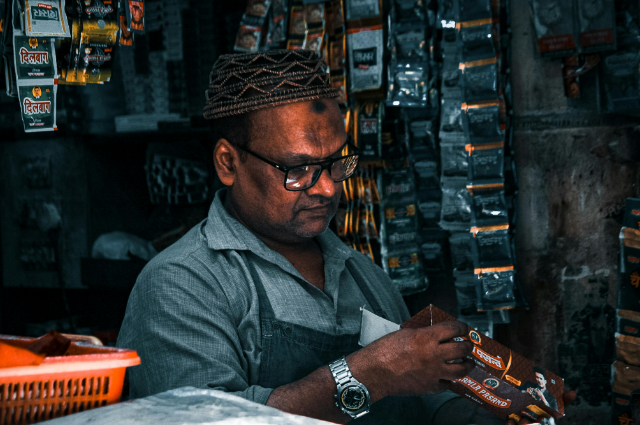
Unlike traditional chewing tobacco, gutka is industrially processed, aggressively marketed, and designed for convenience. Its small, inexpensive sachets, requiring no preparation, made it especially easy and affordable for daily-wage workers. Over time, gutka replaced older smokeless tobacco forms in many regions. Its spread is clear in data: rural household consumption rose from 5.3 to 30.4 per cent, and gutka now accounts for about 41 per cent of rural tobacco expenditure. This growth has been especially pronounced in states like Madhya Pradesh and Uttar Pradesh.
Pradesh, Bihar, Chhattisgarh and Rajasthan, where economic vulnerability and informal labour markets are widespread.
In rural Madhya Pradesh, more than six in ten households consume gutka. Uttar Pradesh has crossed 50 per cent. This data reflects how closely tobacco consumption tracks economic conditions.
Consumption and Economic Reality
Over the past decade, tobacco spending has increased significantly. Between 2011–12 and 2023–24, it rose by 58 per cent in rural India and 77 per cent in urban areas, even after adjusting for inflation. The number of rural households consuming tobacco has also grown, from 9.9 crore to 13.3 crore. This brings the share of tobacco-consuming households to 68.6 per cent.
The concentration of this consumption among poorer households is difficult to ignore. In rural India, more than 70 per cent of households in the bottom 40 per cent of the income distribution use tobacco. In states such as Uttar Pradesh, Madhya Pradesh, and Bihar, the figure exceeds 85 per cent.
This pattern is tied closely to a large part of the rural workforce, engaged in physically demanding, low-paying jobs with little stability, as well as long hours, irregular meals, and limited access to rest, shaping daily life. In that setting, tobacco becomes part of how people manage fatigue and hunger.
A ₹5 sachet of gutka offers stimulation, suppresses appetite, and is seen as a necessity to get through the day.
Food, Spending, and Trade-offs
The financial trade-offs are real, even if they are not always consciously calculated.
Poorer households spend a higher share of their income on tobacco than wealthier ones. At the same time, many struggle with inadequate nutrition. Estimates suggest that redirecting tobacco expenditure toward food could add over 500 calories to a child’s daily intake.
The reason lies in the immediacy of need. Food provides sustenance, but tobacco alters how hunger is felt. It stretches limited resources in a way that food alone cannot do. This dynamic complicates the idea that increased income will automatically reduce tobacco consumption. The data show that even as incomes rise, spending patterns do not necessarily move toward education or nutrition in a proportional way.
Social and Cultural Layers
Tobacco’s persistence is also reinforced by its place in social life.
It is shared among co-workers, offered in moments of interaction, and woven into everyday exchanges. In some communities, it appears in rituals and ceremonies. These practices do not operate as formal endorsements, but they normalise consumption over time.
Beliefs around tobacco add another layer where Gutka is often associated with aiding digestion, freshening the mouth, or easing stress and minor pain. These ideas continue to circulate, specifically in areas where access to formal healthcare and information is limited.
Health and Its Uneven Burden
The health consequences are well established. Tobacco contributes to a range of non-communicable diseases, including lung cancer, heart disease, chronic respiratory conditions, and cancers linked to smokeless tobacco use. The Ministry of Health and Family Welfare estimates that tobacco is responsible for around 13 lakh deaths each year in India.
The economic burden extends beyond individuals. For every ₹100 collected in tobacco taxes, the broader cost to society is estimated at ₹816. This includes treatment expenses, lost productivity, and long-term care. These costs tend to fall most heavily on those who are already economically vulnerable, which further reinforces existing inequalities.
Regulation and Its Limits
India has attempted to regulate tobacco, including a ban on gutka introduced in 2012. The response from manufacturers was quick. Products began to be sold in separate sachets, one containing pan masala and the other containing tobacco, allowing consumers to mix them. This workaround was noted by the Supreme Court of India in 2016, but enforcement has remained inconsistent. The products continue to be widely available in local markets.
The gap between policy and practice is not difficult to observe. It reflects the challenges of regulating a product that is deeply embedded in both the economy and daily life.
A Pattern That Holds
Looking at the broader picture, tobacco consumption among the poorest 40 per cent is shaped by a combination of history, economic conditions, social practices, and policy gaps.
It is tied to how people work, eat, and manage their daily strain. It is sustained by accessibility and reinforced by habit. Attempts to address it often focus on awareness or restriction, but these approaches rarely engage with the conditions that make tobacco use addictive or continuous.
Changing that pattern will require more than isolated interventions. It will depend on how closely policy can engage with the lived conditions that shape everyday choices.
References:
- https://indianexpress.com
- https://eacpm.gov.in
- https://adr.org.in
- https://pmc.ncbi.nlm.nih.gov
- https://indianexpress.com