
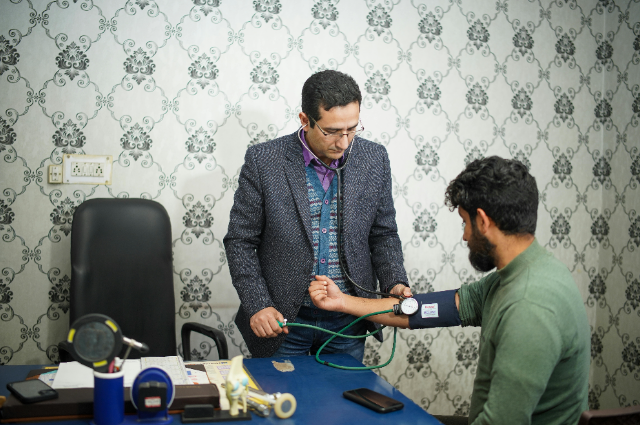
In the Melghat region of Maharashtra, numbers once told a bleak story. Infant deaths were so common that they had stopped shocking anyone. Illness, malnutrition, and isolation had blended into a quiet, persistent crisis. There were no headlines drawing attention to it, no urgency from outside. Loss had become routine.
What altered this trajectory was not a sweeping government reform or a large NGO intervention. It began with the decision of two individuals, Dr Ravindra Kolhe and Dr Smita Kolhe, to live and work in a place most professionals avoided.
A Different Kind of Beginning
Dr Ravindra Kolhe’s path to Melghat was deliberate. His thinking had been shaped by figures like Mahatma Gandhi and Vinoba Bhave, and later influenced by Where There Is No Doctor by David Werner. The book focuses on practical healthcare in resource-poor settings, and its ideas stayed with him. After completing his MBBS in 1985, he chose to prepare for conditions that most medical training does not cover. He spent time learning how to deliver babies without standard facilities, how to identify pneumonia without imaging, and how to manage common illnesses with minimal tools.
He then moved to Bairagarh, a remote village in Melghat, and began working there. A Marriage That Was Also a Commitment
Before settling into this life, he set clear conditions for marriage. They reflected the reality he had chosen: long distances on foot, a very small monthly budget, and a life without financial security. Many declined those terms; Dr Smita did not. Trained in Ayurveda and Homoeopathy, she agreed with a clear understanding of what the work involved. When they married in 1989, she became both his partner and the second doctor in a region that had almost none.
Earning Trust Over Time
The early years were shaped less by medical outcomes and more by acceptance. Villagers had seen outsiders come and go before. Officials visited, surveys were conducted, and then people left. There was little reason to believe that this time would be different. Trust was limited, and it had to be earned gradually. That shift came during a personal crisis.
When their newborn son became critically ill, they were advised to take him to a city hospital. It was the safer and more predictable option, but Dr Smita chose to treat him in the village, using the same resources available to everyone else. This decision carried real risk; it also changed how the community saw them.
From that point, the distance between the doctor and patients narrowed. They were no longer visitors offering help, but were citizens living under the same conditions.
Looking Beyond Treatment
As they continued their work, patterns became clear.
Children were falling ill repeatedly, Families struggled with seasonal food shortages, Winters brought exposure that many households could not manage, and Illness kept returning because the conditions behind it remained unchanged. The Kolhes responded by widening their focus.
They continued their medical practice and kept it accessible, charging a token fee of ₹1. Alongside this, they began working on food security, farming practices, and basic health awareness. They introduced improved seed varieties that could withstand local conditions. They ran a ration shop to stabilise access to food, and they spent time explaining preventive care and simple health practices. This work required consistency more than scale because it involved repeated conversations, small adjustments, and patience.
The Numbers That Followed
Over time, measurable changes appeared.
Infant mortality declined from around 200 per 1,000 live births to about 40. Pre-school mortality also dropped significantly, from roughly 400 per 1,000 to close to 100. These changes reflected the effect of medical intervention. They also indicated that the broader conditions affecting child survival had improved. Families began to experience a different reality, where survival in early childhood was more certain.
Working With the System
The Kolhes did not work in isolation from government structures.
When Nitin Gadkari visited and offered to build them a house, instead, Dr Smita asked for roads. Better connectivity would support the entire region rather than a single household. That request led to improvements in infrastructure. Over time, roads, electricity, and primary health centres became more accessible in Melghat. These changes strengthened the impact of their work and made services more reliable.
Beyond Recognition
In 2019, the Government of India honoured the couple with the Padma Shri. The recognition followed years of work that had already reshaped the region.
They treated healthcare as something connected to livelihood, environment, and trust. They stayed long enough to understand the area, adapted their methods over time, and focused on continuity rather than quick results.
What Their Work Suggests
The reduction in infant mortality did not come from a single intervention; it rather emerged from sustained effort across multiple areas of life.
The Kolhes’ work shows that change in such regions depends on staying present, responding to real conditions, and building trust over time. Progress may be slow, but it becomes durable when it is rooted in the everyday realities of the community.
In Melghat, that approach reshaped outcomes that once seemed fixed.
References:
- https://pmc.ncbi.nlm.nih.gov
- https://pubmed.ncbi.nlm.nih.gov
- https://gh.bmj.com
- https://pmc.ncbi.nlm.nih.gov
- https://timesofindia.indiatimes.com
- https://www.newindianexpress.com