
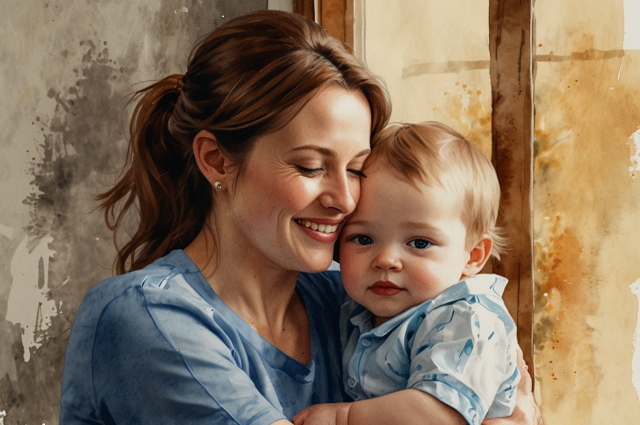
Image by Ghasoub Alaeddin from Pixabay
Since childhood, I have heard one phrase repeated over and over again: " Motherhood is the most beautiful thing in the world. Today, as a mother myself, I understand why people say that. Motherhood is filled with love, unforgettable moments, and a bond that words can never fully describe. Yet there is another side of motherhood that is rarely discussed honestly.
Before marriage and before becoming a parent, very few people explain the emotional, physical, and mental challenges that come with raising a child. We are told about the joy, but not always about the sacrifices. We are shown smiling mothers holding their babies, but we are rarely shown the sleepless nights, the silent tears, the exhaustion, and the overwhelming responsibility that follows.
If young girls were told the complete reality of motherhood—the beautiful moments along with the difficult ones—they would enter this phase with greater understanding and preparation. Motherhood is not simply a role. It is a lifelong commitment that never pauses, never resigns, and never asks whether you are ready.
The Job That Never Ends
Motherhood is perhaps the only responsibility where there are no holidays, no promotions, and no retirement plans. A mother is expected to be available every hour of every day. Even when she is sick, tired, emotionally drained, or overwhelmed, her responsibilities continue.
The world often praises mothers for being strong. While the compliment is appreciated, it sometimes hides a deeper truth. Many mothers are not carrying their burdens because they feel strong. They carry them because they have no choice. They continue because someone depends on them.
The sleepless nights begin early. Feeding schedules, crying babies, health concerns, household responsibilities, and endless worries become part of everyday life. The body aches. The mind becomes tired. Yet the work continues.
A child may look at their mother and think she is the best person in the world. That love is precious. But who looks at the mother and asks whether she is doing okay? Who notices her struggles when everyone else is focused on the child?
The Invisible Weight
Many mothers carry responsibilities that no one else sees. They remember appointments, prepare meals, manage emotions, solve problems, comfort children, and often balance work and family at the same time.
This invisible labour is exhausting because it is rarely acknowledged. People notice the visible tasks, but they often overlook the mental effort required to keep a family functioning every single day.
Sometimes a mother feels as though she is carrying the entire household on her shoulders. She keeps moving forward, not because she is unaffected by the weight, but because stopping does not feel like an option.
She may appear calm on the outside while struggling internally. She may smile while feeling exhausted. She may continue helping everyone around her while silently wishing someone would ask how she feels.
When Responsibility Is Not Shared Equally
Parenthood should belong equally to both parents. A child deserves the love, care, guidance, and support of both a mother and a father. However, society often responds differently to mothers and fathers. When a father helps with childcare, people sometimes praise him as exceptional. He receives admiration for doing what should already be part of parenthood.
Meanwhile, mothers are expected to perform the same responsibilities without recognition because those duties are viewed as normal expectations. This imbalance creates an unfair standard. The same actions are judged differently depending on who performs them.
When a mother feels overwhelmed and expresses frustration, some people question her ability to parent. They ask whether she is grateful enough or patient enough. Yet when a father expresses exhaustion, people often respond with sympathy and encourage him to rest.
This difference may seem small, but over time it creates emotional pressure. It sends a message that mothers must endure everything silently, while others are allowed to acknowledge their struggles.
The Fear of Speaking Honestly
One of the most difficult parts of motherhood is the fear of being misunderstood. Many mothers hesitate to speak openly about their challenges because they worry they will be judged. Society often expects mothers to appear grateful, patient, and emotionally stable at all times.
But mothers are human beings before they are mothers. They experience sadness, frustration, anxiety, disappointment, and exhaustion. They have difficult days. They make mistakes. They sometimes need support.
Acknowledging these feelings does not make someone a bad mother. It makes them human. Yet many women remain silent because they fear criticism. Instead of receiving understanding, they are sometimes told that motherhood is supposed to be difficult and that they should simply accept it.
The Reality of Postpartum Struggles
Perhaps one of the most misunderstood experiences is postpartum depression. After childbirth, many women face emotional and psychological changes that are far more serious than ordinary tiredness. They may feel isolated, anxious, overwhelmed, or disconnected from themselves.
Unfortunately, these experiences are often dismissed. People may assume that a mother should be happy simply because she has a child. As a result, her struggles become invisible. When a woman is already exhausted and emotionally vulnerable, being ignored can deepen her pain. The phrase “Who will believe a postpartum depressed mother?” reflects a painful reality. Too often, mothers feel that their emotions are questioned rather than understood.
Instead of judgment, they need compassion. Instead of criticism, they need support. Instead of assumptions, they need people willing to listen.
Behind Every Good Mother, Every good mother is a woman trying her best. She may not always have perfect answers. She may not always feel confident. She may sometimes doubt herself. Yet every day she wakes up and continues.
She learns. She adapts. She sacrifices. She gives pieces of herself to ensure that her child feels loved, protected, and safe. Many mothers spend years worrying whether they are doing enough while their children grow up remembering them as superheroes.
The irony is that mothers who worry most about being good parents are often the ones working hardest to be exactly that.
What Mothers Really Need
Mothers do not need constant praise. They need understanding. They need partners who share responsibilities instead of treating childcare as assistance. They need families who listen without judgment. They need communities that acknowledge their challenges instead of dismissing them. They need the freedom to admit when they are struggling without being labelled ungrateful or incapable.
Most importantly, they need people who recognise that strength does not mean carrying everything alone.
True strength sometimes means asking for help.
True strength sometimes means admitting exhaustion.
True strength sometimes means choosing rest over perfection.
A Final Thought
So, who said we are strong? Perhaps the better question is why society expects mothers to be strong all the time. Behind every strong mother is a woman who has cried, worried, sacrificed, doubted herself, and continued anyway. She is not a machine. She is not a superhero. She is a human being carrying one of life's greatest responsibilities.
If you truly want to appreciate mothers, do more than praise them. Understand them. Listen to them. Support them. Stand beside them. And if you cannot understand their struggles, at least do not dismiss them. Because every mother deserves something more valuable than admiration: she deserves empathy.