
A work of political satire grounded in the real behaviour of Indian democracy
The Joke That Was Not a Joke
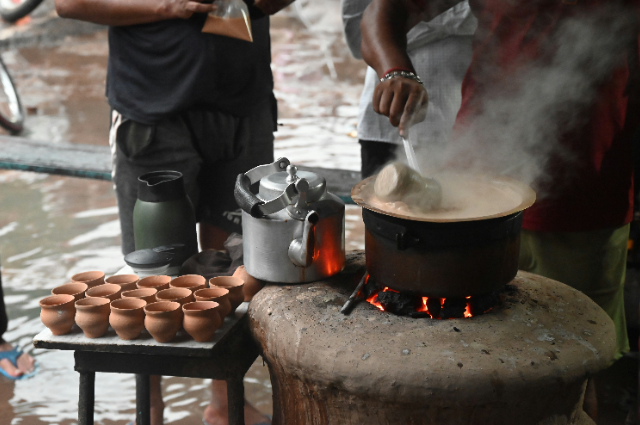
Picture a tea shop. Election banners flap in the morning breeze. A vendor fills glasses as customers debate the candidate whose face stares down from every wall. One old man sips his tea and says, without looking up:
"ஓட்டு வாங்குறதுக்கு முன்னாடி எல்லாரும் நம்ம வீட்டுக்காரங்கதான்… (Before they collect your vote, every politician is family.)
The table erupts in laughter. But nobody disagrees. That is the strange paradox at the heart of Indian political satire — the joke lands because it is true, and it is funny precisely because the truth is too heavy to carry any other way.
This article is a real story. Not of one politician or one scandal, but of something far more pervasive: the culture of political performance that has grown in India over decades, the citizen who watches it unfold, laughs, and then walks back to the same polling booth and does the same thing again. It is the story of how comedy became the last honest language of Indian democracy — and what that says about us.
The Promise Factory — A Nation Built on Manifestos
Every five years, India witnesses what can only be described as the world's largest promise-manufacturing exercise. Political parties release manifestos thick enough to serve as doorstops — glossy, ambitious documents filled with roads, jobs, hospitals, free laptops, rice at two rupees a kilo, and occasionally, bullet trains that will connect cities that do not yet have reliable bus services.
The promises are rarely small. They are always audacious. And they are almost always delivered — on paper.
In the political satire show Arasiyal Nayandi, a fictional studio talk show format, this phenomenon is dissected through the voices of five characters whose personalities mirror those of the Indian public. When the host asks the panel what a political manifesto really is, the answers arrive like dominoes:
Arjun (The Logical Optimist): Manifesto nalla irukku — the manifesto looks good.
Balu (The Believer): Last election manifesto… naane read panniimpressed aayitten! — I read the last election's manifesto and was impressed!
Host: Nadanthathu? — And what happened?
Balu: Adhuvum dream-lathan! — That too was just a dream!
The audience laughs. But this exchange captures a real and documented truth: according to independent analyses of multiple Indian state and central government manifestos over the last two decades, the average fulfilment rate of specific campaign promises has hovered between 30% and 45%, with infrastructure and employment pledges being the most frequently broken. The promises exist. The accountability does not.
What makes the satire sharp — and the situation sharper — is the gap between the scale of the promise and the smallness of the follow-through. As one character puts it in the show:
"Paper-la irukura road is smoother. (The road that exists only on paper is always the smoothest.)
This is not fiction. It is the lived experience of millions of Indians who have watched road projects begun and abandoned, hospitals announced and never built, and job schemes that existed primarily in press releases.
A 2019 study by PRS Legislative Research found that a significant portion of budget allocations for flagship rural employment and housing schemes were repeatedly underspent — not because the need did not exist, but because the implementation machinery was either absent or captured by other interests. The manifesto was real. The delivery was the satire.
Vote After Vanish — The Disappearing Politician
There is a recurring joke in Indian political culture that politicians suffer a mysterious affliction immediately after winning an election: they become invisible to the constituency that elected them. This is not a new observation. It has been noted by journalists, academics, and stand-up comics for decades. What is new is how deeply this pattern has embedded itself in public consciousness — not as outrage, but as expectation.
In Arasiyal Nayandi, when the host asks why vote-buying is not seen as a problem in many communities, the practical character Siva has a devastating answer:
"Enna, nammey adha festival-aa celebrate pannrom! (Why? Because we celebrate it like a festival!"
This is a documented social reality. In multiple studies of voting behaviour in Tamil Nadu, Andhra Pradesh, Bihar, and Uttar Pradesh, researchers have found that cash-for-votes arrangements are not merely tolerated — they are anticipated. Families plan around them. The distribution of money, liquor, or goods before an election has become a form of pre-election welfare for communities that receive almost nothing after the votes are counted.
The Kumar character in the show — the silent thinker who speaks rarely but lands every line — calls it with precision:
"Poverty illai… priority. Muthal naal panam… moonram naal local loan… aintham naal regret. (It's not poverty… It's a priority. Day one: money. Day three: local loan. Day five: regret."
What makes this exchange more than comedy is its accuracy. The money offered before elections is real. The regret that follows — when the politician disappears, the road remains unpaved, and the school remains understaffed — is also real. The cycle repeats not because people are foolish, but because the alternative — waiting for a system that has never delivered — feels even less rational.
A 2014 Lokniti-CSDS survey found that nearly 30% of voters in certain states reported receiving some form of material inducement before elections. This number likely undercounts the reality, since many respondents would not report such transactions. The system is not broken. It has simply evolved into something the architects of Indian democracy never envisioned: a democracy where the election is the service, and the governance is the afterthought.
The Mind Game — Fear, Hope, and Confusion as Political Tools
Perhaps the most sophisticated — and most honest — segment of Arasiyal Nayandi deals with what it calls the three tricks of political mind games: fear, hope, and confusion. These are not theoretical constructs. They are operational tools used in every election cycle, across party lines, in every state, with varying degrees of subtlety.
The Fear Game
Fear is the oldest instrument of political control. In the show, when the host introduces this concept, the exchange cuts to something real very quickly:
Balu: Oru politician sonnaar: 'En-na vote pannalanna, ooru develop aagaadhu!' (A politician told me: If you don't vote for me, this village will not develop!)
Host: Andha ooru develop aagurathilla… avar-oda warning mattum develop aaguthu! (The village never developed… only his warning did!)
This form of electoral coercion — linking the candidate's victory to the delivery of government services — is technically illegal under the Representation of the People Act, 1951. In practice, it is widely used and rarely prosecuted. The threat is rarely direct enough to constitute a legal violation, but the message is clear: your well-being depends on our victory.
The Kumar character's response is the sharpest summary of this dynamic:
"Fear trick-nu sonna simple… 'Naan ilanna yarum safe illa.' But truth… 'Avar irundha dhan safe illa.' (The fear trick is simple: 'Without me, nobody is safe.' But the truth: 'With him, nobody is safe.'"
The Hope Game
If fear is the stick, hope is the carrot — and it is deployed with extraordinary creativity. The promises range from the plausible (better roads, more jobs) to the spectacular (transforming a small town into Singapore in two years, a claim that is satirised directly in the show).
The hope game works because it exploits something genuine: the desire of ordinary Indians for a better life. The tragedy is not that people believe in hope — it is that the hope is systematically recycled without delivery, creating what the show calls:
"Next year, better. Next year, different. Next year, a new plan. 10 next year, same as last year's result. (Next year, better. Next year, different. Next year, a new plan. After 10 such years, the same result as last year."
This is perhaps the most painful truth in the show, because it mirrors the experience of millions of Indians who have voted in every election since 1947 with hope, and watched that hope replaced by a newer, shinier version of the same unfulfilled promise.
The Confusion Game
The third and most sophisticated tool is confusion — the deliberate proliferation of parties, symbols, promises, and counter-promises to the point where the voter cannot form a coherent basis for choice. In the 2024 Indian General Elections, some constituencies saw over 20 candidates on the ballot. Multiple parties made overlapping and contradictory promises. Alliance configurations shifted so frequently that even political journalists struggled to keep up.
In the show, Balu admits to accidentally voting for the wrong party because he confused the symbols. The audience laughs. But this is not merely a comedy moment — it is a documented problem. The Election Commission of India has repeatedly raised concerns about ballot design, voter literacy, and the manipulation of party symbols to confuse voters, particularly in rural constituencies with lower literacy rates.
The Kumar line that closes this segment deserves to be quoted in full, because it is simultaneously the funniest and most serious line in the entire show:
"Politicians confuse pandrathu art. The public confuses the result. (The politician confusing people is art. The public being confused is the result."
Leaders and Followers — Who Is Really Running Whom?
Indian political culture has always had a complicated relationship with the concept of leadership. The Nehruvian vision of rational, institution-led governance gave way over decades to something more personal, more emotional, and more volatile: the politics of personality. Today, electoral outcomes in India are shaped less by policy platforms and more by the image, charisma, and perceived loyalty of individual leaders — and the blind devotion of their followers.
Arasiyal Nayandi takes this apart with surgical precision. When the host asks what kind of followers exist in Indian politics, the panel produces a taxonomy that is funny because it is exact:
Siva: Loyal follower — avan sign seyyum mun follow panna maattan. (The loyal follower won't follow before the signing bonus.)
Kumar: Emotional follower — avan leader drop aanaalum, cups-la crowd-ku tea pour pannuvan! (The emotional follower will still pour tea for crowds at rallies even after his leader falls!)
Siva: Social media follower — avanga actual-aa vote poda povadhilla… fight pannuradhukkutan follow pannuvaanga! (Social media followers won't actually vote — they follow only to fight!)
Each of these follower types represents a real segment of the Indian political ecosystem. The loyal follower who expects material reward for party work is a staple of booth-level politics. The emotional follower whose identity is entirely fused with a leader's is the engine of political rallies across the country. And the social media follower — perhaps the most modern phenomenon — contributes to the toxicity of online political discourse while often failing to translate that energy into actual civic participation.
The deepest cut comes at the end, when the show asks whether leaders create followers or followers create leaders. After the panel goes back and forth, Kumar delivers the final verdict:
"Follower-ku brain irundha, leader create aaguvan. Brain illaama irundha, leader create pannuvan. (If the follower has a brain, a leader is created. Without a brain, the follower is the one being created by the leader."
This is the core thesis of the entire show, and it is not a comfortable one. It places the responsibility for Indian democracy's failures not only on politicians — who are easy targets — but on the citizens who enable, excuse, and repeatedly re-elect the same patterns of behaviour.
The Real Story — What Satire Tells Us That News Cannot
Arasiyal Nayandi is a fictional studio show. But the real story it tells is one that news channels, academic papers, and political commentaries have struggled to communicate: that the problems of Indian democracy are not external to its citizens. They live inside us. They are in the memory that lasts only three days (Recharge offer maadhiri — three days validity), in the ego that cannot say sorry, in the excuse that replaces accountability, in the blind following that switches off the brain.
Satire has always been the art form of the politically powerless. From Jonathan Swift's A Modest Proposal to the sharp political cartoons of the Emergency era, satire allows citizens to name the absurdity of power without directly confronting it. In India today, where political discourse is increasingly polarised and where criticism of leaders can attract public backlash, online harassment, or worse, satire has become one of the few safe spaces where honest political truth-telling can happen.
Shows like Arasiyal Nayandi — and the long tradition of Tamil political comedy it draws from, including the legacy of stage performances and films that used comedy to critique power — perform a democratic function that goes beyond entertainment. They create a shared vocabulary for political disappointment. They allow citizens to acknowledge, collectively and with laughter, what they might be unwilling to say individually and in anger.
The philosopher Simon Critchley has argued that humour can be a form of implicit social criticism — a way of exposing contradiction without demanding immediate resolution. In India, where political patience is both a virtue and a survival strategy, this function is invaluable.
But satire also has limits. The greatest risk of political comedy is that it becomes a pressure valve — a release mechanism that prevents genuine outrage from accumulating into meaningful action. If people laugh at the manifesto joke and then vote for the same manifesto-maker, the comedy has failed its deeper purpose. If they recognise themselves in the emotional follower sketch and continue to follow blindly, the mirror has shown them nothing.
The show itself is aware of this danger. Its closing lines are not jokes. They are demands:
"Arasiyal maara-num-na, aatchi maari-na pothaadhu… naam mara-num. (For politics to change, it is not enough for governments to change. We must change."
The Citizen in the Mirror
India is the world's largest democracy. It is a title that is repeated so often that it has lost the ability to surprise. But what does that title mean in practice? It means that over 900 million eligible voters participate in an electoral exercise of staggering scale and logistical complexity. It means that governments are formed and removed through the will of people who, in many cases, have no formal political education, limited access to verified information, and little experience with the civic institutions that are supposed to serve them.
It also means that the quality of Indian democracy is, ultimately, a reflection of the quality of Indian citizenship. And that is a difficult truth.
The characters in Arasiyal Nayandi are not politicians. They are ordinary people — a logical thinker, an emotional believer, a practical realist, a silent observer. They are the people who watch the speeches, vote in the elections, complain about the results, and then repeat the cycle. They are the majority.
The show asks them — asks us — a simple question: what is our role in this system? Are we passive recipients of whatever democracy delivers? Or are we, as the Kumar character insists, the actual source of the problem and therefore the only possible source of the solution?
The memory joke in the show — that public memory has the validity of a mobile recharge offer, lasting only three days — is funny. It is also the most accurate description of one of India's deepest structural problems: the inability of voters to hold politicians accountable across electoral cycles because the accumulation of broken promises is too vast, too distant, and too diffuse to be legible as a single narrative of failure.
This is not stupidity. It is a rational response to information overload, to the absence of credible fact-checking, to the deliberate obfuscation of political records, and to the basic human tendency to prioritise the immediate and visible over the distant and systemic. The politicians know this. It is why the hope game and the confusion game work.
But it is also why satire matters. Not because a comedy show will change a voter's mind, but because in the act of laughing together at the absurdity of the system, citizens are also, quietly, acknowledging that the system is absurd — and that they are part of it.
Yosichchu Vaazha Vendiyadhu — We Must Think Before We Live
The tagline of Arasiyal Nayandi is: Yosichaaye arasiyal… Sirichaaye namma vaazhkai. Loosely translated: If you thought about it, that's politics. If you laughed about it, that's our life.
It is a beautiful and melancholy double meaning. Politics, examined carefully, reveals the comedy of power. Life, lived without examination, becomes the punchline.
The real story that political satire tells — the story that Arasiyal Nayandi is trying to tell — is not about corrupt politicians or broken promises or missing roads. Those are the symptoms. The story is about attention. About whether citizens pay attention to what is done in their name, with their votes, and at their expense. About whether the laughter in the studio translates, even slightly, into a voter who remembers on election day what was forgotten over the last five years.
In 2024, India voted in the largest election in human history. Over 640 million people cast their ballots. The result was a democratic verdict of extraordinary scale. Whether that verdict was informed by memory, by analysis, by hope, by fear, or by confusion — by manifesto or by cash — is a question that political scientists will debate for years.
But the tea shop conversation continues. The old man is still there, still sipping, still watching the banners. And somewhere, a young writer is turning that conversation into a script — because satire is not surrender. It is the refusal to stop noticing.
As Kumar says, in the final moment before the lights go down:
"Thinking illaama vaazhndhaa animal… Overthinking-la vaazhndhaa patient… Thinking-odu vaazndhaa — human. (Without thinking, you are an animal. Drowning in thought, you are a patient. But thinking and living — that is what it means to be human."
The studio audience erupts. The laughter fades. And the question hangs in the air, waiting for an answer that only the citizen can give.
Author's Note
This article draws on the script and themes of Arasiyal Nayandi, an original Tamil political satire studio show, to explore real patterns in Indian democratic behaviour. All political observations reference documented research, survey data, and publicly available records. The dialogue excerpts are original creative works used for analytical illustration. The author writes as a citizen, a student of democracy, and an unapologetic fan of the kind of comedy that tells the truth.
References:
- Manifesto fulfilment data (30–45%) — PRS Legislative Research (prsindia.org) and Association for Democratic Reforms (adrindia.org)
- Vote-buying behaviour studies — Lokniti-CSDS National Election Study 2014 (lokniti.org); Milan Vaishnav, 'When Crime Pays' (2017), Carnegie Endowment
- Budget underspending on rural schemes — PRS Legislative Research budget analysis reports (prsindia.org)
- 2024 General Election voter participation — Election Commission of India (eci.gov.in)
- Satire as social criticism — Simon Critchley, 'On Humour' (2002), Routledge
- All dialogue excerpts from Arasiyal Nayandi are original creative works authored by me and are not sourced from any external publication.