
“Long off… long off… long off
aur Suryakumar Yadav ne pakad liya apni zindagi ka sabse mahatvapurn catch.”
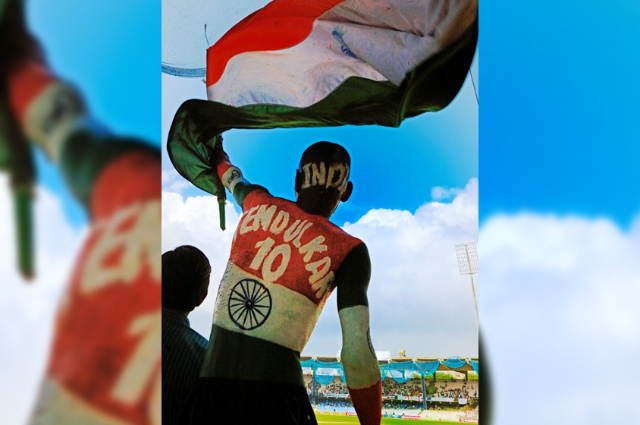
The commentator’s voice still echoes in my ears as if it happened just yesterday. In that moment, as Suryakumar Yadav held on to the ball at the boundary during Hardik Pandya’s over, time seemed to stand still for millions of Indians. For a brief second, the entire country held its breath and then, all at once, it erupted into joy. There were tears in everyone’s eyes. It had been over a decade since India last lifted an ICC trophy, years of near misses, heartbreaks, and waiting. From the victory in 2007 to the unforgettable moment in 2011, and then the painful setback of 2023 and 2019, this win felt long overdue. Cricket in India is not merely a sport; it is a cultural phenomenon that binds millions across the country. From crowded streets to living rooms, matches are followed with unmatched passion, often turning into shared national experiences. Major tournaments, especially ICC events, carry emotional weight far beyond the game itself, symbolising pride, hope, and collective identity for a diverse population. This emotional connection between cricket and the people of India is not new. When India won its first Cricket World Cup in 1983, it marked a turning point in the country’s sporting history, igniting a sense of pride and belief among millions. That victory did not just change Indian cricket; it changed how the nation saw itself. Over the years, moments like these have repeatedly brought people together, cutting across social and cultural divides, even if only for a while. Time and again, cricket has acted as a unifying force in India, creating moments where differences fade, and a shared identity takes over.
And now, it was finally in front of us. Real and Ours.
I don’t think I had ever felt that kind of happiness before, the kind that overwhelms you before you can even process it and almost instinctively, my friends and I knew where we had to go next.
India Gate.
Because if there’s one place that knows how to celebrate a moment like this, it’s Delhi. That night, Delhi didn’t feel like just another city. It felt unreal, almost like this is what happiness, in its purest form, must look like. As we got closer to India Gate, the roads began to slow down, not because of frustration, but because something unusual was happening. There was traffic, but no honking. In a city known for its impatience, the calm felt unreal. People who would usually argue over seconds of delay now stood still, smiling. It was as if, for that one night, nothing felt important enough to complain about. Instead, there was movement. People stepping out of their cars, waving the tricolour, some standing through sunroofs, others running down the streets with flags in their hands. The closer we got, the louder it became, not noise, but celebration. Strangers were hugging each other, shouting “India jeet gaya!” without even knowing who stood in front of them. People clicked photos together, danced in the middle of the roads, and sang along to whatever music was playing in the background. Music played from every direction, blending into a chaos that somehow made perfect sense. People danced to every song that came on loud, carefree, completely lost in the moment. But then, for a brief second, everything shifted. As the trophy was about to be lifted, the song Lehra Do began to play, and almost instinctively, the chaos softened. The dancing slowed, the shouting faded, and for a moment, there was a strange kind of silence not empty, but full. People stood still, watching, feeling, taking it all in. While Rohit Sharma was lifting the trophy with his significant walk. That moment, that quiet, shared pause in the middle of all the noise, has stayed with me ever since. It wasn’t the loudest moment of the night, but somehow the most powerful. It didn’t feel like a city anymore; it felt like an open celebration, where no one was invited, yet everyone belonged. Everyone was dressed in blue, wrapped in the tricolour, carrying a piece of that victory with them. Some stood with their phones out, waiting to capture the exact moment the trophy would be lifted, as if they wanted to relive it again, right there, together. Even the usual order of the city seemed to fade away. Cars moved slowly, almost rhythmically, like a parade. The police didn’t interrupt; they watched, smiled, and became a part of it. In the middle of it all, the four of us found each other. Wrapped in the tricolour, we held onto one another tightly — almost as if we were trying to hold onto the moment itself. There were tears in our eyes, but no words. Because somehow, it felt personal. And in that silence, I realised that some emotions are too deep to be spoken, they are only felt, shared, and remembered. On the side, the familiar Lovely Chuskiwala stood just as it always does near India Gate, but that night, it felt like a part of the celebration itself. People gathered around, holding their chuskis, smiling, laughing, and soaking in the moment. India Gate stood illuminated in the colours of the tricolour, glowing against the night sky. People paused, clicked pictures, and simply stood there taking it all in, as if they didn’t want the night to end.
It was simple.
It was ordinary.
And yet, it felt unforgettable.
Everywhere I looked, there was only one thing: happiness.
It wasn’t just a celebration.
It felt like pride, like relief, like something deeply personal that every single person there believed they were a part of. That night, Delhi didn’t feel divided the way it often does into North, South, East, or West. Or perhaps, even more than that, it felt like India. A place where, for a few fleeting hours, people came together not as strangers, not as identities, but as one collective emotion. There was no difference, no distance — just celebration in its purest form, and maybe that is what made it unforgettable. Because it wasn’t just about winning a match. It was about feeling something so powerful, so shared, that it turned an ordinary night into a memory that would stay forever. What I witnessed that night was far more than a celebration of a sporting victory; it was a reflection of the social fabric of India itself. In a country defined by its immense diversity, where differences in language, religion, region, and identity shape everyday life, such moments of collective unity are rare and deeply significant. Cricket, often regarded as more than just a sport in India, has long acted as a cultural force that transcends these differences, creating a shared emotional space for millions. That night, the streets did not merely celebrate a win; they embodied a sense of togetherness that is difficult to achieve otherwise. Strangers embraced like old friends, barriers dissolved without effort, and identities that usually define us seemed to fade into the background. It made me realise that unity is not always constructed through dialogue or intention; sometimes, it reveals itself naturally in moments that hold equal meaning for everyone. In that shared joy, I saw a glimpse of what India can truly be, not divided by its differences, but connected through them.