
Among all the sources of India’s excellence, sports hold a distinguished space. In modern times, when fingertips compete on the screen, developing an interest in sports is best fostered in this nation. Through the collective efforts of institutions, sports academies, and various other factors, India’s achievements are simply skyrocketing.
At the 2026 Commonwealth Games in Glasgow, India secured a 4th-place finish, competing against other leading sporting nations. The remarkable position came with 39 medals—13 gold, 17 silver and nine bronze. However, the count itself acquired less attention than the comparison with the previous achievement in Birmingham. This is because at Birmingham 2022, India won a glorious number of 61 medals. At first glance, it did look like the nation took a step backwards. But a closer look says otherwise.
After an achievement, not only in sports but in all fields, what shines the most is the medal. But the struggles, pains and all other backstories are often given less importance. Only the gains are talked about, but the losses are ignored.
When 39 Looks Smaller Than 61
The steep fall from 61 to 39 looks drastic on the outside. However, it is to be noted that these are never to be compared, as their determining factors are completely different.
It would resemble comparing two examinations with completely different syllabuses.
The 2026 Games featured only 10 sports, whereas a much broader programme was featured in Birmingham. Wrestling alone had given India 12 medals in 2022; badminton contributed six and table tennis seven. Hockey, squash, and cricket also added to India's victory.
That context changes the meaning of the 39.
India still finished fourth overall, behind Australia, England, and Canada. And more importantly, it remained ahead of hosts Scotland on the medal table. The official Indian Olympic Association records the final tally as 13 gold, 17 silver and nine bronze.
The smaller number, therefore, should not be immediately interpreted as a weaker performance.
A Different India Emerges
Perhaps Glasgow's greatest highlight lies in the sports that stepped forward. Boxing became India's biggest factor to depend on for medals. Indian boxers won 10 medals—seven gold and three silver—making it one of the country's most successful campaigns in the sport at a Commonwealth Games.
Athletics, weightlifting, judo, and para-sport also contributed immensely to the overall haul. Mirabai Chanu continued her mind-blowing Commonwealth record by winning another gold, while athletes such as Gulveer Singh and others added to India's medal tally. This matters because sporting strength should never be confined to a handful of disciplines.
For decades, India's Commonwealth identity has been strongly associated with wrestling, badminton, shooting, table tennis, hockey, and weightlifting. But this year’s Glasgow proved that India soars in a wide variety of sports.
India’s Nari Shakti
Like in any other discipline, India once again flaunted its Nari Shakti.
According to reports, women won eight of India's 13 gold medals. Their success speaks beyond podium finishes. This impressive visibility of women in almost every sport is a key reason to rewrite the history of sports in India.
From boxing to weightlifting, athletics and para-sport, Glasgow showcased that India's medal ambitions can never be separated from the power of women's sport.
The larger challenge now is to ensure that these successes do not remain isolated. Sustained investment in coaching, grassroots participation, nutrition, sports science, and safe sporting environments and much more, is key to determining whether today's champions inspire the generations to come.
The Story Beyond the Medal Table
However, the most important takeaway from Glasgow may not have been in the usual medal tally at all.
India's para-athletes produced a record seven-medal performance, including three golds, two silvers and two bronzes. The achievement was officially described as India's best-ever Commonwealth Para Games performance.
This deserves attention because sporting success is also about fair opportunities for all.
Para-athletes have historically had to fight battles that were barely spoken about: accessibility, facilities, funding, recognition, and public visibility. Every medal won therefore carries a deeper message—that sporting excellence should not be solely about physical ability.
This inclusivity provides India with yet another sign of a progressive nation. But the real question is whether it is time that we Stop Counting Medals?
Not entirely.
Medals indeed remain an important determinant of international sporting performance. But they should not be the only one.
From Glasgow to Ahmedabad
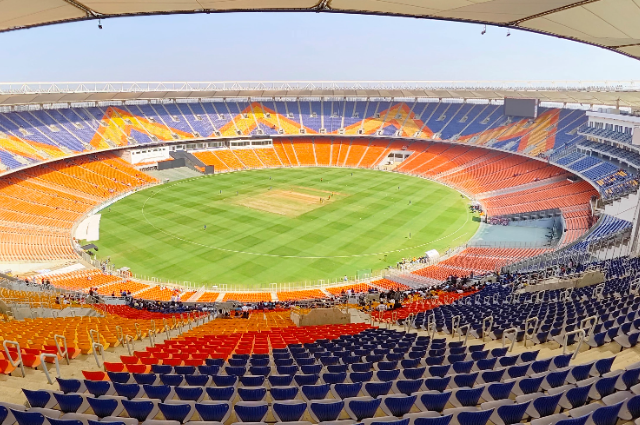
As the Glasgow Games ended, the Commonwealth Games flag was formally handed over to India. Olympic champion Neeraj Chopra and Indian Olympic Association President P. T. Usha represented India at the ceremony, marking fresh beginnings for the much-awaited Ahmedabad 2030.
As Ahmedabad gears up for the next Commonwealth Games, it is also set to witness 100 years of the Commonwealth Games, the first one hosted by Canada back in 1930.
India’s capability to strengthen grassroots sport, identify talent earlier, expand para-sport facilities, improve coaching, invest in sports science, and bring back disciplines in which it has traditionally excelled is highly looked upon for the upcoming Games. The real achievement of hosting should not be the spectacle of the opening ceremony. It should be the quality of the athletes standing on the podium at the end.
References: