
Right now, the world is crippling from the aftereffects of the ongoing tensions in the Middle East, particularly between Israel, Iran and the United States of America. The world has witnessed epoch-making incidents right from the beginning of the year 2026, including the death of Iran's supreme leader Ayatullah Ali Khamenei from the Israeli airstrikes on 28th of February 2026, but little did the conflicting parties knew that it was just the beginning for the emergence of a greater storm impacting not just the nations under war but also creating adversaries for the entire world to endure.
The death of Iran’s supreme leader changed the worldly dynamics of geopolitics completely, out of which the stymieing of the Strait of the Hormuz was one of the most catastrophic aftermaths, because of the massive significance the “the Strait of Hormuz” holds, it is not any ordinary pathway rather a narrow bridge of a width ranging between 33-39 kilometers only, originating from Iran and terminating in Oman, however it is situated in the middle like a sandwich between the Persian Gulf which is the main source of oils and the Arabian Sea which can be viewed as an outer door as it connects the oil coming from the Persian Gulf to the world. Iran has shaken the regional influence by creating hindrances in the Strait of Hormuz, which has badly affected the living standards of several Asian countries, both at the national and domestic levels.
India, the country with the world’s largest population, can be ranked at the top of the list in bearing greater repercussions due to the triangular war between Israel, Iran and America’s intervention, as India imports 65% of its LPG ( liquified petroleum gas) through the Strait of Hormuz. India, despite having its own gas fields to self-produce the fuel, heavily relies on the importation of LPG from the Strait of Hormuz, because of its overpopulation, as India requires 180 million cubic meters of gas per day for a stable livelihood, while its own natural gas fields can only provide up to 90 million cubic meters of gas per day. Hence, the Iranian pathway served as the biggest contributor to running the stoves of Indians and ensuring the smooth transportation and working of restaurants.
THE MARKET VOID IN INDIA: SHUTTING DOWN OF THE RESTAURANTS
The intervention of America in the Iran and Israeli tug of war was justified as a “ moral act’’, but was it really moral or just an attempt to seize more control in the Middle East? , or perhaps an act of prevention to resist Iran from becoming a nuclear power, whatever the reason may be, the impacts can be drawn out very clearly. The most evident problem the world now has to face is the shortage of essential fuel energy, causing energy crises all over Asia.
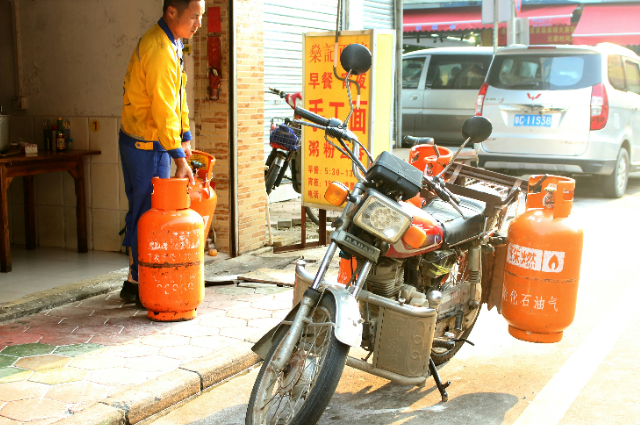
India, which is ranked as the second biggest importer of LPG (liquified petroleum gas), is now in deep waters, and is at risk towards a major economic collapse. India, known for the cultural food they cook, is now cutting down their menus for survival. Many Indian restaurants in Maharashtra, Karnataka and West Bengal are on the verge of shutting down because of the cylinder shortages. Approximately 20 % of the Indian restaurants in major cities like Mumbai are closed off temporarily, to prevent a total run out of gas cylinders. Even the small eateries that require less amount of fuel for running, like the fast food stall of Samit Roy, told the media that they would soon shut down their small business and also discussed how home deliveries would not be an option anymore.
VENTURING INTO THE BLACK MARKET :
History bears witness to how the crises of any essential product could easily navigate businessmen and even common men towards the black market, where you have to pay double the actual price of the product for your needs or survival, and that is what India is experiencing at this hour. An LPG cylinder, which typically costs about ₹918, is sold in the black market at the price of ₹4000 to 4,500. These black market sellers are further weakening the economy by causing bankruptcy in the masses, as it’s not possible for an ordinary street vendor to afford a ₹ 4000-priced cylinder for a refill. However, the government of India has actively been doing raids and arrests and has opened a helpline number 1906 to ensure the prevention of the spread of corruption.
THE POLICY OF GOVERNMENT: NATIONAL AND INTERNATIONAL FORUM
To conserve the gas energy, and protect India from facing severe energy crises in the coming days or months, India initiated a domestic policy called as Essential Commodities Act on March 6, under which it extended the refill cycle of gas from 21 to 25 days, and ordered the refineries to optimize LPG production, for lesser dependency on the imports and also ensured to increase domestic supply from the oil marketing companies for efficient livelihood of the Indian masses.
At international level, India opted for alternative routes including Russian route that extends from russia towards the arabian sea, being the most used alternative route by India, additionally gas energy is also being imported from United States of America, however its much expensive than the russian route and also is a longer route as it travels through Africa and circulates the The Cape of Good Hope to reach India. Other than that, LPG is getting important from West Africa as well as from Latin America to substitute the loss India had to endure due to the blocking of the Strait of Hormuz. Yet all these alternative routes still can't equate to the route of the Strait of Hormuz, as it's the shortest distance with the most bearing capacity pathway for the importation of liquified petroleum gas to India.
WHO’S BEEN HIT THE HARDEST?
The war for the preservation of the balance of power and for geopolitical motives has and will always hit the hardest on the innocent civilians of the nations in war, but also affects the livelihood of the masses in the entire world. In the case of Iran, Israel and America’s war, it has severely impacted the living standards of the entire Asian countries, particularly the biggest importers of LPG from Asian countries like India. India, which is known for their cultural dishes and vast dish items, is suffering the most, despite not being an active player in the Middle Eastern war, yet India’s people have to tolerate, especially the masses from lower-income backgrounds.
The restaurants are either temporarily shut down or offering limited dish items in the food menu items. Many industries, like textile processing, which rely upon liquified petroleum gas, are at potential risk of becoming stagnant.
The further escalation of the war could only worsen the situation of India at the domestic level, as it is time-consuming and costly to build new infrastructure, like shifting the ports for the alternative routes overnight, but it still won't be as efficient as the Strait of Hormuz is in terms of efficiency and capacity. Hence, the living standards and the economy of India are at stake because of the current animosity in the relations of Iran with Israel and America.
REFERENCES :
- Iran's war threatens LPG supply. India's restaurants are in trouble
- West Asia Conflict Disrupts India's LPG Supply, Shuts Restaurants
- Stra
- It of Hormuz Tensions Begin to Hit Indian Kitchens | The Geopolitics of LPG
- Explained – Outlook Business
- <html lang='en'> <head> <meta charset="utf-8" /> <title>Eximpe
- Restaurants Introduce Crisis Menus, Shorten Hours as LPG Shortage Hits India’s Food
- Industry – Outlook Business
- LPG Gas Sold at ₹4500 in India Black Market Crisis | BIGSTORY
- UP: Six held in LPG black marketing raids across 1,483 locations in Lucknow
- Why blocking Hormuz could threaten the world's food supply
- US-Israel strikes on Iran: February/March 2026 - House of Commons Library
- Iranian missile strike in central Israel sets building ablaze | Conflict | Al Jazeera