
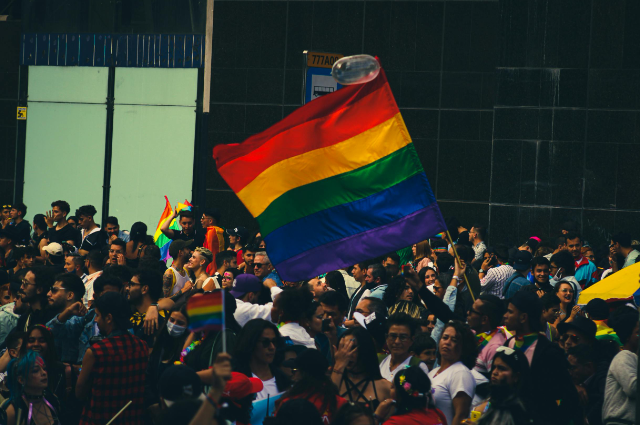
Around the globe, governments are increasingly identifying transgender people based on self-identity, abandoning intrusive medical procedures, and incorporating this identity into legal processes. It demonstrates the changing morals of our time: identity is a very personal matter, and it should be respected, not regulated.
At one time, India was ahead in spearheading this movement on an international scale. This can be traced to the groundbreaking decision made by the Supreme Court of India in the case of National Legal Services Authority v. Union of India.
Nonetheless, the revision of the Transgender Persons (Protection of Rights) Act in 2026 raises alarming concerns. While the international community is making progress towards recognizing autonomy and dignity in line with UN and WHO guidelines, it seems that India is reverting to bureaucratic intervention and verification regarding self-identity.
This article examines this shift in a global and human context, asking: when the world moves toward freedom and dignity, is India quietly stepping backward?
From Judicial Leadership to Legislative Uncertainty
NALSA’s ruling was more than just a landmark legal decision; it was a statement of principle. Transgender persons were acknowledged as equal citizens of India, entitled to identify themselves without undergoing medical verification or seeking any form of external validation. Identity was considered an inherent quality, not a subject for assessment or endorsement.
India seemed to be at an advanced stage compared to many countries that were yet to come to terms with the concept. Nevertheless, with the 2026 amendments, administrative requirements make recognition a difficult task. Identity, which was once recognized, is now open to scrutiny, creating a contradiction.
Practical instances have shown how human beings are affected by this change. For example, Nisha Kalra, a transgender woman in Delhi, had to go through several months of meetings with government officials to have her gender corrected in her legal records. During each meeting, she felt threatened and insecure, as if her whole existence was being questioned. Another instance involves Hijras from the Uttar Pradesh region who continue to be harassed even after the protections granted by NALSA. They are required to provide multiple forms of evidence when applying for ration cards or IDs.
Global Standards and the Principle of Self-Determination
Countries like Argentina, Ireland, and Malta have implemented gender recognition systems that permit self-declaration without any medical or bureaucratic obstacles. The Argentine Gender Identity Law of 2012, the Irish Gender Recognition Act of 2015, and the Maltese Gender Identity, Gender Expression, and Sex Characteristics Act of 2015 exemplify such legislation.
According to organizations like the United Nations, there should be equal access to legal recognition without coercion. The World Health Organization has also removed the classification of gender identity as a pathological condition, making it clear that transgender identity is not a disease.
In these nations, the legal system ensures respect for human dignity and independence, enabling citizens to access medical care, education, and employment without excessive screening processes. This global comparison highlights that India’s identification process does not conform to modern norms.
Verification, Human Dignity, and Psychological Impact
Reintroducing verification processes for transgender people creates significant ethical and psychological concerns. For transgender individuals, especially those presenting in ways not socially accepted, the requirement to verify their identity often leads to harassment and shame.
Studies and NGO reports, including surveys conducted by the Naz Foundation and Humsafar Trust, show that about 70–80% of the transgender population faces hurdles in accessing basic amenities because of administrative processes. These verification procedures negatively impact mental well-being, increasing levels of anxiety and depression.
To illustrate, in the case of Rina, a young trans woman from rural Bihar, she had to travel hundreds of kilometers to attend government hearings to correct her identity. Each visit involved fear, isolation, and public scrutiny. For Rina, the entire process was a violation of personal space and dignity.
Each verification requirement signals a deeper distrust—the assumption that self-identification is insufficient. This not only strips away respect but also reinforces exclusion, limiting access to education, employment, and healthcare.
Socio-Economic and Intersectional Dimensions
These procedures disproportionately impact those who are already marginalized, particularly transgender individuals who are feminine-presenting, rural, and economically disadvantaged.
Media representation further complicates the issue. By portraying transgender identities as subjects for verification, bureaucracy contributes to a hostile social environment. In contrast, global evidence shows that reducing bureaucratic barriers leads to improved socio-economic outcomes.
For example, in Argentina, self-identification laws have enabled thousands of transgender individuals to access healthcare, employment, and education more easily. This demonstrates that excessive bureaucracy is not only oppressive but also ineffective.
Legal, Constitutional, and Political Analysis
The tension between judicial progressiveness and legislative conservatism arises from complex socio-political and institutional dynamics. While legal systems aim to create order, identity recognition is deeply personal and subjective.
The 2026 provisions introducing checks and balances may reflect a cautious governmental approach, but they risk undermining autonomy and dignity. India’s Constitution guarantees equality and protection against discrimination under Articles 14 and 21. Additionally, international conventions endorsed by India emphasize the importance of self-identification.
The current legal framework, however, appears to contradict these principles to some extent.
The Question of Direction
Legal systems reflect societal values. Self-identification laws affirm the belief that individuals have authority over their own identity. Verification-based systems, on the other hand, imply conditional acceptance.
India’s earlier judicial approach emphasized freedom and dignity. The current legislative shift risks creating barriers instead.
The lived experiences of individuals like Nisha and Rina, supported by NGO data, highlight the human cost of bureaucratic verification. Global examples from Argentina, Malta, and Ireland demonstrate that self-identification frameworks promote dignity, inclusion, and psychological well-being.
In this context, the direction of the world toward dignity and freedom is clear. India now faces a critical choice: whether to uphold constitutional values and respect the dignity of its transgender community, or to revert to bureaucratic control.
Ultimately, this is not just a legal issue. It is a question of trust—whether a nation chooses to trust its people with their truth, or compel them to prove it.
References:
- https://indianexpress.com
- https://indianexpress.com
- https://indianexpress.com
- https://timesofindia.indiatimes.com
- https://m.economictimes.com
- https://timesofindia.indiatimes.com
- https://timesofindia.indiatimes.com
- https://www.onmanorama.com
- https://link.springer.com
- https://lawschoolpolicyreview.com
- https://www.icj.org
- https://www.icj.org