
However, there is a specific type of violence that does not receive any news coverage anymore. Not the one involving burning cars and bodies lying dead on the streets – that used to happen just once, in August 2017, when Gurmeet Ram Rahim Singh was found guilty of rape charges, and he incited his followers to kill at least 36 people within one day in the states of Haryana, Punjab, and Sirsa. The violence continues, but it is more subtle, institutionalised, and, in many ways, more harmful, because it is a case of watching a judicial system in action where power and justice negotiate with each other.
On May 26, 2026, Gurmeet Ram Rahim Singh was released from Sunaria Jail in Rohtak on 30 days' parole – his 16th parole since his trial in August 2017.
This means that in 16 occasions of being released from jail, this individual has stayed out of prison for an approximate total period of about 435 days, either through furloughs or paroles that have been granted to bring him back to Dera headquarters located in Sirsa. This implies almost one year of relative freedom, granted to a person who has been sentenced to 20 years of strict imprisonment due to rape.
These two ladies, who became victims of rape committed by this man, are actually his own disciples. The trust placed by them in their mentor not only included their faith but their bodies as well. These anonymous ladies who sent the letter in 2002 to the PM's office triggered a chain of actions that took another fifteen years before leading to a conviction. The names of these girls never appear in press reports, whether due to a lack of identity or voluntary silence on their part. The Dera Sacha Sauda, headed by Ram Rahim from his grandiose base in Sirsa, Haryana, is one of the strongest socio-religious organisations in North India. This organisation runs schools, hospitals, and its media network. Millions of people are said to follow the Dera Sacha Sauda organisation in the Indian states of Haryana, Punjab, Rajasthan, and others. In its most powerful phase, the sect operated not as a religion, but as an alternative state, with all the attributes of a welfare system, a system of internal justice, and the capability of violent response if needed. Ram Rahim, also known by his birth name Gurmeet Singh, born in 1967 in Rajasthan, was appointed the third Guru of the sect in 1990. He made music, acted in movies, wore increasingly elaborate clothes in the form of shiny tunics and jewelled sunglasses, and built an image that combined spirituality and Bollywood showmanship. His call to caste-free brotherhood was well received by millions of devotees who were members of low-caste groups or economically marginal communities in rural Haryana and Punjab. But the politicians who sought his blessing before every election to the State Assembly saw it differently.
The rape charge against him was made in 2017 following a long inquiry by the CBI based on an anonymous letter in the 1990s. On August 25, 2017, a special CBI court in Panchkula pronounced him guilty of the charges against him for his actions at the sect’s headquarters in Sirsa. The pronouncement of the verdict was far from silent. These led to the death of 36 people and injuries to 423 individuals as the mobs attacked the Dera followers. Government buildings and motor vehicles were destroyed, and hotels and stores were looted by the mobs. The rioters did not spare journalists as well, attacking them and seizing their recording devices. It is among the most violent acts ever committed against civilians in India during the last few decades. The scenes of OB vans burning and bloody scenes in Panchkula can never be forgotten. However, the cause behind these acts is conveniently forgotten.
Ram Rahim Singh was convicted of two consecutive ten-year sentences, totalling 20 years of rigorous imprisonment. In addition, he was also convicted for the murder of journalist Ramchandra Chhatrapati, who wrote an anonymous letter about the sexual exploitation of the Dera women. The journalist was shot dead near his residence in Sirsa in October 2002 and died after a month. Ram Rahim was found guilty in a trial court and was awarded life imprisonment. This is what 16 such parole releases would look like if arranged in the context of the electoral cycle. The granting of Ram Rahim's parole occurred before the Punjab Assembly election of 2022, prior to the Haryana Assembly election in 2024, and even prior to the Delhi Assembly election in early 2025, a trend that has been associated with political controversy in the past. In January 2025, his parole release occurred 30 days before the February 5 Delhi assembly election. In October 2024, his parole release occurred only days before the October 5 Haryana assembly election. In August 2024, he received parole for 21 days. Moreover, a three-week parole period was given to him starting on February 7, 2022, only 2 weeks before the Punjab assembly elections.
Coincidence is coincidence. But two coincidences are a pattern. 16 parole releases in an election-proximate manner at least four times is altogether something very different.
It has been continuously stated by the Government of Haryana that such parole releases have been done by "competent authorities" in terms of the Haryana Good Conduct Prisoners (Temporary Release) Act, 2022. The act states that prisoners can be released on parole for up to ten weeks in a year, while they can avail themselves of three weeks' furlough as well. Ram Rahim Singh has availed himself of these provisions to their maximum limits possible. The lawyers of the accused contend that this is an important statutory right which cannot be taken away from him, as, by denying it to him due to his prominence, they will be discriminating against him. The fact is that there is a particular situation in which this law operates. The scheduling of his paroles and furloughs was bound to raise eyebrows. However, since Dera Sacha Sauda is such an influential organisation and its leader, Ram Rahim Singh, has huge popularity among some sections of the population, political parties have avoided getting into the controversy. While the Congress wrote to the Election Commission before the upcoming state elections in Haryana in 2024 about the possible influence that Ram Rahim would exert on voters, as a popular spiritual guru, the request was never honoured. As per the May 2026 release, Ram Rahim has availed himself of all 10 weeks of parole quota allowed for the year 2026. Although it is a heinous crime, rape is not the only legal offence that has been committed by Ram Rahim. He was found guilty of murdering Ramchandra Chhatrapati, a reporter, and Ranjit Singh, a former Dera manager who was alleged to be the source of information contained in an anonymous letter accusing Ram Rahim of sexually abusing women.
However, both of these murder charges have been overturned in appeals cases. Specifically, on March 7, 2026, Ram Rahim was acquitted of charges of murdering Ramchandra Chhatrapati, a journalist, by the Punjab and Haryana High Court. The murder case against him occurred in 2019 when the judge handed down a sentence of life imprisonment. Additionally, in the Ranjit Singh murder case, which occurred in 2024, Ram Rahim was acquitted due to "sketchy and tainted" investigation results. According to Anshul Chhatrapati, the son of the murdered journalist, this decision is a major defeat, and he intends to seek further review of the matter at the Supreme Court level.
The acquittals are judgments passed by the court of law and have to be treated as such. Judges may acquit someone based on the lack of sufficient evidence for conviction, but that does not equate to proving one's innocence. Nonetheless, the combined effect of watching a person be acquitted of charges of rape sixteen times, followed by the reversal of his two murder convictions, shakes faith in the judicial process.
Ramchandra Chhatrapati was a journalist whose reports on Ram Rahim were deemed worth reading by the public. He was murdered in the line of duty, and the son has sought justice for almost two decades. The other three men who were convicted along with Ram Rahim for the killing of the journalist, with their convictions still standing, are currently serving time behind bars.
It may be well known that there is a politics of Indian religious sects, but it is rarely mentioned explicitly enough. DSS counts on the support of a voting constituency that clusters around some of the most fiercely contested districts in Haryana and Punjab: Sirsa, Ambala, Kurukshetra, and Hisar. Ram Rahim enjoys political clout in the border regions of Haryana and Punjab, and his release in the Chhatrapati case was viewed by the BJP as an electoral benefit because his followers are politically influential.
This is the hidden mechanism behind the paroles. They cannot be described in terms of any sort of crass bargain or deal, for which no evidence of an exchange of favours is available. Yet, Indian elections make generous use of such gestures of respect and goodwill shown to important figures whose followers can infer their political preferences from such gestures. When a sexual offender is given a parole right before a state election campaign, his message to his followers is clear enough: he is released; the party that arranged it must be supported.
The intersection of celebrity godmanship and electoral politics in India is one that has a long-established tradition. Political leaders, regardless of their party (be it the Congress, BJP or others) and their ideological leanings, always make efforts to secure the support of religious leaders with huge followings. The case of Ram Rahim is exceptional in this sense only because it highlights the magnitude of this contradiction: he isn't merely a religious leader with dubious moral principles; he is also a convicted rapist. The political reasoning behind his release raises difficult questions regarding what value his voters' votes carry compared to the dignity and security of the women who were victims of sexual abuse. But running through all of this is one thing that rarely gets said within the framework of legality and politics: how does it feel like for a victim of sexual abuse to witness her rapist being released from jail yet again, this being the sixteenth time so far?
The conviction rate of India in rape cases stands pathetically low. According to figures from the National Crime Records Bureau, thousands of rape cases are filed each year, but the trial process takes ages, there is improper handling of evidence, and victims get re-traumatised during the course of legal proceedings. The women in the case of Ram Rahim were one of those exceptional cases where the perpetrator was convicted.
The sentence delivered was twenty years, and yet the man lives a life of privilege, taking police escorts regularly to his ashram, while the women who stood up to him must be living with the consequences of their brave actions.
With each instance of parole, an unintended message is being sent out. It states that your security from your oppressor will depend upon administrative ease. It suggests that what was done to you does not matter as much as the politics that follow it.
The laws in India concerning parole were not made to be discriminatory. The laws through which Ram Rahim is repeatedly paroled exist to help rehabilitate the individual. However, the fact that laws operate within institutional settings means that those who are in control of the institution can abuse their power. For instance, in February 2024, the Punjab and Haryana High Court instructed the Haryana government that Ram Rahim could not be released on parole without first obtaining the court's approval, yet by August 2024, the court had ruled that temporary release from jail would be decided by the appropriate state authorities.
The more pertinent question to ask, however, is whether or not India has a category of criminal whose crime is not what is relevant but rather the number of people he can influence politically. From an analysis of the case studies presented here, the answer seems to be affirmative.
It has not been Ram Rahim alone who has taken advantage of the flexibility built into India’s parole and remission system. The combination of spiritual power, caste cohesion, and political protection has resulted in consequences that can only be inconceivable to ordinary prisoners. There is no legal provision for a two-class system. But it exists anyway.
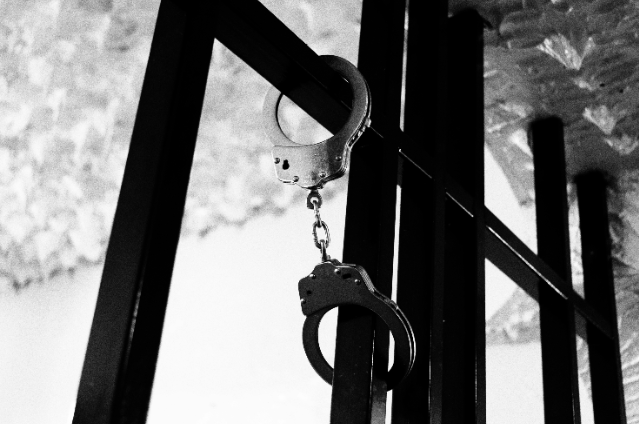
On the morning of May 26, 2026, a rapist, a prisoner in Indian jurisprudence, will be escorted by police to his religious stronghold to serve 30 days there. Virtual addresses will be sent to his followers. His lawyers will start preparing another case for an application. His nameless victims will see the news, if they choose to, and realise their place in the Indian justice system once more.
After 30 days, the gate will be opened and let him out. Then, a few months later, the process of filing an application will begin all over again. Competent authorities will take a look at it. And the gate will open again.
References
- Republic World - 16 Paroles, 435 Days Out: Rape-Convict Gurmeet Ram Rahim Walks Out Of Jail Once Again (May 26, 2026): https://www.republicworld.com
- The Logical Indian - Gurmeet Ram Rahim Granted 30-Day Parole, Marks 16th Release Since 2017 Conviction (May 26, 2026): https://thelogicalindian.com
- Business Standard - Jailed Dera Sacha Sauda chief Gurmeet Ram Rahim gets 30-day parole (May 26, 2026): https://www.business-standard.com
- The Week - Dera chief Ram Rahim Singh walks out of jail on parole for 16th time since conviction (May 26, 2026): https://www.theweek.in
- Free Press Journal - Gurmeet Ram Rahim's 15th Parole: When Justice Begins To Look Like Favouritism (January 2026): https://www.freepressjournal.in
- The Tribune India - Ram Rahim acquittal: Is it an advantage for the BJP ahead of Haryana, Punjab elections? (March 7, 2026): https://www.tribuneindia.com
- Newsgramcom - "We Will Continue Our Fight": Anshul Chhatrapati Responds To Gurmeet Ram Rahim Acquittal (March 7, 2026): https://www.newsgram.com
- Deccan Herald - On 15th parole, Gurmeet Ram Rahim walks out of prison to stay at Sirsa Dera (January 2026): https://www.deccanherald.com
- Deccan Herald - 5 years after Dera-linked violence in Panchkula, none convicted so far (2022): https://www.tribuneindia.com
- Al Jazeera - Ram Rahim Singh's supporters riot after rape conviction (August 25, 2017): https://www.aljazeera.com