
The morning of May 24, 2026, was everything the bridegroom dreamed of in preparation for his wedding. Men from various parts of the state of Madhya Pradesh rushed to Mata Tehri temple at Dewas donned in new sherwanis, accompanied by their families with sweets and gift boxes. It was the dream day that some had waited for years to happen, after making many sacrifices to register for this occasion. Others had informed their relatives and friends about starting a new life on this day. At ten p.m., however, they found themselves inside a police station.
The brides were said to be coming from Indore, but there was a delay. And then more delays. And then the phones of the organisers remained silent, one by one, until there were no numbers left ringing anymore. The day that was supposed to make the lives of 42 families happier than ever before turned into a whole other story – one of disappointment after hours of false hope when the reality struck that all the photos, all the promises, all the meticulously planned details of the weddings had been fake all along.
The Dewas fake wedding scheme can be looked at from the point of view of deceitful behaviour. However, it is also a story that shows how the peculiar state of mind makes it all possible, giving a map of the social forces that created an environment for the fraudsters to exploit.
According to the police, the plan was based on the principle of trust which had been painstakingly established over weeks. The accused Mukesh Bairagi and his wife, Sunita Das Bairagi, are said to have formed a system which found out unmarried men from rural and semi-urban areas, men who, due to some reason, were unable to marry through normal methods. Four people have been charged in this case while two more are missing.
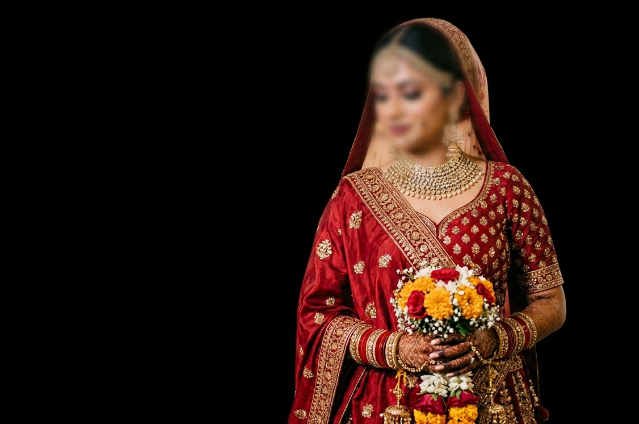
The accused used trust by making calls, WhatsApp messages, and video calls. In many cases, detailed profiles, photos, and even wedding arrangements were shown to the victims to give the impression of an authentic plan. The photos were of imaginary women.
Further investigation revealed that the pictures had been copied from social networking sites of models, strangers, women who had no clue that their photos were going to be used to trick the grooms.
The crux of the entire confidence game was in the establishment behind it. The victims were led to believe that the brides hailed from the Matru Chhaya Ashram, located in Indore, an orphanage. It solved, in one go, the glaring query that popped up regarding where the women’s relatives and families were.
Furthermore, there was a promise made by the organisers to offer dowry goods as well, which added another dimension of tangible attraction to what was already an emotional offer.
Rahul, one of the victims who came from Harniyakalan village, spoke about his ordeal in great detail. Every family was to pay Rs 25,000 for the registration fee. Moreover, they were requested to reach Dewas on the day prior to the function and dress up in ordinary clothes, as the groom's clothes as well as the rituals were supposed to be taken care of at the venue itself. They were not even allowed to put haldi or mehendi, as everything was going to happen there itself. Such directions, while convenient, served another purpose altogether: that of keeping the victims confused and ignorant.
On the actual day, the grooms and their families were assembled at a place where decorations and other arrangements had already been done. The initial perception by the families was that the whole exercise was legitimate because the people involved had managed to create a scenario similar to that of a marriage ceremony. For many hours, they kept telling the participants that the brides were coming, but for some formalities, there was a slight delay. It went on like that throughout the day until evening, when the crowd got irritated, and the police came in for intervention. A total of more than Rs 10 lakh is said to have been swindled out of this fraud.
To comprehend how these families were so misled, one needs to realize the marriage market that these families had to cope with, which has become, indeed, a reality for many Indian men. The distorted sex ratio due to son preference and sex-selective abortions in India has resulted in what demographers refer to as a "marriage squeeze". Using data from India's 2011 Census, researchers found that eleven per cent of males aged 15 to 54 years are unable to get married because of lack of brides, roughly 39 million men. Imbalance exists nationally and is not geographically limited to any particular region. Punjab reports the largest imbalance of 33 per cent; yet, states perceived as demographically progressive also report large imbalances: Kerala has an imbalance of 18 percent, West Bengal 14 per cent, Karnataka and Tamil Nadu 11 per cent.
This happens because of structural reasons as well. Declining fertility rates have resulted in smaller female generations that cannot absorb larger male generations formed due to high fertility in the previous generation. Even with a balanced sex ratio at birth, fertility reduction and later marriage age make for a very poor marriage market balance. In its report in 2016, the United Nations estimated a 7 per cent surplus of marriageable males in India, which, according to projections, may go up to 16 per cent by 2040.
This problem gets worse for poorer males in rural and semi-urban areas. Men in regions with male surpluses find it harder to find wives locally, and this is exacerbated by conditions of poverty and joblessness prevailing in underdeveloped regions. For males residing in villages with rugged terrain, scarcity of water, difficult weather, and limited economic prospects, there is an additional marriage squeeze: not only does there not exist enough local women to marry, but the marriage market also offers little demand for them.
Social implications of such a disparity can be quite grave. Being single in rural India has a social taboo that reaches far beyond an individual but affects the whole family. Women, on the other hand, have shown increased autonomy in choosing their spouses and living arrangements. The prospect of migrating to urban areas and having higher educational and career ambitions makes the marriage market dynamics dramatically different. Men from rural areas, especially those poorly educated and impoverished, end up being on the lowest rung of a ladder which has become increasingly hierarchical despite dwindling supply. This is what makes them an easy target for those behind such scams.
The Dewas scandal is unusual because forty-two families have been defrauded at the same time; however, it does not represent an exception from the perspective of its type of crime. Marital fraud is considered to be one of the most rapidly growing types of financial crime in India. It has been caused by the development of technologies, which have made matchmaking easier and faster.
According to the National Crime Records Bureau, by 2024, India had become the third country by the number of newly established romance scams and accounted for twelve per cent of such cases all around the globe. Moreover, there were over 62,000 cases of cybercrime associated with marriage frauds with the total losses of approximately Rs 14,200 crore, which is 900 per cent compared to the previous year. More than 1,500 cases of marital fraud were registered in 2022. Furthermore, many other cases have not been reported due to the victims' shame.
However, there are no specific laws regarding online marriage fraud as such, and such practices are considered to be a combination of cheating, impersonation, forgery, and, at times, extortion. This creates complications for law enforcement agencies in investigating such crimes and bringing the offenders to justice. Social stigma stops the victims from reporting the matter, especially for women whose honour is also at stake.
In terms of geography, these scams have spread along with internet access. The fraudsters usually belong to places like Jharkhand, certain regions of Haryana, and Uttar Pradesh. Some have even emerged from call centres across the border. Multiple fake accounts are created with stolen images, professional identities, and caste or community filters to match the victims’ profiles.
And the value of exactly what was lost by these families on that day in Dewas cannot be captured in a mere accounting of financial losses. This was not only about closing a deal; rather, it was about being there to experience one of the most significant events in any family’s history.
It had been made clear to the grooms that they should not carry out their wedding preparations at home, and so, for most of them, their community saw them go without the customary grandeur of the marriage procession. They came bearing the emotional burden of several months’, if not years', long search process. They came, maybe, even wondering whether they would ever find a bride. It was during their most vulnerable state that the scammers managed to locate them.
The process of waiting, from morning hopefulness until the eventual unravelling by ten o'clock, should be explored in depth. The whole day, there was always someone from the organizers to assure them of various delays in order to keep them hopeful.
It prolonged the embarrassment as much as the deception itself. By the time the crowd became upset and the police arrived on the scene, these people had already been wearing wedding clothing all day long, waiting for strangers whose existence was entirely fictional.
In studies on online marriage scams conducted by researchers, two common factors are present whenever victims are involved in this kind of crime. Victims suffer from a complete lack of trust in the process of finding love online due to being scammed once, whether this trust be in websites or even the people they are matched with.
To dismiss the whole issue of the Dewas scam as merely a law-and-order issue and believe that once Mukesh and Sunita Das Bairagi have been punished, then the problem would be sorted is naïve and ignorant of the circumstances that made this scam happen and that are going to repeat themselves in the years to come. If there is a lack of girls as children, there will eventually be a lack of girls available for marriage in future decades.
The 2011 Census highlighted a Child Sex Ratio (CSR) of only 914, which is the worst CSR since India’s independence. While the latest survey conducted by the National Family Health Survey (NFHS-5) highlights that the sex ratio at birth has shown an improvement, the effects of this gender ratio discrepancy will take a long time to correct themselves.
The commercialisation of dating through matrimonial sites, on one hand, and fraudsters on the other, has made the process of seeking a spouse more transactional than before. There are costs involved in everything from registering and verifying profiles to becoming members. Those who cannot pay these fees, or whose repeated attempts have not yielded any results in finding mates through such means, end up resorting to unofficial methods and shady agents. And this seems to have been exactly what the Bairagis were involved in – providing what the legal market couldn’t deliver, at a price.
There is a special vulnerability in the way in which they were cheated out of their money. They sought neither status nor money. They had no unrealistic expectations. They were just ordinary men from ordinary families, hoping like any other men to build a home for themselves and start a family. To sell such an aspiration for a profit, and thus make people lose all hope of ever being fulfilled in such a manner, reflects just how deep the commercialisation of love can go.
Given that looking for an appropriate match might take several years out of the lives of some people and also cost quite a bit of money, one wonders what kind of social system would be able to generate such desperation that it leads forty-two families to come from all over the state for a chance to marry girls they've never even met before. And this is certainly not because those forty-two families were more naive than others – it is because the options they had ran dry and the circumstances surrounding them have become desperate indeed.
The fraudsters could not possibly have created desperation themselves; they simply took advantage of the desperation that already existed, the desperation which came as a result of certain structural contradictions inherent in the Indian marriage market and the stigma associated with having an unmarried son, not to mention the failure of authorities and civil society organisations to cope with a problem that will only worsen in the future.
If the wish for inclusion - belongingness to a loved one, to a family, to the routine of home - can be commodified into something criminal, it is necessary to consider what such an outcome indicates of the kind of society that allows for such circumstances to exist. The answer to that lies in the forty-two grooms who waited in a temple in Dewas on May 24.
REFERENCES
- "Couple Held In Mass Wedding Fraud After 42 Grooms Waited For Brides Who Never Came." NewsX, May 27, 2026.
- "Mass Wedding Scam in Madhya Pradesh: 42 'Grooms' Show Up to Get Married After Being Shown Fake Brides." The Week, May 26, 2026.
- "Mass Wedding Scam in Madhya Pradesh Leaves Families Humiliated and Cheated." The420.in, May 2026.
- "42 Grooms in India Allegedly Duped in Mass Wedding Scam." Mothership.SG, May 2026.
- "The Matrimonial Cyber Fraud in India: Legal Framework and Emerging Trends." Record of Law, December 2025.
- "Online Matrimonial Frauds: A New Frontier for Family Law in India." Lawctopus, August 2025.
- "Sex Ratio Patterns in the Indian Population - A Fresh Exploration." arXiv, February 2026.
- "India's Sex Ratio at Birth Begins to Normalize." Pew Research Center, August 2022.
- "Potential (Mis)Match?: Marriage Markets Amidst Socio-Demographic Change in India, 2005–2050." PMC/NCBI, 2015.
- "Skewed Sex Ratio, Male Marriage Squeeze and Cross-Cultural Marriages." Canadian Journal of Tropical Geography.
- "Inside the Dark Reality of Romance and Matrimonial Scams in India." The Theatis, January 2026.
- National Crime Records Bureau (NCRB). Crime in India Report 2023. Ministry of Home Affairs, Government of India.
- "Rajasthan: 23-Year-Old Woman Arrested for Duping 25 Men in Marriage Scam." Deccan Herald, May 2026.
- "Fake Bride Family Exposed as Police Bust Wedding Racket in Dabwali." Tribune India