
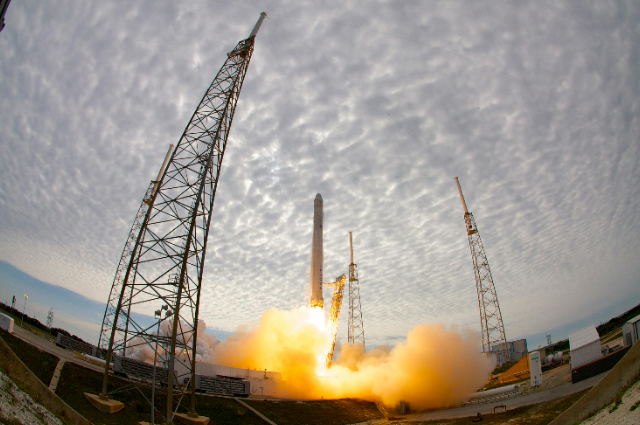
For the first time in over half a century, the moon is no longer just a distant light in the sky; it is a destination once again. On April 1, 2026, NASA’s Space Launch System (SLS) roared to life, propelling the Artemis II mission into the history books. While the mission officially concluded with a successful splashdown on April 10, the data and imagery gathered during its ten-day voyage are currently reshaping our understanding of deep-space survival.
We break down the technical precision, the human element, and the groundbreaking science of the mission that has finally returned humanity to the lunar vicinity.
The Crew: A New Face for Lunar Exploration
Unlike the Apollo era, which was ch by a specific demographic of test pilots, Artemis II reflects a global and inclusive vision of exploration. The four-person crew represents a series of historic firsts:
- Commander Reid Wiseman (NASA): A veteran of the International Space Station, leading the first crewed lunar mission of the 21st century.
- Pilot Victor Glover (NASA): The first person of color to travel beyond low Earth orbit.
- Mission Specialist Christina Koch (NASA): The first woman to embark on a lunar mission, bringing her record-breaking experience in long-duration spaceflight.
- Mission Specialist Jeremy Hansen (CSA): The first non-American (Canadian) to fly to the Moon, marking a new era of international lunar partnership.
"Integrity" in Motion: The Spacecraft and Hardware
The mission served as the ultimate stress test for the Orion spacecraft, aptly named "Integrity" by the crew. One of the mission's first major milestones was the flawless deployment of its four solar array wings. Extending from the European Service Module, these wings gave Orion a wingspan of roughly 63 feet, providing the vital power needed for deep-space life support.
The Space Launch System (SLS), the world’s most powerful rocket, performed with clinical accuracy, placing Orion into a high Earth orbit before the crew executed the pivotal Translunar Injection (TLI) burn on April 2. This six-minute firing of the service module’s engine set the crew on a path toward the Moon at speeds exceeding 20,000 mph.
The Slingshot: Navigation and the Far Side
Artemis II utilized a "free-return trajectory," a brilliant piece of orbital mechanics that uses the Moon's gravity as a natural slingshot. On April 6, 2026, the crew performed their lunar flyby. During this period, the astronauts became the first humans since 1972 to look down upon the lunar surface."To lay eyes on the lunar far side, not through a robotic lens but with human sight, is to realise that the Moon is no longer a 'them' or 'it', it is an 'us.' We are finally back." ~Reflections from the Artemis II Flight Deck.
While passing the Moon, the crew reached a maximum distance of over 250,000 miles from Earth, breaking the distance record previously held by the Apollo 13 mission.
AVATAR: The Science of "Humanity on a Chip"
Artemis II wasn't just a flight test; it was a laboratory. The AVATAR (A Virtual Astronaut Tissue Analog Response) investigation is perhaps the most sophisticated biological study ever conducted in deep space. Instead of just testing the astronauts' vitals, researchers used organ-on-a-chip devices,tiny platforms containing living human cells. These "mini-organs" were exposed to the same intense radiation and microgravity as the crew. By comparing these chips to identical samples on Earth, scientists are now analyzing how deep-space environments affect bone marrow and organ function at a cellular level, providing the "blueprint" for future missions to Mars.
Legacy: The First Step Toward Artemis III
The successful return and splashdown of Artemis II in the Pacific Ocean on April 10, 2026, has cleared the final technical hurdle for Artemis III,the mission that will return humans to the lunar surface.
By validating the life support systems, the manual piloting capabilities of Orion, and the resilience of the SLS, Artemis II has moved the Moon from the realm of "memory" back into the realm of "reality." The "conspiracy of silence" regarding our lunar absence has finally been broken, replaced by the high-definition data of a crew that went further into the black than any humans in history.
References
- Carnell, L. (2026, April 9). The Artemis II mission included a Harvard space medicine experiment. Harvard Magazine. https://www.harvardmagazine.com
- Howells, K. (2026, April 7). The best images from Artemis II. The Planetary Society. https://www.planetary.org
- National Aeronautics and Space Administration. (2026, April 10). NASA welcomes record-setting Artemis II moonfarers back to Earth. NASA News Release. https://www.nasa.gov
- National Aeronautics and Space Administration. (2026, April 20). NASA is on track for future missions with initial Artemis II assessments. Artemis Blog. https://www.nasa.gov
- Wikipedia contributors. (2026, April 22). Artemis II. In Wikipedia, The Free Encyclopedia. https://en.wikipedia.org