
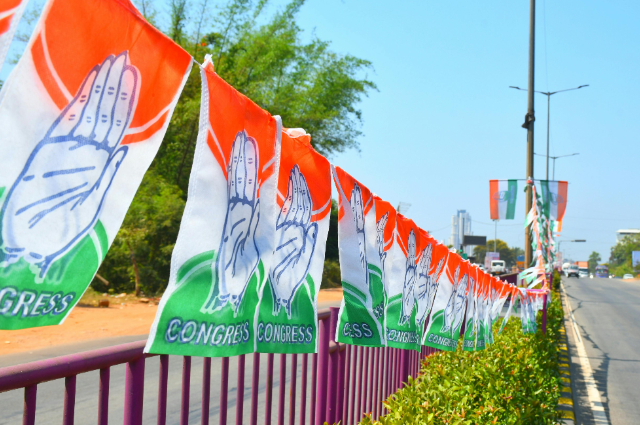
A highly populated region with more than 100 million people as residents, West Bengal has been one of India's most politically charged states for decades. It has a long and a bit of dramatic history regulated by Mamata Banerjee, president of Trinamool congress (TMC).
Two major candidates were qualified for 2026 election in West Bengal; either Mamata Banerjee would secure an unprecedented fourth consecutive term or the Bharatiya Janata Party would write history by winning the state for the very first time. However, the outcome took a drastic turn with the win of pm Modi's BJP , perhaps the biggest shock of West Bengal history till yet. The party is anticipated to secure more than half the seats in a state that has traditionally resisted its influence, causing a massive blow to Mamata Banerjee's (TMC), which has ruled the state since 2011.
EARLIER THE SIR CONTROVERSY; THE ELIMINATION OF 90 LAKH VOTERS
An enormous list of voters were removed from the right to vote in the election held in West Bengal, despite the presence of a required valid document. 9 million voters, which covers about 12% of west bengals 76 million electorate, were deleted from the 2026 rolls as part of the special intensive revision sir conspiracy. Approximately more than 6 million names were categorised as absentee or perished, and the fate of the other 2.7 million electors remained undecided before the tribunal. The deletion of names became an immense political breaking point.
India's Election Commission states that the revision aims to remove duplicate or outdated voter records and include legitimate voters. However, this process has been controversial and has faced legal disputes since it was first implemented in Bihar last year. The chief minister, Gynesh Kumar exclaimed that this exercise was to ensure a pure electoral roll with carefully selected voters, and finally, the unfit and disqualified voters were denied.
The friction was therefore flamed by the statement of prime minister, narendra modi, who proclaimed that the purpose of this cutout was to pinpoint the questionable identities that were termed as illegal Bangladeshi infiltrators. It is said by TMC that the label was to refer to Muslims, especially; however, many Hindu voters also faced the denial to vote.
The campaign was influenced by several important and divisive issues. One major topic was citizenship and identity, with the Citizenship Amendment Act (CAA) being a key concern, especially in areas with many Matua and refugee communities. The BJP promised to speed up the processing of CAA applications if it formed the government in Bengal. Another focus was on stopping illegal immigration, with the BJP emphasising border security and undocumented migration, particularly in border districts where this message was very popular. There was also strong dissatisfaction with the current government after 15 years of TMC rule, mainly due to concerns about jobs, corruption, governance, and law and order. However, these issues were closely linked with debates about citizenship and the SIR rather than being separate. Lastly, women’s safety became a central issue in the campaign following several high-profile incidents in 2024 and 2025.
BJP made a statement during the campaign period that:
"We will defeat Biman Banerjee (Speaker) and mamata Banejeee and throw all TMC'S Muslim MLAs out of the assembly. We will dump them on that road." and later announced that this government and its police are communal, its muslim league 2. The Hindus of Bengal will uproot this government.
During the Hindu yatra in Murshidabad, Adhikari also accused Mamata Banerjee of protecting Bangladeshi Muslims and infiltrators, and declared Hindus are being tortured in Bengal.
TMC spokesperson Kunal Ghosh described the comments as highly offensive, unlawful, and indicative of a narrow mindset. He emphasised that singling out elected officials because of their religion is unconstitutional, inappropriate, and meant to incite tension.
TMC respond during the campaign that Suvendu Adhikari gives a provocative statement. He is giving statements in the name of religion after being rejected by the public. The main issue in West Bengal is development. The TMC will form the government for the fourth time with a majority, said Kunal Ghosh, TMC's spokesperson.
Voting occurred in two phases on 23 and 29 April 2026 across all 294 assembly constituencies. The Election Commission announced the schedule on 15 March. BJP released 144 candidates on 16 March, and TMC released 291 candidates on 17 March.
Due to past election violence in Bengal, over 350,000 security personnel were deployed state-wide, including the National Investigation Agency (NIA) for the first time in any Indian state election. Central Armed Police Forces were stationed in all sensitive areas.
Allegations of Electronic Voting Machine (EVM) tampering surfaced during voting, with reports of opposition candidates' buttons being blocked with tape, gum, and ink. After investigation, the Election Commission ordered repolls in 15 booths—11 in Magrahat Paschim and 4 in Diamond Harbour—on 2 May.
Despite heavy security, localised violence occurred, especially in Howrah and Hooghly districts, where CRPF personnel used baton charges to control clashing supporters. The election recorded a voter turnout of the highest in the history of West Bengal, 92.93% and surpassed the landmark 2011 election, which recorded 84%. Furthermore, it was 30 lakh more than the 2011 assembly election, casting over 6.3 crore voters.
The results were declared on 4 May 2026 for 293 of 294 seats, in which the BJP won 206-207 seats and easily crossed the 148-seat majority mark and made it the first right-wing party to win in West Bengal since the state election began in 19937. On the other hand, TMC won 215 seats in 2021 and was reduced to a fraction of its earlier strength. The Congress CPI and other parties were largely removed from the picture.
The most closely watched contest was the showdown between Suvendu Adhikari and Mamata Banerjee in Bhabanipur, a rematch of their 2021 face-off in Nandigram. Once again, Adhikari emerged victorious, defeating Banerjee by a margin of nearly 10,000 votes. This defeat was more than just a personal setback for Mamata; it represented a significant symbolic blow to the TMC's political standing.
Mamata Banerjee refused to step down from the seat of chief minister despite losing her own seat and her party in the assembly. It was remarkable in the history of Indian politics and called the BJP's win 'an immoral victory'.
"I will not resign. I did not lose. The election verdict is not a people's mandate; it is a conspiracy. The commission is the main villain of the 20266 West Bengal elections. More than 100 seats were looted by the BJP". –Mamata Banerjee.
Under the Indian constitution, the state government could demand Banerjee's resignation or wait for her term to expire, which was set for 77 May 20266, after which the newly elected legislator would be sworn in, and the government formation process would begin.
Post-election violence occurred in West Bengal shortly after the result was declared, causing at least four political workers' deaths and following days, their top target was Muslim-owned businesses, a mosque was desecrated, and scores of party offices were burned or ransacked across the state. The police reported that clashes erupted between the rival party supporters in the state capital, Kolkata, and other West Bengal districts. TMC said that two of their workers were beaten to death and accused bjp for cause of death and for the damage to the infrastructure, while warning the BJP to cease the hooliganism act that could expand far beyond political matters to personal vendettas, threatening the safety and harmony of the entire community. Bulldozers were allegedly used to demolish structures, including the TMC New Market Party Office. This incident caused panic among local traders, many of whom shut their shops abruptly.
TMC leader Derek O'Brien claimed the bulldozers had been bought with police permission. Mahua Moita described the scenes of Bengal revealed in Parivartan. Some residents disputed the allegation, saying the demolished structure was an illegal construction. Another innocent, Abir Sheikh, a member of the TMC anchal community, was unfortunately slashed to death during the violent confrontation in Birbhum Nanoor.
In Domkal, CPI(M) worker Safikul Islam was shot and injured by unidentified attackers while returning home.
In North 24 Parganas’ Sandeshkhali area, three police officers, including Officer-in-Charge Bharat Prasun Kar, were wounded during a late-night patrol after a gunfire exchange. Two central force personnel were also hurt. Security forces launched extensive raids to find the assailants.
In Asansol and nearby industrial areas like Raniganj and Burnpur, several TMC offices were set on fire. Clashes between supporters near counting centres in Dinhata led to vandalism and property damage.
On counting days, a TMC office in Jamuria was also torched while early results favoured the BJP.
At Jadavpur University, saffron flags and 'Jai Shri Ram' slogans appeared overnight. BJP-backed staff called for a 'Naxal-free' campus and demanded a permanent police presence.
TMC leaders claimed that meat shops and Muslim-owned businesses were targeted during the violence, with reports of a mosque being vandalised. This mix of post-election celebrations and communal attacks attracted significant national and international concern. In response, Chief Election Commissioner Gyanesh Kumar issued a strict 'zero tolerance' order, directing West Bengal officials to prevent further violence and hold district authorities personally accountable for any deaths. The Election Commission closely monitored the situation from Delhi and deployed additional security forces to the worst-hit areas.
They warned them to cease the hooliganism act that could expand far beyond political matters to personal vendettas, threatening the safety and harmony of the entire community.
THE MURDER OF CHANDRANATH RATH
He was the personal assistant and executive assistant to Suvendu Adhikari, the BJP's leader of opposition in the West Bengal assembly and frontrunner to become Bengal's next chief minister.
Two days after the BJP's massive victory, Chandranath Rath was put to death in the Doharia area of Madhyamgram, in the northwestern fringe of Kolkata, North 24 Parganas. The assassins appeared when Chandranath was just 15 to 20 steps away from his house entrance and fired four bullets in the head, abdomen and chest. He was on the spot while his driver also sustained multiple bullet injuries and was rushed to SSKM hospital in Kolkata in a serious condition.
TMC's Response
In a carefully worded statement, the TMC condemned the killing while simultaneously using it to draw attention to what it called BJP-orchestrated violence against its own workers:
"We strongly condemn the brutal murder of Chandranath Rath in Madhyamgram tonight, along with the killing of three other TMC workers in incidents of post-poll violence allegedly carried out by BJP-backed miscreants over the last three days. We demand the strongest possible action, including a court-monitored CBI investigation. Violence and political killings have no place in a democracy." — TMC official statement.
Planned and Brutal Murder
The murder shocked many not only because of its brutality but also due to the clear evidence of planning. Senior police officials revealed to the media that the attack was allegedly planned over at least three days:
"The conspiracy was hatched over the last three days. It was planned and rehearsed. Chandranath Rath was followed, his schedule was closely monitored, and his movements were marked." — Senior police official, News18.
Investigators noted the attackers chose a narrow, congested lane instead of a nearby highway, indicating detailed knowledge of the area and careful rehearsal. The getaway car had fake registration plates and possible chassis irregularities. CCTV footage was collected from multiple locations along Rath’s route.
Timing: Two Days Before Government Swearing-In
The killing occurred just two days before the swearing-in of Bengal’s new BJP government, an event expected to be attended by Prime Minister Narendra Modi and Union Home Minister Amit Shah. Investigators suspect the motive was to destabilise Bengal and disrupt the power transition by inciting political unrest.
In 2013, Adhikari’s former personal assistant, Pradip Jha, was found dead in Kolkata. At that time, Adhikari was still with the TMC. The recent killing of a second personal assistant after Adhikari’s party victory has unsettled Bengal’s political circles.
Reactions to the Murder
Suvendu Adhikari
Adhikari visited the hospital with Rath’s wife and BJP Union Minister Sukanta Majumdar. He pledged to cover all medical expenses and support Rath’s family.
"Chandranath Rath was murdered in cold blood after several days of surveillance and careful planning." — Suvendu Adhikari.
This was expected. How low can they get? The TMC stooped so low that they killed Suvendu Adhikari's PA. Earlier, they attacked our leaders, including Suvendu, Dilip Ghosh and others. This is a very unfortunate incident. Even his mother is part of our party." — Samik Bhattacharya, Bengal BJP Chief.
Rahul Gandhi from Congress said, 'Assam and Bengal are clear cases of the election being stolen by the BJP with the support of the EC. More than 100 seats were stolen in Bengal. We have seen this playbook before: Madhya Pradesh. Haryana. Maharashtra. Lok Sabha 2024.'
Akhilesh Yadav, former Chief Minister of Uttar Pradesh, called the BJP's win 'a dark day for democracy.' Hemant Soren, Tejashwi Yadav, and Sonia Gandhi all reportedly called Mamata Banerjee to express solidarity after the results.
From the BJP, Suvendu Adhikari stated, 'With a heart overflowing with humility and profound gratitude, I bow before the Janata-Janardan of West Bengal. Today's historic mandate is not just a victory for the BJP — it is a resounding triumph for every citizen, every Sanatani who dreamt of a Sonar Bangla.' He also criticised the outgoing TMC government as 'a corrupt, family-oriented party with no ideology.'
International media outlets such as Al Jazeera, TRT World, and NPR covered the elections extensively, framing the BJP's win as 'a major expansion of Modi's political dominance beyond the Hindi-speaking heartland of north India into the culturally distinct Bengali-speaking east' and raised questions about the implications for Indian democracy given the scale of post-poll violence and Mamata Banerjee's refusal to recognise the result.
WHAT HAPPENS NEXT
The transfer of power in West Bengal has reached a constitutionally unique situation. Mamata Banerjee’s tenure as Chief Minister is set to end on May 7, 2026. At this juncture, the Governor of West Bengal faces two constitutional choices: either ask for her immediate resignation or wait until her term officially concludes before inviting the BJP to form the government and appoint a Chief Minister.
Suvendu Adhikari is widely seen as the leading candidate for the Chief Minister position, having defeated Banerjee twice in direct electoral battles — once in Nandigram in 2021 and again in Bhabanipur in 2026. The new government’s oath-taking ceremony, which was planned to include Prime Minister Narendra Modi and Home Minister Amit Shah, was anticipated to take place within days of this update.
Meanwhile, a re-election in the Falta constituency is scheduled for May 21, 2026, with results expected on May 24. Security concerns remain high throughout the state. The ongoing CBI probe into the murder of Chandranath Rath is expected to become a major political issue in the coming weeks.
West Bengal has experienced political upheavals before — the Left Front was ousted in 2011 after 34 years in power, paving the way for Mamata Banerjee. Now, 15 years later, another major political shift has taken place. The key questions ahead are whether the BJP can effectively govern a state as complex, volatile, and culturally unique as West Bengal, and whether this transition can occur without further violence.
References: