
What is smokeless tobacco?
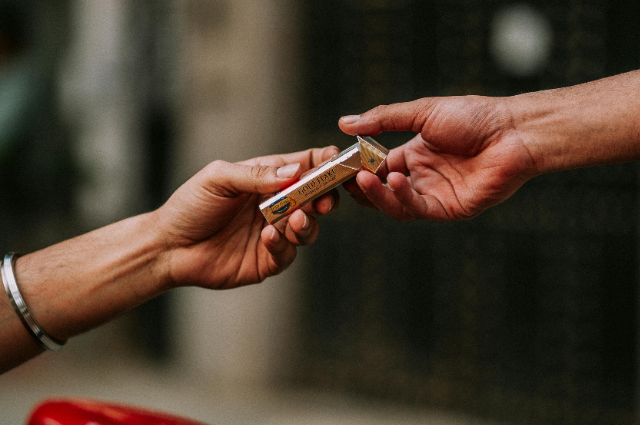
Gukta is an inexpensive, smokeless, addictive tobacco product rich in nicotine. It is a blend of crushed areca nut (betel nut), tobacco, slaked lime, paraffin, and flavourings. South asians are widely familiar wṄṄith this chewing tobacco used as a foodstuff in rural areas simply by placing a pinch between their cheeks and gums. The manufactured gutka targets a huge audience. Smokeless tobacco includes khaini, gutkha, betel quid with tobacco and zarda. Not to mention, the consistent consumption has been shown conclusively to cause serious life-threatening diseases such as widespread oral, oesophageal, and stomach cancers, along with high rates of cardiovascular diseases and oral submucous fibrosis.
India is the world's second-largest producer (approx. 800–1037 million kg annually) and the second-largest consumer of tobacco as well. A variety of tobacco products are available at very low prices in the country. The bidi industry relies on approximately 4.9 million workers, about 90% of whom are women and children.
Gutkha saw a six-fold increase in rural household consumption over the last twelve years. Despite the fact that gutkha has been officially banned in most states since 2012.
Authorities believed the banning of this masala would stop its usage on a large scale, but it is just one piece of the puzzle because it appeared more difficult than they had deemed. Likewise, the working paper recommends several policy interventions, including stronger taxation on tobacco products, stricter enforcement against illicit sales, and expanded awareness campaigns.
Critics often argue that increasing tobacco taxes unfairly hurts the poor, but data suggest the opposite. Because lower-income households are more price-sensitive, a 10% increase in price can reduce demand by over 11% in this group.
Major tobacco hazard in India
Tobacco leads to major risk factors such as chronic diseases, including cancer, lung disease, cardiovascular disease and stroke. India is confronted with nearly 1.35 million deaths per annum, caused by tobacco alone. Smoking forms of tobacco used are bidi, cigarette and hookah.
Who is most affected?
Consumption of tobacco escalated quickly, expanding widely and absorbing itself into the lives of poorer households.
Alarmingly, poorer households also spend a larger share of their income on tobacco. In rural areas, the bottom 40 per cent spend about 4 per cent of their consumption expenditure on tobacco and intoxicants, compared with just 2.5 per cent on education, according to the analysis.
It is estimated that 18.4 million Indians are pushed into extreme poverty every year. They lose not just their savings, but their primary breadwinner, cementing the family's status in the bottom 40 per cent of the economy.
The opportunity cost of tobacco spending by Indians is heavily weighted towards lost nutrition, education, and healthcare for households. Thus, the money spent on harmful demerit goods could be used in better ways that lead to a bright future and influence the economy in an appreciated route.
It's getting worse over time.
Surveys like the Global Adult Tobacco Survey (GATS) and the National Family Health Survey (NFHS-5) indicated that tobacco usage was declining. Later on, the consumption of 43% dropped to 29% between 2015-16 and 2019-21. “India appeared to be at a turning point in its developmental health”.
Secondly, the Household Consumption Expenditure Survey (HCES) 2023-24 was conducted by the government to be aware of how Indian households spend.
Over the past twelve years, real per capita expenditure on tobacco has increased significantly, rising 58% in rural areas and 77% in urban India. Data indicates a notable rise in consumption, with tobacco-using households growing by 33% in rural areas to over 13 crore, while urban households saw a steeper 59% increase.
Researchers warned that without any strict measure it could lead to huge loss of human life and serious long-term challenges for the government.
Why Quitting is a Struggle
For a manual labourer or migrant worker exhausted after a brutal day of physical work, a ₹5 packet of gutka is the most affordable "escape." More than that, it acts as a hunger suppressant. A cheap way to push through a gruelling shift when they can’t afford three full meals a day. Tobacco contains nicotine that releases dopamine, which makes it harder for the user to quit, and subsequently demands more.
On top of that, there are persistent myths that gutka helps with digestion, freshens breath, or kills the pain of a toothache and stress.
The policy failure
Even though gutka was officially banned in 2012, the law hasn't been effective. Manufacturers simply bypassed the rules by splitting the ingredients into separate pouches to be mixed by the user. By simply splitting the tobacco and the flavoured pan masala into two different packets, manufacturers performed a legal magic trick. Technically, they aren't selling 'gutka' anymore, which is what the 2012 law specifically prohibited. They are selling two 'legal' ingredients that the customer just happens to mix in their own palm. Moreover, it happens until the government stops looking at the ingredients and starts looking at the final product being consumed.
The bigger picture
The tobacco crisis in India is more than a health epidemic; it is a systemic barrier to national development and a primary driver of the "poverty trap".Tobacco-related illnesses account for 5.3% of India's total health expenditure. In addition, tobacco production is an "unseen" environmental disaster for India.
Tobacco is not just a health hazard; it is an ecological parasite. In India, over 4.5 lakh hectares of forest land across 15 states have been depleted for tobacco cultivation.
References: