
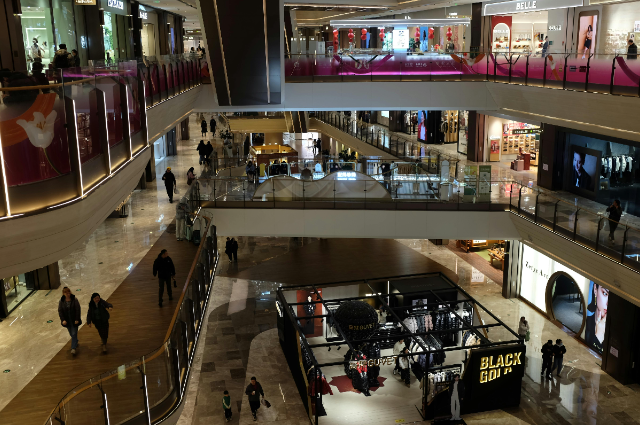
You step out of an airport in a place you have never visited before, only to find roads lined with familiar glass towers, cafés serving identical menus, shopping malls carrying the same brands, and apartment blocks that look as though they were copied from a universal blueprint. The thrill of arrival fades quickly because the unfamiliar feels strangely familiar.
This is one of the defining yet often unnoticed realities of modern life. Cities across continents are beginning to resemble one another so closely that many now feel interchangeable. What once gave places their personality, their architecture, local markets, street rhythms, neighbourhood culture, and historical texture is increasingly being replaced by a single urban formula designed for speed, efficiency, and investment.
Urban thinkers have long warned about this drift toward placelessness. Non-Places: Introduction to an Anthropology of Supermodernity described modern transit zones and commercial spaces as locations people move through without forming any real attachment. Rem Koolhaas later wrote of the “generic city,” a city stripped of identity and shaped by repetition rather than memory.
The problem is not progress itself. Modern infrastructure, housing, and connectivity are necessary. The concern begins when development erases what made a place distinct in the first place. A city then stops feeling like a living community and starts feeling like a replicated product.
The copy-paste world is therefore more than an architectural trend. It is a cultural and emotional shift. When every skyline looks familiar and every destination offers the same experience, we are forced to ask whether, in making cities more efficient, we have also made them forgettable…
What Is the “Copy-Paste City”?
A city was once a signature. Today, many have become photocopies.
The copy-paste city is not a technical phrase of urban planning, yet it may be one of the most accurate descriptions of contemporary life. It refers to the modern metropolis that has surrendered its accent. No matter the continent, one encounters the same polished skyline of reflective towers, the same manicured plazas, the same chain cafés perfumed with manufactured familiarity, and the same residential enclaves promising a lifestyle as s as flat-pack furniture.
These cities are not built organically. They are assembled. Their forms are often borrowed from global templates proven profitable elsewhere, then replicated with minor cosmetic changes. A successful district in one nation becomes the model for another. A mall concept in one capital is reproduced in the next. What was once shaped slowly by climate, craft, memory, and local need is now frequently shaped by spreadsheets, branding decks, and investor confidence.
Architect Rem Koolhaas captured this phenomenon in The Generic City, where the city becomes detached from ancestry and remade as an endlessly expandable product. It functions smoothly, looks impressive from a distance, and yet often says very little about the people who inhabit it.
The tragedy of the copy-paste city is subtle. Nothing appears broken. The roads are wide, the glass shines, the cafés are comfortable, the lobbies smell expensive. Yet beneath that surface lies a peculiar emptiness. One can admire the city and still fail to remember it.
A true city possesses idiosyncrasy. It carries scars, habits, peculiarities, even flaws that belong only to itself. The copy-paste city, by contrast, is curated to offend no one and surprise no one. It is efficient, elegant, and strangely mute…
How Did Cities Become So Similar?
No c wakes one morning to discover that its cities have become interchangeable. Such transformations arrive quietly, dressed as progress.
The modern city did not lose its distinctiveness through a single decision, but through a sequence of incentives that appeared sensible at every stage. Globalisation accelerated the movement of capital, labour, materials, and ideas across borders. Investors sought urban landscapes that looked familiar, predictable, and easy to monetise. Developers, in turn, learned that repetition was safer than invention. Why gamble on originality when a profitable formula could simply be imported?
Thus began the age of architectural déjà vu.
A tower that succeeded in one financial district inspired towers elsewhere. A luxury mall in one capital became the prototype for another. Waterfront promenades, mixed-use complexes, business parks, gated communities, lifestyle high streets each replicated because they had already performed well in market terms. Cities increasingly borrowed from one another until many began to resemble a network of cousins dressed by the same tailor.
Multinational brands deepened this uniformity. Whether one enters a café in Dubai, Singapore, London, or Delhi, the aesthetic grammar is often recognisable at once. The furniture, menu boards, lighting, music, and even the ritual of consumption feel pre-scripted. Familiarity became a commodity, and consumers rewarded it.
Then came the influence of the screen. Social media trained cities to desire photogenic surfaces. Districts were designed not merely to be lived in, but to be posted. Murals, rooftop bars, pastel façades, curated public spaces, and gleaming interiors often emerged less from civic need than from digital desirability. The city became a backdrop for content.
Meanwhile, speed became doctrine. Imported materials, prefabricated systems, and universal design templates allowed faster construction than slower local methods rooted in craft or climate. Efficiency triumphed over intimacy. Scale triumphed over soul.
As The World Is Flat argued in another context, the world was being levelled by interconnected systems. Urban identity was not exempt from that process. Cities did not become similar because people lacked imagination. They became similar because sameness was repeatedly rewarded.
And so, what was sold as modernization often became imitation with excellent lighting…
The Airport-Mall-Hotel Effect..
If the copy-paste city has a cathedral, it is the terminal. If it has a marketplace, it is the mall. If it has a drawing room, it is the hotel lobby.
Few spaces illustrate urban sameness more vividly than the triumvirate of airport, shopping centre, and business hotel. These are the ceremonial gateways of modern mobility, and increasingly they speak the same visual language everywhere. Soft neutral palettes, polished stone floors, controlled fragrance, discreet lighting, chrome fixtures, indoor palms, interchangeable art, and the gentle tyranny of ambient music. One may glance up and forget which country one has landed in.
This is by design. Such environments are engineered to be frictionless. They minimise confusion, reduce cultural unfamiliarity, and reassure the travelling consumer. A passenger fresh from a long-haul flight is not invited into local character, but into calibrated comfort. Navigation is intuitive, brands are recognisable, menus are translated, and nothing feels too specific to place.
Anthropologist Non-Places: Introduction to an Anthropology of Supermodernity described such spaces as “non-places” environments of transit, consumption, and temporary presence where people pass through efficiently but seldom belong. They are functional, sophisticated, and emotionally weightless.
The shopping mall extends this logic. Whether in Kolkata, Kuala Lumpur, Madrid, or Toronto, one often encounters the same escalator choreography, the same fragrance stores, the same food courts, the same aspirational displays of lifestyle. Consumption is globalised so thoroughly that retail space now behaves like an international dialect.
Then there is the hotel lobby: perhaps the purest theatre of elegant sameness. Designed to offend no sensibility and flatter every guest, it offers comfort without context. Plush seating, abstract art, muted luxury, coffee tables large enough for status but small enough for convenience. One could be anywhere, and that is precisely the point.
Yet something is forfeited in this triumph of convenience. Arrival once meant encountering differences. Today, it often means stepping into another version of what one has already seen. The world has become easier to navigate, but harder to truly discover…
Architecture Without Roots..
There was a time when buildings spoke the language of their surroundings. They rose from the climate, borrowed from local materials, respected the rhythm of seasons, and carried the memory of those who built them. Today, many structures speak instead in a fluent, placeless accent.
Architecture without roots is the condition in which buildings appear detached from the geography, history, and culture that surround them. A glass tower in a tropical city mirrors one in a desert capital. A luxury apartment block in South Asia resembles one in North America. Steel, concrete, and curtain walls now travel more easily than tradition, and so skylines across the world increasingly echo one another.
The irony is difficult to ignore. Regions that once perfected climate-responsive design now import forms poorly suited to their own weather. In hot cities, sealed glass façades intensify heat and dependence on air conditioning. In rainy regions, designs prioritising appearance over practicality often age badly. What once required wisdom is now outsourced to aesthetic fashion.
Architectural theorist Kenneth Frampton argued for a more grounded approach through Towards a Critical Regionalism, urging modern architecture to engage with local terrain, materials, light, and culture rather than imitate international formulas. His concern was not nostalgia, but dignity. A building should belong to where it stands.
When architecture loses roots, cities lose conversation with their own past. Streets become galleries of imported ambition rather than records of lived identity. Stone replaced by mirrored panels. Courtyards replaced by sealed atriums. Verandas replaced by tinted glass. Utility remains, but continuity disappears.
A rooted city reveals where you are before anyone needs to tell you. An uprooted one requires a street sign…
The Death of Local Markets and Streets…
A city does not reveal itself first through monuments. It reveals itself through errands.
In the old grammar of urban life, identity lived in modest places: the vegetable seller who knew families by name, the tailor tucked into a narrow lane, the tea stall where politics was argued with operatic confidence, the pavement bookseller, the florist, the cobbler, the sweet shop fragrant before sunrise. These were not merely businesses. They were social institutions disguised as commerce.
The copy-paste city has been unkind to such places.
As malls, retail chains, and master-planned commercial districts expand, local markets are often pushed to the margins or erased altogether. Historic bazaars become redevelopment sites. Independent shops struggle against the purchasing power and convenience of multinational brands. Streets once animated by negotiation, gossip, improvisation, and community are replaced by curated corridors where every signboard appears professionally approved and every transaction emotionally neutral.
Urban thinker Jane Jacobs, in The Death and Life of Great American Cities, celebrated the vitality of mixed streets filled with small enterprises, regular foot traffic, and informal social surveillance. She understood that lively neighbourhoods are not created by grand masterplans alone, but by dense webs of ordinary human presence.
When local markets disappear, a city loses more than economic diversity. It loses memory. Family recipes vanish with shuttered eateries. Craft traditions fade when workshops close. Intergenerational trust weakens when commerce becomes anonymous. Streets cease to be places where one is known and become places where one merely pays.
Even the sensory world changes. The scent of spices gives way to conditioned air. Bargaining gives way to fixed pricing. Serendipity gives way to directory maps. Noise becomes background music.
A polished shopping district may be cleaner, safer, and more efficient. But efficiency is not the same as life. Markets were untidy, crowded, loud, and gloriously human. Their disappearance leaves cities tidier perhaps, yet lonelier…
Why We Accept It: The Emotional and Cultural Cost of Sameness..
The most remarkable feature of the copy-paste city is not that it exists, but that it is so readily embraced.
Part of the answer lies in convenience. Standardised cities are easy to understand. Familiar brands reduce uncertainty. Predictable layouts make movement effortless. A mall in one country functions much like a mall in another. A chain café promises the same coffee, the same lighting, the same carefully rehearsed comfort. In a world already crowded with complexity, repetition can feel like relief.
There is also aspiration at work. For many developing societies, gleaming towers, luxury districts, and international aesthetics are presented as visible proof of arrival. To look global is often mistaken for being advanced. Imported styles carry prestige, while local forms are too easily dismissed as backward, informal, or insufficiently modern. Sameness is marketed not as loss, but as success.
Yet what is convenient economically may be costly emotionally.
When streets, skylines, and public spaces begin to resemble one another, cities become less memorable. One may admire them without forming attachment to them. The sense of belonging that grows from distinctive places weakens when every place feels partially interchangeable. Human geographer Yi-Fu Tuan, in Space and Place, distinguished between mere space and meaningful place. Space is where one moves. Place is where one feels rooted. Many modern environments excel at the first while neglecting the second.
The cultural cost runs deeper still. Younger generations raised amid homogenised landscapes may inherit less connection to local craft, neighbourhood histories, vernacular architecture, and community rituals. Traditional identities do not always vanish dramatically. Often, they simply fade through disuse. A city becomes easier to consume and harder to inherit.
Institutions such as UNESCO have long stressed the value of tangible and intangible heritage because culture survives not only in museums, but in everyday streets, trades, habits, and built forms. Once these ordinary ecosystems disappear, they are rarely restored with authenticity.
Thus the copy-paste city offers a subtle bargain. In exchange for efficiency, prestige, and predictability, it asks citizens to surrender texture, memory, and emotional intimacy. Many accept the trade because the losses are gradual, almost invisible.
A city does not become soulless overnight. It becomes soulless by becoming convenient first.
Can Cities Feel Unique Again?
Rethinking Growth, Identity, and Sustainability..
If modern cities have become increasingly similar, the future is not therefore condemned to sameness. Urban identity can be diminished by design, but it can also be restored by design.
One of the greatest flaws of copy-paste urbanism is that it often ignores the environment in pursuit of appearance. Glass-heavy towers in hot climates demand immense cooling. Car-dependent layouts increase congestion, pollution, and wasted land. Constant demolition and reconstruction generate mountains of material waste. What looks sleek in brochures may perform poorly in reality. Institutions such as United Nations Environment Programme and International Energy Agency have repeatedly highlighted the environmental burden of inefficient buildings and unsustainable urban growth.
Yet many cities prove that modernity need not erase character. Kyoto has preserved historic urban identity while adapting to contemporary life. Barcelona continues to blend civic design, public life, and historical continuity. Copenhagen demonstrates how sustainability, walkability, and distinct urban culture can coexist. These examples are not perfect, but they show that development need not mean imitation.
The path forward requires a different philosophy of progress. Cities can protect historic neighbourhoods instead of replacing them wholesale. They can encourage architecture that responds to local climate, materials, and customs rather than importing generic forms. They can support independent markets, artisans, and street-level commerce that give neighbourhoods personality. Public art can reflect local memory rather than decorative neutrality. Streets can be designed for pedestrians, communities, and daily life rather than only vehicles and investors.
Urban designer Jan Gehl has long argued that cities must be shaped at the human scale. This principle remains vital. A city should not merely photograph well from above. It should feel alive at eye level.
The true question is not whether cities will grow. They certainly will. The question is whether they will grow into themselves or away from themselves.
A memorable city is not one that copies the future fastest. It is one that carries its own past gracefully into the future.
Perhaps the greatest luxury in the twenty-first century is no longer speed, height, or convenience, but distinctiveness.
The modern world has mastered the art of building quickly, scaling endlessly, and reproducing success across borders. Yet in doing so, it has often confused uniformity with progress. Cities have become smoother to navigate, easier to market, and more efficient to monetise, but many have also become strangely forgettable. What was once shaped by memory, climate, craft, and community is too often replaced by a polished template with excellent lighting.
A city should be more than infrastructure arranged efficiently. It should carry a temperament. It should sound different in the morning, smell different after rain, move differently at dusk, and tell its history through walls, markets, lanes, and habits. Its imperfections are often part of its charm. Its peculiarities are often part of its truth.
The challenge, then, is not to reject modernity, but to civilise it. Growth need not arrive as erasure. Development need not require imitation. Cities can expand while preserving their accent, modernise while honouring their memory, and welcome the future without evicting the past.
For when every skyline begins to look the same, identity becomes the rarest architecture of all.
And a place that forgets how to be itself may remain impressive, but it will never be unforgettable.
REFERENCES.
- Non-places : introduction to an anthropology of supermodernity: https://catalogue.nla.gov.au
- Internet Archive https://share.google
- University at Buffalo: https://share.google
- Monoskop https://share.google
- Scribd https://share.google
“The world is Flat”
- Wikipedia https://share.google
Globalisation insights
- Scribd https://share.google
Towards a critical regionalism.
- Modern in Denver https://share.google
- https://share.google
- Universitas Pembangunan Jaya: https://share.google
- SuperSummary https://share.google
- ResearchGate https://share.google