
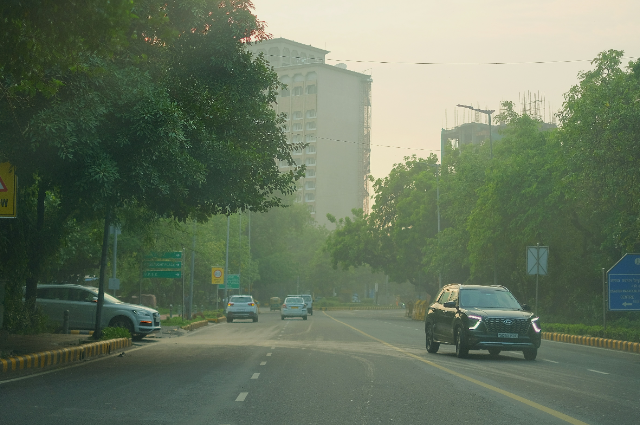
Behind the daily roar of India's traffic lies a chilling truth. Hundreds of people wake up every day only to become a hit-and-run statistic by nightfall. This cowardice is no anomaly; it is a full-blown national crisis. Hit-and-runs now account for nearly 18% of all road fatalities in the country, translating to more than 53,000 cases a year. It is a reality where the public streets belong not to safe commuters, but to a faceless wave of fleeing vehicles.
The Tragedious Hit-And-Run
Among these thousands of faceless statistics is Sahil Dhaneshra, a 23-year-old youth whose promising future was instantly snuffed out on a Delhi street.
On the morning of February 3, 2026, Sahil was riding his motorcycle towards his office near Sector 11 in Dwarka, continuing the ordinary routine of a young man who had spent years trying to build a stable life for himself and his widowed mother after losing his father in 2018. A hardworking professional and the sole breadwinner of his household, Sahil had recently completed his BBA, was juggling responsibilities with quiet persistence, and was actively preparing to leave for the United Kingdom for his postgraduate studies. But before that future could begin, a speeding Scorpio N-SUV, driven by an unlicensed minor, reportedly attempting a reckless overtaking manoeuvre, swerved directly into Sahil’s lane on a road without a divider and rammed his motorcycle head-on.
The impact was catastrophic.
Witness accounts and police reports stated that Sahil was thrown nearly fifty feet into the air before crashing onto the road. What makes the sequence even more horrifying is that the SUV reportedly did not brake even after the initial collision; it continued moving forward with force before smashing into a parked taxi, leaving its driver critically injured. According to the official autopsy report later made public, Sahil died instantly from a massive subdural hematoma, severe cranio-cerebral trauma, and extensive internal haemorrhaging in his lungs, liver, and spleen. Following the multi-vehicle collision, the minor driver and his sister exited the SUV and allegedly attempted to flee the scene on foot before being intercepted by local onlookers and detained by the Delhi Police. Eleven days later, on February 14, an acceptance letter from the University of Manchester arrived at Sahil’s home, a striking contrast to the loss of life that could’ve been avoided and not ended up on Dwarka’s narrow lane.
The Accused’s Wrong Turns
To understand why Sahil Dhaneshra’s death triggered such widespread public outrage, one must examine the profile of the accused juvenile and the environment that enabled him. The driver of the Scorpio-N SUV was Akshatra, a 16-to 17-year-old minor with no valid driving licence, yet investigators revealed that the vehicle he routinely accessed already carried a troubling record of 13 prior traffic challans, nine of them specifically issued for overspeeding violations. CCTV footage later recovered by the Delhi Police allegedly showed the SUV being driven aggressively in a zigzag manner through Dwarka minutes before the collision, weaving through traffic and attempting reckless overtaking manoeuvres at high speed. Investigators also stated that the juvenile’s sister, seated beside him, was filming a social media “reel” during the drive, intensifying public anger over the apparent prioritisation of online attention over road safety. In the aftermath of the crash, police records indicated that the accused initially misrepresented his age, falsely claiming to be 19 years old before official documentation confirmed his juvenile status. Following the registration of an FIR for rash and negligent driving causing death, the minor was produced before the Juvenile Justice Board and placed in an Observation Home for preliminary detention between February 4 and February 9, 2026.
The Juvenile Justice Board, later, reportedly observed that the minor displayed little visible remorse and lacked an understanding of the gravity of human life.
The case also widened scrutiny onto the accused’s family, particularly his father, a commercial transport business owner who was later booked under Section 199A of the Motor Vehicles Act for allegedly permitting a minor to operate the vehicle despite repeated warning signs attached to it. Together, these details transformed the case from a singular road accident into a broader public debate about parental accountability, wealth-enabled impunity, reckless driving culture, and the growing influence of social media validation on adolescent behaviour behind the wheel.
The Dangerous Complexity of Shared Blame
As CCTV footage and the alleged reel recorded from inside the Scorpio began circulating online, public discourse surrounding the crash quickly grew divided. Many viewers pointed out that Sahil, too, appeared to make a dangerous judgment call in his final moments by attempting to overtake a public bus on an undivided road, briefly placing his motorcycle into the oncoming lane. Simultaneously, debates intensified across platforms like Twitter regarding whether Sahil was wearing a helmet at the time of impact, especially after the autopsy confirmed catastrophic cranio-cerebral trauma and massive head injuries. Yet, while these discussions raise legitimate questions about road safety and commuter responsibility, investigators and legal authorities continue to place substantially greater liability on the accused minor for reasons far larger than a split-second traffic error. The juvenile was allegedly driving without a licence, operating a vehicle with a documented history of repeated overspeeding violations, engaging in reckless high-speed manoeuvres while being filmed for social media content, and reportedly attempting to flee the scene after the collision. In legal terms, Sahil’s possible lapse in judgment may have contributed to the vulnerability of the situation, but authorities argue it was the accused’s unlawful, reckless, and sustained conduct that transformed a dangerous road interaction into a fatal crash.
The Legal Grey Zone of Teenage Violence
The legal trajectory of the Sahil Dhaneshra case quickly evolved into a wider debate on the practical limitations of India’s juvenile justice framework and the emerging loopholes within the Bharatiya Nyaya Sanhita’s promise of stricter accountability. Following the February 3 crash, Delhi Police registered an FIR under provisions relating to rash and negligent driving causing death and serious injury, after which the accused, officially verified to be an unlicensed 16-to-17-year-old minor, was produced before the Juvenile Justice Board (JJB) as a “Child in Conflict with the Law.”
During preliminary detention between February 4 and February 9, investigators gathered CCTV footage, forensic evidence, and witness statements allegedly showing the Scorpio SUV overspeeding aggressively moments before the collision. However, public frustration intensified on February 10 when the JJB granted interim bail to the accused specifically to allow him to appear for his Class 10 board examinations, a decision many viewed as symbolically tone-deaf considering Sahil himself would never live to attend the University of Manchester, whose acceptance letter arrived days after his death.
In March 2026, the Board granted regular bail while reportedly attributing the incident substantially to “lack of parental supervision” rather than deliberate intent, thereby reinforcing his juvenile status instead of considering trial as an adult. Legally, the Board relied on the Juvenile Justice Act, under which minors aged 16–18 can only be prosecuted as adults for “heinous offences” carrying punishments exceeding seven years because the invoked charges fell within negligent homicide provisions rather than intentional homicide, the accused continued to receive statutory juvenile protections despite the fatal outcome and allegations of reckless conduct.
For many observers, this exposed a visible disconnect between legal categorisation and public perception of accountability. While emotional maturity may develop gradually with age, critics argued that a 17-year-old is fully capable of understanding the basic consequences of overspeeding an SUV without a licence, performing dangerous manoeuvres on a public road, and allegedly attempting to flee after a fatal collision. The criticism sharpened further after reports from preliminary proceedings stated that the accused appeared to show little visible remorse during initial observations.
Sahil’s mother, Inna Makan, repeatedly challenged both the bail orders and the juvenile classification, demanding that the accused be tried as an adult and later approaching the Delhi High Court seeking a CBI investigation into alleged procedural negligence and investigative leniency. Yet on April 20, Additional Sessions Judge Rajat Goyal upheld the juvenile’s bail, ruling that his release would not “defeat the ends of justice,” while concerns regarding possible misuse of influence remained legally speculative.
In effect, the case became a focal point for a larger national question: whether India’s evolving criminal framework is genuinely equipped to address modern forms of reckless juvenile violence involving high-speed vehicles, social media performance culture, and repeated warning signs that go unchecked until a fatality occurs.
Performative Outrage and the Gen Z Contradiction
“The generation that condemns reckless driving while algorithmically rewarding it”
The Sahil Dhaneshra case triggered intense outrage across Instagram, Twitter, and short-form content platforms, particularly among Gen Z users who projected themselves as the morally conscious and socially aware generation unwilling to tolerate reckless privilege on Indian roads. Hashtags demanding justice trended rapidly, reaction reels condemned the accused’s behaviour, and thousands expressed fury over the idea of a teenager allegedly treating a public road like a filming set. Yet the outrage also exposed a visible contradiction within the same digital culture that produced that anger. Even as users criticised the fatal consequences of overspeeding and stunt-driving, social media platforms continued to remain saturated with cinematic bike edits, high-speed “POV” reels, illegal street racing clips, dangerous overtaking videos, and aestheticised traffic violations that routinely gather millions of views, likes, and shares from the very demographic condemning Sahil’s death.
The problem, therefore, extends beyond one reckless juvenile driver; it reflects a broader online ecosystem where risk-taking behind the wheel is constantly packaged as confidence, rebellion, masculinity, or visual entertainment. Algorithms reward adrenaline before responsibility, while teenagers absorb a culture that glamorises speed but rarely confronts its aftermath. In this environment, public condemnation often becomes selective and reactive. Society celebrates reckless driving when it looks cinematic, then expresses shock when the same behaviour produces a corpse instead of viral content.
The Echo Chamber of Empathy
Outrage that trends faster than accountability
For nearly forty-eight hours after the CCTV footage and details of the crash surfaced online, Indian social media erupted with anger. Twitter timelines filled with demands for “strict action,” Instagram pages reposted clips of the collision with emotional captions, and thousands of users condemned juvenile privilege, reckless driving, and influencer-style stunt culture on public roads. Yet, as with countless tragedies before it, the outrage began fading almost as quickly as it appeared. The hashtags slowed, public attention shifted, and the legal proceedings continued largely outside the visibility of the same audiences that initially amplified the case. This pattern has become increasingly familiar in India’s digital landscape. Collective grief is immediate, loud, and emotionally charged, but rarely sustained long enough to transform into civic pressure, policy discussion, or behavioural change.
The same society that expresses horror over fatal speeding incidents continues to normalise underage driving, overspeeding, dangerous driving, drunk driving, and casual traffic violations in everyday life. Online empathy becomes a temporary performance confined to screens, while the physical roads themselves remain unchanged. In that sense, Sahil Dhaneshra’s death did not merely expose one reckless teenager or one legal controversy. It exposed a wider culture where public mourning trends for days, but public accountability disappears far more quickly.
And perhaps the most uncomfortable question the Sahil Dhaneshra case leaves behind is this.
If a death captured on camera, debated nationally, and mourned across millions of screens still fails to meaningfully change how India drives, parents, enforces law, or consumes reckless content, what exactly does our outrage achieve beyond the internet?..
REFERENCES….
- Source: NDTV https://share.google
- https://youtu.be
- Source: BW Police World https://share.google
- Source: Hindustan Times https://share.google
- Source: The Times of India https://share.google
- Source: The Economic Times https://share.google
- Source: Team-BHP https://share.google
- Source: The Hindu https://share.google
- Source: The Times of India https://share.google
- Source: NDTV https://share.google
- Source: Hindustan Times https://share.google
- Source: The Times of India https://share.google
- Source: The Economic Times https://share.google
- The video of the crash is evidence of real culture. '
- Source: NDTV https://share.google
Autopsy findings
- Source: Gulf News https://share.google
Hit and run statistics
- Source: RBG Labs | IIT Madras https://share.google
One of the cases of speedy bike stunts resulting in accidents and not viral reels.
- Source: NDTV https://share.google