
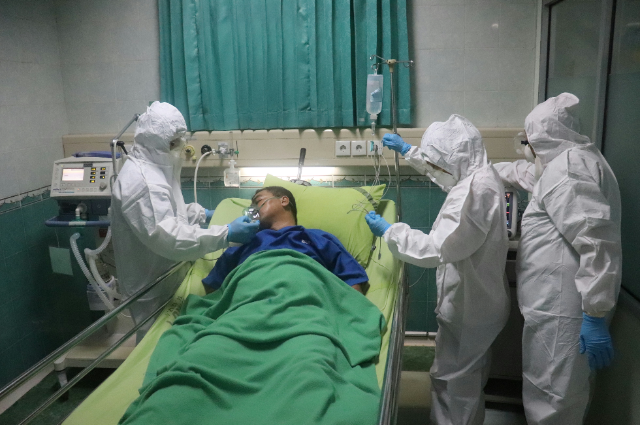
For thirteen years, Harish Rana existed in a space that law has never been well-equipped to define. Sustained by medical intervention yet devoid of any conscious response. His condition remained at the uneasy intersection of life and its absence. Preserving his life through artificial means, along with shrinking the pockets of his parents for expensive treatment with no certainty of his recovery, is simply unjust. When the Right to Die With Dignity, as a part of Article 21, has already been recognised, then why did Harish have to wait a period of 13 years before embracing death?
Such questions are at the core of this article’s analysis of the evolving jurisprudence and legal framework governing the right to die in India.
HOW IT HAPPENED..
A devastating fall from the fourth floor of his paying guest accommodation impacted him with a traumatic brain injury known as Diffuse Axonal Injury, which usually happens when the brain's long connecting nerve-fibres (axons) are torn due to the shifting of the brain inside the skull during a violent fall. The injury was itself catastrophic and resulted in 100% quadriplegic disability and permanent brain damage. This left a 19-year-old Btech student bedridden, combating his Persistent Vegetative State (PVS). In the absence of a ‘living will’ or an advance medical directive, a protracted legal struggle from 2013 to 2026 was undertaken to secure the verdict permitting the withdrawal of both the tracheostomy and PEG tubes.
THE FIRST APPEAL AND BASIS OF REJECTION…
The emotionally and financially depleted parents of Harish Rana approached the Delhi High Court in early 2024, after exhausting their savings and waiting over 11 years in the fading hope of a recovery. The High Court thereby refused to entertain the initial appeal by declaring the family’s prayer legally untenable. Adopting a narrow and technical interpretation of both the law and medical condition, it reasoned that since the patient is “independently breathing” and not on a mechanical ventilator, he's sustaining himself” Building on this, the court treated the withdrawal of a feeding mechanism not as the cessation of extraordinary medical intervention but as a positive act that would directly precipitate death through starvation, which acts as an impermissible form of euthanasia. Additionally, the absence of an immediately terminal prognosis further weakened the case. This reasoning exposes a deeper legal ambiguity between allowing death and causing it, warranting a closer look at the distinction between active and passive euthanasia and the framework governing them in India.
THE LEGAL FRAMEWORK ADVOCATING “RIGHTS TO DIE WITH DIGNITY”...
Before we proceed, an understanding of the doctrinal distinction between the active and passive forms of euthanasia is required to build our knowledge about euthanasia laws.
Active Euthanasia, which involves direct and deliberate acts to end one’s life, such as through lethal injections or substances, is illegal. In contrast, Passive Euthanasia, understood as the withdrawal or withholding of life-threatening treatment, has gradually gained judicial recognition as an extension of personal autonomy and dignity.
The first shift of this was noticed back in 2011’s notable cases of Aruna Shanbaug v. Union of India, where the Court permitted withdrawal of life support under strict judicial oversight, grounding its reasoning in the patient’s best interests. The expansion of jurisprudence in this domain was articulated in the case of Common Cause v. Union of India(2018), where the Court expressly recognised the right to die with dignity as an intrinsic facet of Article 21 and validated advance directives or living wills as instruments of patient autonomy. The Common Cause modification guidelines, which emerged soon after the verdict, made implementation practicable and provided procedural safeguards to make it accessible. Under these guidelines, any decision to withdraw life-sustaining treatment must undergo a layered review process involving the treating physician and two independent medical boards, ensuring that the decision is medically sound, ethically justified, and legally protected. Together, these developments reflect a calibrated legal approach that seeks to balance individual dignity with institutional safeguards, while firmly situating passive euthanasia within the constitutional promise of a dignified existence and, by extension, a dignified end.
THE FINAL JUDGEMENT…
The true strength of this framework lies not in its articulation but in its application, a challenge that came to the forefront in the 2025 appeal before the Supreme Court. After being rejected at the Delhi High Court, the aggrieved parents approached the Supreme Court of India, relying upon their best interests to be on the part of Harish. However, the Supreme Court also declined their plea, while agreeing with the verdict provided by the High Court.
In the absence of brain death and lack of an advance medical directive, withdrawing life support transitions from a medical decision into a legally scrutinised act with potential criminal consequences. Though legally recognised and implied in the Common Cause Case, the resistance to applicability in this particular case seemed rigorous, so they were offered financial aid for his medical expenses.
Fast forward to 2025, a fresh application where the deteriorating state of Harish was explicitly explained and why the passover was important.
The two bench sitting judges, Justices J.B. Pardiwala and K.V. Viswanathan, allowed for the withdrawal of life-sustaining treatment in Harish Rana v. Union of India after being satisfied, on the basis of multiple medical evaluations and extensive factual inquiry from a neutral facility of AIIMS, that the patient’s condition was irreversible and devoid of any real prospect of recovery. The consistent findings of both medical boards established that continued treatment served no therapeutic purpose and merely prolonged biological existence without awareness or dignity. Coupled with this, the Court took into account the prolonged suffering, the absence of meaningful cognitive function, and the burdens placed on the family, ultimately concluding that the continuation of artificial support would undermine, rather than protect, the constitutional guarantee of a dignified life under Article 21. In permitting withdrawal under strict safeguards and a structured palliative care plan, the Court affirmed that the right to life includes the right to a dignified end when recovery is no longer possible.
With this approval, Harish was shifted to the palliative care unit of AIIMS Delhi. After withdrawal of the medical support, he breathed his last at 4:10 pm on March 24, 2026, becoming India’s very first passive euthanasia case…
KARNATAKA’S CIRCULAR EXPLAINED..
The primary circular issued on 30th January, 2025 relates to the State’s pioneering implementation of Right To Die With Dignity and Passive Euthanasia guidelines, supporting Harish Rana landmark case, ensuring that terminally ill and people in vegetative state can have futile medical treatment legally withdrawn. As the first state level measure of its kind, it reflects an emerging decentralised approach to end-of-life decision making, translating judicial principles into administrative practice. It was mandated by this circular that for review examination of the patient’s will primary and secondary level hospitals must be built, along with clarifying that medical practitioners following these protocols, are protected from legal liability.
Can a right truly be called fundamental if it contradicts its applicability and remains difficult to implement?
Unlike several other jurisdictions, India continues to rely upon the judicial guidelines rather than a comprehensive legislation to govern end-of-life decisions. Countries such as the Netherlands, Belgium, Canada, Spain and New Zealand have adopted detailed statutory frameworks, ensuring clarity alongside accessibility. While India’s procedural safeguards are meant to protect, they often turn the "right to die with dignity" into a legal maze that’s nearly impossible for regular families to navigate, especially those without deep pockets or a lawyer on speed dial.
The Harish Rana judgment feels like a breath of fresh air here. It’s more than just a court ruling; it’s a shift toward making these rights actually work in the real world, offering a clearer, more compassionate roadmap for families facing the hardest decisions of their lives.
REFERENCES.
- Full case details.: Supreme Court Observer https://share.google
- Legal backup: Verfassungsblog https://share.google
- Summary of the case: Drishti IAS https://share.google
- Common Cause Case details and guidelines are prescribed: Indian Kanoon https://share.google
- DAI explained: National Institutes of Health (.gov) https://share.google
- Persistent vegetative state explained: Osmosis https://share.google
- Aruna Shanbaug’s case: BBC https://share.google
- Passive and active euthanasia. Euthanasia - Wikipedia https://share.google
- Karnataka circular: Karnataka.gov.in https://share.google
. . .