
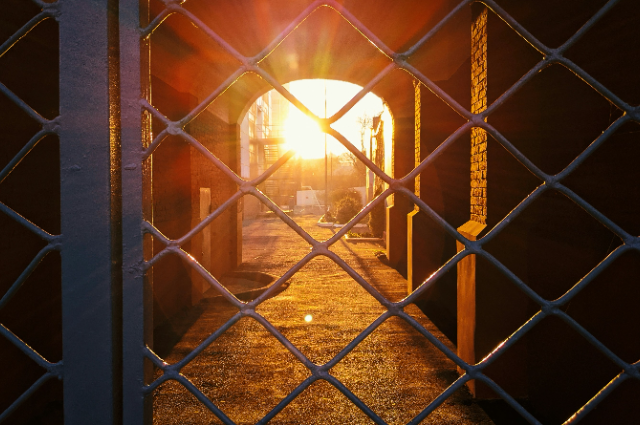
We have reached the absolute outer limits of the commodity market. Why the statement? Over the last two decades, the global Experience Economy has successfully monetised everything from faux-dangerous escape rooms to curated adult playgrounds, all driven by a singular consumer craving that is explicitly the desire to feel something real, if only for an hour. But an unsettling line was crossed on May 12, 2026. On that very morning, Hyderabad’s historic, 148-year-old Chanchalguda Central Jail opened its iron-grilled doors to let law-abiding, paying citizens voluntarily step inside a cell. By offering a 24-hour simulation of confinement at a fare of ₹2,000. The Telangana Prisons Department’s new Jail Anubhavam “Feel the Jail) The initiative immediately triggered a viral, deeply polarised global debate. It forces an uncomfortable question upon a society obsessed with novel weekend itineraries: Has the Experience Economy finally run out of decent ideas, or have we simply begun repackaging the systemic loss of human liberty as our newest form of consumer entertainment?
The procedure begins with erasure.
Before participants are permitted to “experience” prison life, they are first relieved of the few possessions that sustain individuality beyond institutional walls. Phones, watches, personal clothing, toiletries, wallets, chargers, every object tethering them to autonomy and familiarity is surrendered at entry. The process is clinical rather than theatrical, which makes it all the more psychologically effective. In return, participants receive a standardised prison kit: a coarse Khadi uniform, prison-manufactured soap, thin bedding, an aluminium plate, and a steel tumbler whose metallic scrape against the barrack floor becomes an oddly persistent sound within the compound. From that moment onward, identity begins yielding to procedure. Personal preference dissolves into regulation. Meals arrive at predetermined hours, lights-out is dictated by institutional timing rather than bodily fatigue, and the architecture itself, iron-grilled corridors, surveillance-heavy passageways, narrow sleeping rows, reinforces the sensation of controlled existence. The programme’s realism does not emerge from overt physical suffering so much as from the slow disappearance of spontaneity. Even temporary confinement becomes quietly disorienting once every ordinary choice of when to eat, where to sit, how long to remain alone, and when to speak is subtly transferred from the individual to the institution.
Morning inside the simulation begins at 5:00 AM with a fixed wake-up protocol aligned with standard prison schedules. Participants are required to assemble for roll-call and receive routine instructions from supervising staff before the day’s structured activities commence. The schedule is divided into predetermined time blocks, during which participants perform assigned tasks such as sweeping common areas, cleaning designated sections of the barracks, and engaging in plantation work within the prison compound. All activities are conducted under supervision and follow strict timing, reflecting the programme’s emphasis on procedural discipline and uniformity.
Meals are served at fixed intervals through the prison kitchen system and distributed in standard steel utensils used within the facility. Breakfast typically consists of pre-measured, simple portions of rice-based preparations, dal, and sambhar, with no variation in menu or individual preference, prioritising standardisation over customisation. Movement throughout the day is restricted to designated areas, with activity periods and rest intervals clearly defined by the institutional timetable. The simulation is situated within the Chanchalguda Central Jail complex, which also houses the Telangana Prisons Museum, where participants are guided through curated exhibits featuring historical records, penal artefacts such as shackles, and archival documentation, including references to convict labour used in infrastructure projects like the Nagarjuna Sagar Dam.
Why Officials Defend It
Officials defending the programme frame it primarily as an exercise in public awareness rather than entertainment. According to the Telangana Prisons Department, the intention is to bring citizens closer to the realities of institutional incarceration in a controlled environment where the consequences are observed rather than endured. They argue that most public understanding of prisons is shaped by media portrayals that are either abstract or dramatised and that direct exposure to regulated prison conditions can correct these distortions. Within this view, the experience is positioned as a form of civic education that translates an often distant justice system into something physically comprehensible.
A second strand of justification rests on deterrence and behavioural impact. Authorities maintain that structured exposure to prison routines, discipline, and restriction can act as a psychological disincentive, particularly for younger participants who may otherwise lack awareness of institutional consequences. The programme is also linked to broader correctional objectives through its funding model, where revenue generated from participation is directed toward prisoner welfare and rehabilitation initiatives. This includes support for skill development programmes and reintegration efforts that operate within the prison system.
Officials also place the initiative within the wider context of heritage preservation and institutional transparency. By integrating the experience with the Telangana Prisons Museum, the programme is presented as a way of documenting the historical evolution of punishment and incarceration in the region. Exhibits tracing colonial and pre-independence penal practices are used to situate contemporary prison systems within a longer administrative continuum. In this framing, the project is not only about simulating confinement but also about making the history of state punishment visible to the public in a structured and curated form…
Criticism Through the Lens of Dark Tourism and the Experience Economy
Critics of the programme argue that its central limitation lies not in its execution but in its fundamental asymmetry with real incarceration. While the experience reproduces the surface architecture of prison life, it remains entirely reversible. Participants are aware at every stage that the confinement is temporary, scheduled, and ultimately optional. This knowledge alters the psychological condition of imprisonment itself, which in reality is defined by uncertainty, procedural delay, and the absence of control over time. In this sense, the simulation cannot replicate the lived condition of incarceration, particularly for India’s large undertrial population, who remain confined for months or years without conviction, often due to economic and legal disadvantage rather than judicial closure.
This gap between simulated constraint and structural confinement becomes more significant when placed within the broader framework of the experience economy. Modern tourism increasingly privileges immersion over observation, transforming historical and institutional spaces into participatory environments. Within this shift, prisons, disaster sites, and memorials have become part of a growing category often described as dark tourism, where visitors engage with sites associated with suffering, death, or systemic violence. Supporters of such models argue that immersion fosters awareness, but critics caution that it can also convert complex histories of injustice into consumable experiences that end at the point of exit. In this framing, the act of participation risks becoming detached from the realities it seeks to represent.
The concern, therefore, is not only whether the experience educates, but whether it inadvertently simplifies. When incarceration is packaged within a controlled, time-bound format, it can blur the distinction between witnessing a system and performing it. The experience economy rewards intensity, novelty, and emotional engagement, yet prison as an institution is defined by duration, inequality, and absence of choice. This tension raises a difficult question about what is actually being understood by participants, and whether structured exposure to discomfort translates into sustained civic awareness or remains contained within the boundaries of a curated encounter.
What the Experience Cannot Recreate
The psychological core of the debate emerges when the simulation is placed against the structural reality of India’s prison system. National data shows that prisons operate at an average occupancy of around 131 percent, meaning most facilities are already functioning beyond intended capacity. In practice, this translates into overcrowded, poorly ventilated, and often unhygienic living conditions where space, privacy, and basic dignity are severely constrained. The “Feel the Jail” programme, by contrast, is designed within controlled limits, with curated barracks that remain relatively clean, regulated, and free from the pressures of actual overcapacity. This divergence creates a fundamental gap between observed confinement and lived incarceration.
A similar contrast appears in the legal status of inmates. Nearly three-quarters of India’s prison population consists of undertrials, individuals who have not been convicted but remain in custody while awaiting the completion of judicial processes. Their confinement is often prolonged by delays in investigation, slow court proceedings, and limited access to effective legal representation. In the simulation, however, entry and exit are fixed and absolute, with participants guaranteed release within a defined period of 12 or 24 hours. This certainty removes the defining uncertainty of real incarceration, where duration itself becomes unpredictable and often extended by systemic inefficiencies rather than judicial outcomes.
The socioeconomic dimension further sharpens this contrast. Real prison populations are disproportionately drawn from marginalised communities, including Dalits, Adivasis, Muslims, and individuals from economically disadvantaged backgrounds who are frequently unable to afford bail or sustained legal defence. In contrast, participation in the programme is discretionary and largely limited to those with the financial capacity to purchase the experience, positioning it within a consumer framework rather than a coercive one. Even the financial structure of the initiative reflects this inversion, where revenue generated from participation is directed back into prisoner welfare and rehabilitation programmes, creating a system where simulated confinement indirectly subsidises real incarceration conditions.
Within the broader lens of the experience economy, this contrast becomes more pronounced. The experience economy is defined by the shift from consuming goods and services to consuming staged, immersive experiences designed to produce memorable engagement. Jail Anubhavam operates at a more extreme edge of this model by transforming loss of freedom into a purchasable, time-bound experience. Critics argue that this risks converting deep institutional failures such as overcrowding, delayed justice, and inadequate legal aid into a temporary aesthetic encounter that ends at the moment of exit. Supporters, however, place it within the established tradition of dark tourism and heritage sites such as Alcatraz or Robben Island, where immersive exposure to sites of confinement and suffering is argued to generate awareness, historical consciousness, and in some cases funding for preservation and reform.
Psychological Limits of Curated Incarceration
The psychological evaluation of the experience ultimately rests on a tension between exposure and illusion. On one hand, even a highly curated encounter with confinement can produce a brief cognitive rupture in participants who are otherwise distant from the realities of incarceration. The act of sleeping in a barrack, following institutional routines, and moving through spaces associated with punishment may generate a form of affective awareness that statistics alone rarely achieve. In theory, this could translate into heightened sensitivity toward issues such as delayed trials, overcrowding, inadequate legal aid, and the structural dependence of undertrial detention on economic capacity. In that sense, the experience has the potential to function as a trigger for civic reflection rather than a substitute for it.
On the other hand, the very architecture of the simulation introduces a protective psychological buffer that real prisoners do not possess. The certainty of exit, the knowledge of voluntary entry, and the absence of legal or existential uncertainty reshape the experience into something fundamentally bounded. For many participants, this boundedness may reduce incarceration into a contained narrative that can be processed, shared, and eventually aestheticised as a personal story. The risk, therefore, is that the encounter resolves itself not into sustained political demand but into symbolic closure, a sense of having briefly “understood” a system that remains structurally unchanged. In that outcome, the experience economy completes its familiar cycle, converting institutional reality into consumable memory, while the deeper questions of trial delay, bail inequity, and overcrowding continue to operate outside the frame of experience altogether.
REFERENCES.
- Behind bars by choice: Hyderabad’s Chanchalguda Jail now lets citizens feel the jail at ₹2,000 for 24 hours - The Hindu https://share.google
- Hyderabad’s new 'feel the jail experience' lets people live like prisoners for 24 hours: Eat jail food and sleep in prison cells - The Economic Times https://share.google
- Source: LawStreet Journal https://share.google
- Source: ThePrint https://share.google
- Source: Facebook https://share.google
- Source: The Tribune https://share.google
- Source: WION https://share.google
- Tour set up.- Source: Travel And Tour World https://share.google
- https://share.google
- Source: The Economic Times https://share.google
- Source: The Live Nagpur https://share.google
- Source: Supreme Today AI https://share.google