
The double homicide of two minors in Tronglaobi, Bishnupur, on April 7 served as the flashpoint for Manipur’s latest regression into civil strife. This rapid deceleration of peace demands an audit of the institutional paralysis currently gripping the state. A projectile strikes a residential house approximately at 1 a.m in Tronglaobi village under Bishnupur District, committing the assassination of two children, of 6 years-old and a 5-month-old, while brutally injuring their mother, who suffered critical splinter and shrapnel injuries. In response, Oinam Binita Devi, the mother in question, was rushed to Bishnupur District Hospital and later admitted to Raj Medicity in Imphal due to the severity of her wounds. Beyond the immediate tragedy lay a grievous irony that further incensed the public, one that'd fuel their outrage even further was the fact that the targeted residence belonged to a BSF Jawan, currently serving on the front lines in Bihar. While the father was away guarding the nation's borders in Bihar, his own home and children were left defenseless against such an atrocity.
In the wake of the April 7 projectile attack, Manipur erupted into a wave of intense civil unrest characterised by its widespread public fury and volatile street protests. Beginning on April 8, thousands of residents led by women’s collectives and civil society groups, defied curfews to block major highways and storm security outposts, accusing the government of failing to protect innocent lives. The situation turned deadly when a mob attempted to storm a security camp at Gelmon, leading to a confrontation that resulted in three civilian deaths and dozens of injuries. This escalation prompted a total security lockdown, including an indefinite curfew and the suspension of internet services across five districts, as protesters shifted their demands toward the immediate resignation of top state officials and the total withdrawal of militant peace agreements. The mass mobilization and internet shutdowns to suppress the protesters were merely tactics of the government to play-peace in a calamity that ensures a combustible social landscape.
However, this unrest cannot solely be understood through the lens of protest and state suppression, as parallel developments point towards a deeper and entrenched security crisis. On 10th April, constable Mithun Mandal of the BSF's 170 Battalion, was killed while on road-opening patrol duty at Mongkot Chepu village under Ukhrul district. He was struck by a stray bullet during an intense firing between Kuki-zo and Tangkhul Naga community’s volunteers. Following the death of Constable Mandal, a massive joint operation by the Manipur Police, BSF, and Army destroyed 21 illegal bunkers in the Mongkot Chepu and Shikhibung areas through a mere lodge of FIR.
Now, you may wonder why both unfortunate incidents are connected through a thread?
To fully grasp these events, we must examine the deep-rooted history and the complex origins of Manipur’s three-year-long conflict.
Following the Merger of Manipur with India, Manipur’s evolution as a constituent state of India remained marked by insurgency and sustained militarisation under the Armed Forces Special Powers Act, before gradually shifting into an entrenched pattern of ethnic confrontation between the valley-dominant Meiteis and the hill-based Kuki-Zo communities, who had their own armed militants to promote autonomy and independence.
But what explains the descent of this long standing friction into such retaliatory brutality?.
The answer lies in a convergence of structural realities, where the asymmetry in land rights between hills and valley, the imbalance in political representation despite geographical disparities, and the deepening contest over identity and constitutional recognition continued to interact and intensify, eventually reaching a flashpoint when the Supreme Court of India in 2023 directed the State to consider granting Scheduled Tribe status to Meiteis, an intervention widely acknowledged as the immediate trigger for the latest wave of violence.
These tensions did not remain abstract and instead translated into cycles of retaliation involving armed groups from both sides, with documented instances of killings, arson, and forced displacement, alongside the widely reported “naked parade” of Kuki women in May 2023, which stands as stark evidence of the collapse of local law enforcement and the use of sexual violence as a tool of humiliation and reprisal.
Yet one question persists, Is this a case of neighbours fighting, or a government failing to intervene?
especially when the delayed response of security forces, extended communication blackouts, and subsequent judicial scrutiny together indicate that governance deficits add up to the crisis. Within which context, the revocation of President's Rule in Manipur and replaced by BJP leader Yumnam Khemchand Singh in February 2026 appears less of a resolution and more of an attempt to project political normalcy. Timed perfectly to sidestep the one-year constitutional limit that would have made extending central rule a legal headache. Even with the symbolic appointment of two Deputy Chief Ministers from the Kuki-Zo and Naga communities to signal inclusivity, this "normalcy" rings hollow while militarised buffer zones continue to physically slice the state in two and AFSPA remains a daily reality,
as deeper structural grievances remain insufficiently addressed.
With 260+ deaths by mid April of 2026 and over 60,000 displacement and a rise in property damages ensures an inescapable fog. Why would young adults allow their life to be consumed in state politics and passive aggressive movements with no brokering of truce?
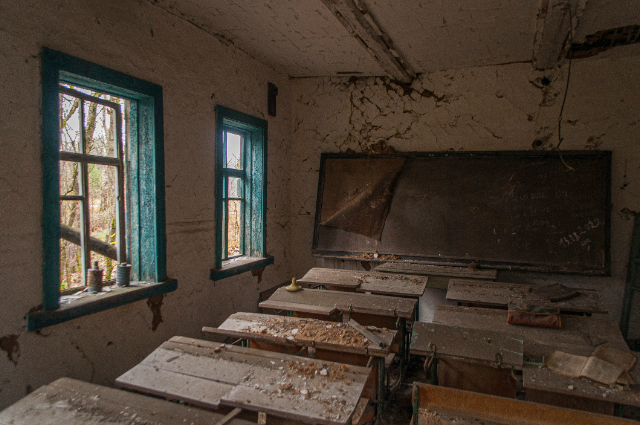
Many educational institutions have been closed for months or converted into relief camps, denying thousands their right to learn. Not a single professional or technical institute is located in the tribal hill districts. With the valley (where the main universities and hospitals are located) now out of bounds, hill youths have no choice but to leave the state for higher education. Over 58% of students who left the state cited the law and order condition as their primary reason for seeking studies elsewhere. The constant exposure to violence, uncertainty, and forced identity alignment has also created a climate of psychological fatigue among the youth.
The state’s economy has been crippled by blockades, supply chain disruptions, and a sharp fall in exports like textiles and food. Rising prices for essentials and the loss of family livelihoods have pushed many into extreme poverty. With rapid rise in unemployment distress along with forcing to choose a side of the boat just to stay in Manipur, it seemed off-limits for people who really wanted to move on.
This steady exit of young, educated individuals signals a deepening brain drain, weakening the state’s future workforce and its capacity for internal recovery. Speculations otherwise direct to a state, with no youth left to fight for the rivalry they hold so close to heart.
The crisis in Manipur, therefore, cannot be reduced to episodic ethnic violence or isolated administrative failure, but must be understood as the outcome of layered historical grievances, constitutional contestations, and prolonged governance lapses. Unless these underlying fractures are addressed with sustained political will and institutional accountability, the crisis risks outliving the very generation meant to resolve it.
REFERENCES:
Case brief
- BBC https://share.google
- The Hindu https://share.google
- ThePrint https://share.google
- The video of distressed youth commenting of govt’s lack of support and ignorance https://www.instagram.com
- NDTV https://share.google
- The Economic Times https://share.google
History of Manipur’s violence
- Wikipedia https://share.google
- Human Rights Watch https://share.google
- NEXT IAS https://share.google
- The youth’s sentiment upon migration. https://youtu.be