
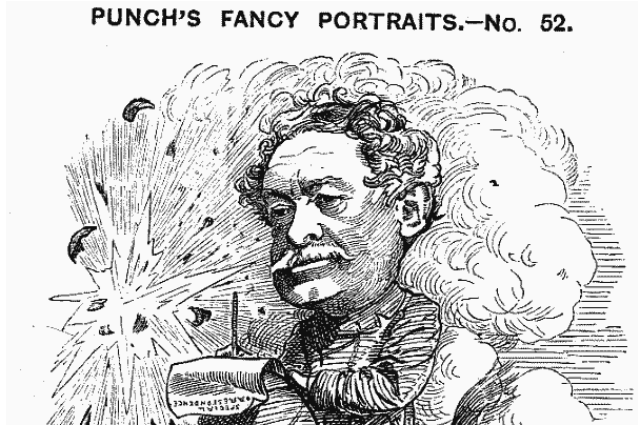
“I trust the army will lynch the Times Correspondent”, announced Sidney Herbert amidst the dead winter of 1854 to get rid of a reporter who's only doing his job.
There's a special kind of fury reserved for people who telecast statements of truth, rebel and question the activism ferociously to encourage people’s will. This entrenched disdain was publicly arrowed at stocky Irish journalist William Howard Russell, to such an extent that the British personnel asked for the army’s intervention to take care of the matter with in-hand operations.
War, a Pandora's box of grim realities, strips away all patriotic illusions and forces a country to confront its own masked frailties. Empires don't fear losing wars nearly as much as they fear losing the narrative of the war. Britain, for most of its history, never had to worry about that gap. War, as it liked to tell the story, was clean. The picturesque myth of brave men, noble causes,d and the occasional tasteful tragedy is sold to the public as a painting of a sanitised version of the catastrophe of war, stripped of its smell altogether.
Britain went to Crimea expecting a quick, glorious little war. It got a quagmire, a scandal, and a reporter who ultimately quashed the whitewashed narrative. In war reporting, journalism was 10% of what's been broadcast; the rest were inclined closer to government messaging with a byline. Newspapers ran official dispatches, officers' letters home, and illustrations commissioned to look valiant rather than honest. The timeline of dispatches always used to be weeks later than the actual battle, as to which people believed the “set narrative” to be true. No one independent stood at the front to check if any of it was even up-to-date with the actual occurrences.
To hijack the propaganda, THE TIMES correspondent William Howard Russell set out to do something which nobody in his position had done before. He skipped the briefings, talked to ordinary soldiers instead of the officers handing them out and used the electric telegraph,h which was still new enough to feel like sorcery, to get his dispatches to London in days, not months.
Yet what was received through the wire was unpalatable to both the citizens and the authorities. He wrote about commanders who lived comfortably, while their men froze a few hundred yards away, ay and he didn't hesitate to place the blame for the Charge of the Light Brigade on the officers who'd botched the order in the first place. The malnourished troops froze to death in their rags throughout the chilly winter of 1854 as basic needs such as food, blankets and clothes were out of reach. He described field hospitals so filthy and understaffed that more soldiers died of Cholera and infections than of Russian bullets and bombings, with a shortage of surgeons, clean linen and a smell foul enough that the wards felt closer to slaughterhouses than hospitals.
His uncensored dispatches explicitly said the frontline troops were nothing more than sacrificial lambs who were only offered a heroic status after death from infectious diseases rather than actual warfare. That's how he acquired the title of “Father of Modern War Reporting”, becoming the first of his kind to make a revolutionary change in broadcast journalism.
The title rather attracted the prying eyes of authorities than that of citizens. The establishment didn't just dislike Russell; they treated him like a walking security breach. Lord Raglan actually complained that Tsar Nicholas barely needed spies anymore, not when copies of THE TIMES were sitting on newsstands in Vienna, basically handing Russia a briefing on British weaknesses for free. He was further criticised by inviting citizens to read closely his columns, which regiments cholera had gutted, where the trenches were thin and exactly how short the men were running on winter clothes and ammunition. Raglan's cleverest manoeuvre was rebranding the inconvenient truth as treason, without adding to the hostility faced by Russell.
Resorting to vitriolic threats, Sidney Herbert, the Secretary at War, said he hoped the army would lynch THE TIMES correspondent himself. The disapproving Queen Victoria called his reporting an infamous attack that had disgraced the country's newspapers. Prince Albert wasn't any kinder, dismissing him as a "miserable scribbler" doing more damage with a pen than any enemy could. Officers were told to shut him out completely, offering him no mess hall, no tent, no rations, questions ignored outright, and more than one quiet conversation about just removing him from Crimea altogether. Funny enough, it was the ordinary soldiers actually freezing and starving in his reports, who looked after him instead. They slipped him food, shared their brandy and cigars, pointed him toward the worst of the hospitals, and told him things they'd never have said in front of an officer.
Every dispatch chipped away another piece of the polished story Britain had been telling about itself. Readers who'd grown up on paintings of glorious cavalry charges were suddenly reading about corpses left out in the snow, surgeons operating with rusty instruments, hospital wards drowning in dysentery, and warehouses full of blankets that somehow never made it to the men dying without them. At some point Parliament couldn't keep pretending this was bad luck. The outrage built until John Roebuck forced a parliamentary inquiry into how the war was actually being run, and once it was clear what that inquiry would dig up, Lord Aberdeen's government resigned in January 1855, to escape the inspections. The fallout reached further than Westminster.
Russell's reporting is part of what pushed Florence Nightingale to take thirty-eight nurses to the hospital at Scutari, where she rebuilt the place's sanitation and care almost from scratch and saved a staggering number of lives in the process. A man the government had once wanted gone from Crimea altogether ended up reshaping how Britain ran its army, treated its wounded, and tolerated its press. After Russell, no general got to be the only one telling the story of a war; instead,d his armed counterparts were the centre of the newsletters.
Even royal hatred, ed as it turns out, has a shelf life. The same establishment that wanted Russell run out of Crimea ended up sending him off touring with the Prince of Wales years later, Victoria's own son, the scribbler now keeping company with the very crown he'd once embarrassed. And he did not stop his rebellion either. Crimea wasn't a one-off. A few years later, The Times sent him to cover the Indian Rebellion, expecting the same patriotic fire-and-vengeance coverage every other British paper was running. Instead, Russell turned his pen on his own side again, ain ultimately documenting the brutality of British reprisals, the casual contempt British officers had for the Indians they ruled over, and the inconvenient fact that the empire's army would have collapsed without the thousands of Indian labourers it never bothered to credit. A few years afterwards, in America, he refused to flatter either side of a civil war, writing unflinchingly about the cruelty of Southern slavery, then turning around and exposing the Union army's panicked, undisciplined retreat at Bull Run so bluntly that he received death threats and had to leave the country.
The pattern, by then, was obvious. Russell wasn't chasing a scandal. His offence was making suffering impossible to ignore, and that's still the exact complaint governments throw at journalists, just wearing a different costume each time. The war was always going to be brutal. Russell's job was just making sure the lie didn’t outlive it.
References:
- MilitaryHistoryNow.com https://share.google/sLFr1HFPoY0sakoWf
- School History https://share.google/9l2dhfa5Qo2FjaL7e
- The Royal Parks https://share.google/120KOGzZtwnypiWgA
- Spartacus Educational https://share.google/bzrv6dJBMs2a6lSuP
- https://share.google/HmzGZSFgYo76FOUkk
- https://britishonlinearchives.com
- https://lsupress.org/9780807134450/the-crimean-war/?utm_
- https://www.military-history.org
- https://www.theguardian.com
- https://share.google/j7knN0lmna0Zqgw6d
- https://www.irishtimes.com
- National Army Museum https://share.google/hmDzyepyAw8lM1QKm