
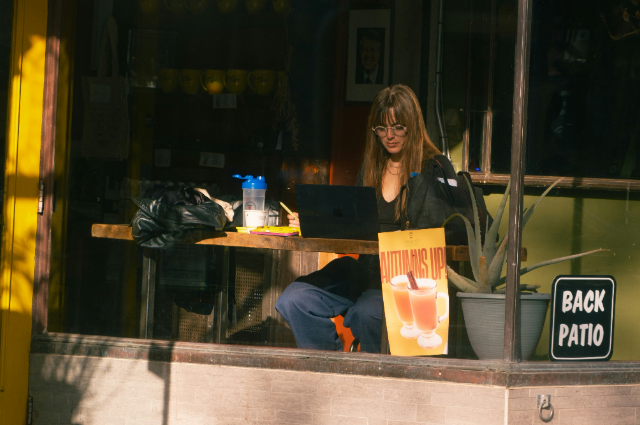
Chapter 1: The Girl With Too Many Plans
At twenty-six, Meher Sanyal had a strange habit of making plans for a life she hadn't figured out yet. She had three notebooks lying on her tiny study table- one marked Career, another Money, and the third simply called Dreams. Some nights, she would open all three at once and wonder how one person could have so many plans and still feel like she was going nowhere.
During the day, Meher was a healthcare professional working at a small clinic in the busy city of Suryanagar. To her patients, she appeared calm, confident and sorted. She knew how to explain difficult things to worried parents, how to make nervous patients comfortable and how to handle a busy day without losing her patience. But once she reached home, took off her shoes and sat on the edge of her bed, she was just another twenty-six-year-old girl wondering, “Am I actually doing okay?”
Meher hadn't always lived in Suryanagar. She had grown up in a small town called Devgarh, where life was slower, and people knew each other a little too well. For her education and career, she had moved to different cities- first Aaravpur, then Nandipur, and finally Suryanagar. Every city had taken something from her and given something back. Aaravpur taught her what it felt like to miss home. Nandipur taught her that being independent could sometimes feel terribly lonely. Suryanagar taught her that growing up meant making decisions even when nobody could guarantee that they were the right ones.
She had slowly become the kind of girl who could handle things on her own, even when secretly she wished someone would just sit beside her and say, “Don't worry, I'll handle this.”
Chapter 2: The Life Away From Home
Her rented apartment wasn't the Pinterest-perfect home she had once imagined. The kitchen was small, the furniture was basic, and some months the rent seemed to disappear half her salary before she could even understand where her money had gone. Still, every evening when she unlocked the door, there was a tiny sense of achievement.
This may not be my dream home yet, she would think, but I built this little life away from home.
And that thought was enough to make her smile sometimes.
When Meher received her monthly salary of ₹57,500, she had celebrated for exactly one evening. The next morning, she was back with her calculator. Around ₹14,000 went toward rent and household expenses, roughly ₹6,000 disappeared into food, transport and random necessities, another ₹5,000 went into investments, some money went toward insurance and long-term savings, and whatever remained was divided between her future goals and emergency savings.
She wanted to save enough that an unexpected expense wouldn't make her panic. She wanted investments that would grow quietly while she slept. She wanted to travel without checking her bank balance every two minutes. Someday, she wanted her own beautiful home. She wanted to be financially independent enough to say, “I can take care of myself.”
The funny part was that every time she reached one financial goal, she immediately created another. Sometimes she would stare at her spreadsheet and laugh.
“Salary ek hi hai, goals itne saare kyun hain?”
Maybe that was the problem with ambitious people. They didn't know how to stop dreaming.
Chapter 3: The Secret Dream
Meher also had another dream that she didn't talk about much. She wanted to create content. She wanted to make videos about her life, her work, money, travel, little everyday moments and all the things she was learning while growing up.
But there was one small problem- she was scared of being seen.
She would imagine people judging her. “Log kya bolenge?” “Healthcare professional hokar ye sab kyun bana rahi hai?” “What if nobody watches?”
One afternoon at work, when there were no patients, she found herself sitting at her desk and scrolling through other people's videos. After nearly half an hour, she suddenly locked her phone and whispered, “Agar main doosron ki life dekhne ke bajaye apni life record karna start kar doon toh?”
That evening she created a small YouTube channel called Life With Meher.
Her first video took almost three hours to record. She kept restarting the introduction because she didn't like the way her voice sounded. Eventually, tired of hearing herself say, “Hi guys, welcome back,” she simply pressed upload.
Her first video got only a few views. One of them was obviously hers.
But she smiled anyway.
Because sometimes the first victory isn't getting thousands of people to watch you.
Sometimes it's simply having the courage to let yourself be seen.
Chapter 4 — The Numbers
Content creation didn't suddenly make her famous. Some videos got a few dozen views. Some crossed a few hundred. Once, one of her videos unexpectedly crossed 2,000 views, and Meher behaved as if she had just won an award.
She kept refreshing the screen, took screenshots and sent them to her closest friend.
“Look! People are actually watching!”
The next video got 41 views.
She stared at the number for a while and said, “Okay, YouTube has humbled me again.”
But she uploaded another video anyway.
Slowly, she learned editing, thumbnails, hooks, captions, lighting, consistency and, more importantly, patience. She realised that building something from zero was lonely because nobody saw the hundred attempts behind the one thing that finally worked.
People only noticed the result.
They didn't see the girl recording the same sentence fifteen times, editing at midnight or wondering whether she should just give up.
Chapter 5: The Girl Nobody Saw
And perhaps that was how most of Meher's life felt.
From the outside, she looked ambitious. Inside, she was often exhausted.
There were days when she worried about money, days when she questioned her career, days when she compared herself with people her age and wondered why everyone else seemed to be moving faster.
Someone was buying a house. Someone was getting married. Someone was travelling abroad. Someone was starting a business. Someone seemed to have their entire future planned.
Meanwhile, Meher was celebrating because she had managed to save a little extra that month.
Sometimes she would scroll through social media and think, “Sabki life itni sorted kaise hai?”
Until one day she understood something that changed the way she looked at everything:
People post their highlights, not their whole lives.
Nobody posts the nights they cry. Nobody posts the bank balance that scared them. Nobody posts the failed interview, the family argument, the loneliness, the self-doubt or the days when getting out of bed itself felt like an achievement.
Everyone has a behind-the-scenes version of themselves that the world doesn't see.
Chapter 6: Love
There had been love in Meher's life too.
The kind of love that made ordinary days feel special. The kind where a simple message could change her entire mood. She had imagined a future, had made plans in her head and had believed that maybe she had finally found someone who would stay.
But relationships weren't always as simple as falling in love.
Sometimes there were misunderstandings, expectations, distance, emotional exhaustion and conversations that stayed in your head long after they ended.
There were nights when Meher replayed old conversations and wondered what she could have said differently. There were moments when she missed someone so much that she wondered whether moving forward meant that what they had shared wasn't real.
Eventually, she learned that moving on didn't mean forgetting someone.
It simply meant choosing not to let an old chapter control the chapters that hadn't been written yet.
Chapter 7: The Beach
One Sunday, Meher went alone to Silver Bay, a quiet beach outside Suryanagar. She loved the sea because it never seemed to ask questions. She sat there with her feet buried in the sand, watching the waves come and go.
She took out her phone to record a video but then put it back in her bag.
That day, she didn't want to create content. She didn't want to calculate her savings. She didn't want to think about career goals, relationships or whether she was falling behind.
She just wanted to exist.
Sitting there, she thought about the list she had made for herself before turning thirty: career growth, financial security, investments, travel, a beautiful home, a successful channel, happiness and peace.
She smiled at the last two because she had never figured out how to measure them.
There was no calculator for peace.
No SIP for happiness.
No monthly target for feeling content.
That evening, when she returned home, Meher opened her three notebooks again. For years, she had treated life like a checklist—finish this, achieve that, save this much, become this successful, reach this age, get this thing.
But that night she opened the Dreams notebook and wrote something completely different:
“I don't need to have everything figured out. I just need to figure out my next step.”
She looked at the sentence for a long time.
For the first time, she wasn't disappointed that she hadn't become everything she had imagined at twenty-one.
She was proud of the fact that she had become someone who kept trying even when she didn't know what would happen next.
Chapter 8: Monday Again
Monday morning came too quickly.
Meher woke up before her alarm. For a few seconds, she didn't remember what day it was.
Then she looked at the clock.
7:12 a.m.
“Shit.”
She jumped out of bed.
Her peaceful beach-day version had officially disappeared.
Back to reality.
She reached the clinic at 8:56.
Her colleague, Naina, looked at her.
“Madam, aaj phir late?”
“Four minutes early.”
“Eight fifty-six.”
“Exactly. Early.”
Naina rolled her eyes.
“You and your logic.”
Meher laughed.
For all the uncertainty in her life, Naina was one of the few people who made ordinary days easier. They could talk about patients one minute and gossip about someone's ridiculous Instagram story the next.
Some friendships didn't arrive dramatically.
They simply became part of your life.
And one day you realised—Oh. I would really miss this person if they weren't here.
Chapter 9: A Different Kind of Ambition
That afternoon, Meher had a difficult case. She spent nearly an hour with the family. There were no dramatic breakthroughs. No movie moment. Just careful assessment, explanation, planning and reassurance.
When the mother finally smiled and said, “Thank you. Aapne mujhe bahut calmly samjhaya,” Meher smiled.
“Of course.”
But when the family left, she sat quietly.
She looked at the empty chair opposite her.
For a moment, she remembered why she had chosen this profession.
Not for the title. Not for money. Not because it sounded impressive.
Because she genuinely liked helping people.
Somewhere between surviving adulthood, worrying about finances and chasing future goals, she had forgotten that.
She opened her notebook.
Under Career, she wrote:
“Don't just build a career. Become good at what you do.”
She underlined it twice.
Chapter 10: The Message
That night, while editing a video, Meher received a message from someone she didn't know.
“Hi. I don't know if you'll read this, but your videos make me feel less alone. I'm also trying to figure out my career and money. Everyone around me seems ahead, and I thought something was wrong with me. Your videos made me realise maybe I'm just growing at my own pace.”
Meher stopped editing.
She read it again.
Then again.
Her eyes became slightly wet.
She looked at her tiny room, at the ring light she had bought after saving for weeks, at the cheap tripod, at her laptop and at the video that had taken her two hours to edit.
Suddenly, the numbers didn't matter as much.
Maybe she wasn't just making videos.
Maybe somewhere, someone was watching.
Someone who felt exactly like she did.
Someone who needed to hear:
“You're not behind.”
Meher smiled.
She typed a reply.
“I honestly don't know what I'm doing either. I'm figuring it out too. Maybe that's the point. We don't have to know everything right now.”
She pressed send.
And put her phone down.
Chapter 11: The First ₹1 Lakh
Six months later, Meher's emergency fund crossed ₹1 lakh.
She stared at the number.
She didn't scream. She didn't celebrate loudly.
She just sat there.
Smiling.
A year ago, she had been scared of unexpected expenses. Now there was a small cushion sitting quietly in her account.
It wasn't enough to make her rich.
But it was enough to make her feel safer.
She opened her notebook and wrote:
Emergency Fund — ₹1,00,000.
Then beside it:
Next goal — ₹2,00,000.
She laughed.
“Obviously.”
The funny thing about financial goals was that they never ended.
But this time, she wasn't frustrated.
She was proud.
Because ₹1 lakh wasn't just money.
It was six months of saying no to unnecessary things. It was choosing savings over impulse purchases. It was learning discipline. It was choosing her future self.
And suddenly she understood something:
Saving money wasn't about becoming rich overnight.
Sometimes it was simply about buying yourself peace.
Chapter 12: The New Girl
A few weeks later, someone new joined the clinic.
His name was Arjun Malhotra.
He was not Meher's type.
At least, that's what she told Naina.
“He talks too much.”
Naina raised an eyebrow.
“You've known him for four days.”
“Exactly.”
“And?”
“He talks too much.”
“Tum uske baare mein kaafi observe karti ho.”
Meher looked offended.
“I'm observing because he talks too much.”
Naina smiled.
“Sure.”
Arjun had an irritating habit of stealing Meher's chair whenever she wasn't there.
One afternoon she returned to find him sitting comfortably at her desk.
“That's my chair.”
He looked up.
“There's no name on it.”
“There doesn't need to be.”
“Why?”
“Because I sit here.”
He grinned.
“Strong argument.”
“Get up.”
“No.”
Meher stared at him.
Arjun stared back.
Naina watched the scene from across the room.
Then quietly whispered to herself,
“Oh, this is going to be fun.”
Chapter 13: Not Again
Meher wasn't looking for love.
She had promised herself that.
She had already learned what happened when you made another person the centre of your emotional universe.
She wasn't doing that again.
So she kept Arjun at a safe distance.
Professional conversations only.
Mostly.
Except they started having lunch together.
Then coffee.
Then random conversations after work.
Then late-night messages.
Nothing serious.
Nothing she couldn't control.
At least that's what Meher believed.
One evening, Arjun asked,
“Why do you always look worried?”
Meher frowned.
“I don't.”
“You do.”
“No.”
“You were checking your bank account five minutes ago.”
“That doesn't mean I'm worried.”
“What does it mean?”
“Financial planning.”
He laughed.
“You're twenty-six.”
“Exactly. That's why I'm planning.”
“Most twenty-six-year-olds are planning their weekend.”
“I'm not most twenty-six-year-olds.”
Arjun smiled.
“I know.”
Something about the way he said it made her look away.
Chapter 14: The Question
One night, Arjun asked her something unexpectedly simple.
“What do you actually want?”
Meher laughed.
“That's a very broad question.”
“Fine. Forget career. Forget money. Forget what everyone expects. What do you want?”
She became quiet.
Nobody had asked her that in a long time.
She thought about it.
“I want…”
She stopped.
“I want to feel secure.”
Arjun nodded.
“Okay.”
“I want my own home someday.”
“Okay.”
“I want to travel.”
“Okay.”
“I want my work to mean something.”
“Okay.”
“And…”
She hesitated.
“I want someone who doesn't make me question whether I'm worth staying for.”
Arjun didn't joke this time.
He simply said,
“You deserve that.”
Meher looked at him.
For a second, she wanted to believe him.
And that scared her.
Because hope was dangerous.
Especially after heartbreak.
Chapter 15: The Call From Home
The next month, Meher received a call from home.
Her mother sounded worried.
“Beta, kab aa rahi ho?”
“Jaldi aaungi.”
“Jaldi matlab?”
Meher smiled.
“Maa, pata nahi. Work hai.”
“Work toh hamesha rahega.”
Meher became quiet.
She missed home.
More than she admitted.
She missed familiar food. She missed hearing someone moving around in the kitchen. She missed not having to think about every little thing. She missed being someone's child instead of always being the responsible adult.
After the call ended, she sat alone for a while.
Then she cried.
Not loudly.
Just quietly.
The kind of crying where you wipe your tears and continue scrolling through your phone as if nothing happened.
That night, she booked a ticket home.
Because sometimes adulthood means knowing when to stop being strong.
Chapter 16: Home
Devgarh hadn't changed much.
The same roads. The same tea shop. The same corner where she used to wait for friends.
But Meher had changed.
Her mother looked at her and said,
“Tu patli lag rahi hai.”
Meher laughed.
“Bas yehi notice kiya?”
“Of course.”
Her father asked about work. Her mother asked about marriage. Her relatives asked about salary. Someone asked whether she had bought a house yet. Someone else asked when she was getting married.
Meher smiled through all of it.
But later that night, lying in her childhood room, she realised something.
Home wasn't the place where everything was perfect.
Home was the place where she could temporarily stop pretending to be strong.
Chapter 17: The Email
For a while, Meher thought life had finally become manageable.
Not perfect.
Just manageable.
Her career was moving in the right direction. Her emergency fund was growing. Her channel was slowly finding its audience. Her friendship with Naina had become one of the safest parts of her life.
And then there was Arjun.
She hadn't given their relationship a name. Not yet.
But he had become the person she looked for when something funny happened at work. The person she wanted to tell when she had a good day. The person whose “Reached home?” message secretly made her smile.
For the first time in years, Meher wasn't constantly thinking about what could go wrong.
Maybe that was exactly when everything decided to go wrong.
It started with one email.
It was a Wednesday afternoon.
Meher had just finished seeing a patient when she noticed a message from the clinic administration.
Subject: Staff Restructuring — Important.
Her stomach tightened.
She opened it.
The clinic was cutting costs. Some positions were being restructured. Some salaries would be revised. Some contracts would not be renewed.
Meher read the email twice.
Then a third time.
She looked around the room.
Everyone was working as usual.
Someone was laughing in the hallway. A child was playing with a toy. A printer was running.
The world hadn't changed.
But hers suddenly felt unstable.
Chapter 18: The Meeting
That evening, the manager called her in.
“Meher, I want you to know this isn't about your performance.”
She sat quietly.
“Then what is it about?”
“Budget.”
That one word was enough.
She nodded.
“Will my position be affected?”
The manager hesitated.
“We'll know in a few weeks.”
A few weeks.
Meher walked out of the room feeling strangely numb.
For the first time in years, she was scared of losing something she had worked so hard to build.
The next few weeks were brutal.
Meher became quieter. She stopped ordering food. Cancelled her travel plans. Paused unnecessary spending. Took extra hours whenever they were available. She even considered taking a second job.
Naina noticed.
“You're not okay.”
“I'm fine.”
“Don't.”
“What?”
“Don't give me that 'I'm fine' nonsense.”
Meher looked away.
“Tell me.”
Meher's eyes filled instantly.
“I might lose my job.”
Naina's expression changed.
“Oh, Meher…”
“I've worked so hard for this.”
“I know.”
“I can't go back to depending on my parents.”
“You won't.”
“What if I can't find another job?”
“You will.”
“What if I have to move?”
“We'll figure it out.”
“What if—”
“Meher.”
Naina held her hand.
“One problem at a time.”
And suddenly Meher cried.
Not because Naina had solved anything.
But because someone had finally reminded her that she didn't have to solve everything alone.
Chapter 19: Losing More Than a Job
Then came the second blow.
Her channel received a copyright warning.
One of her most successful videos was taken down.
Then another.
The small income she had started earning from content disappeared.
It wasn't a huge amount.
But to Meher, it represented something much bigger.
It represented the possibility that maybe her dream could become real.
She sat in front of her laptop that night.
The screen blurred through her tears.
“Maybe I should stop.”
Arjun called.
She didn't answer.
He called again.
She rejected it.
A message arrived.
“I know you're upset. I'm here.”
She stared at the message.
For some reason, instead of feeling comforted, she became angry.
She called him.
“What do you mean you're here?”
Silence.
“Meher…”
“Everyone says that.”
“I'm not everyone.”
“You don't understand.”
“Then explain it to me.”
“You can't.”
“Try me.”
Her voice broke.
“I am tired, Arjun.”
He became quiet.
“I am tired of always having to be strong. I'm tired of calculating everything. I'm tired of worrying about money. I'm tired of pretending I know what I'm doing. And now my job is uncertain, my channel is going nowhere and—”
She stopped.
“And what?”
She whispered,
“I don't know if I can handle losing one more thing.”
There was silence.
Then Arjun said softly,
“Then don't handle it alone.”
Meher closed her eyes.
For a second, she wanted to believe him.
But fear made her defensive.
“You don't have to fix me.”
“I know.”
“I don't need saving.”
“I know that too.”
“Then what do you want?”
His answer was simple.
“Bas tumhare saath rehna.”
She didn't reply.
Because sometimes the kindest words are the ones that scare you the most.
Chapter 20: The Day She Lost Her Job
Two days later, the final meeting happened.
Meher sat across from the management team.
Her contract was not being renewed.
The words were polite. Professional. Carefully chosen.
But rejection didn't care how politely it was delivered.
She walked out of the building holding a cardboard box.
Inside were a few files, a coffee mug, two notebooks and a small photo she'd kept near her desk.
She stood outside the clinic.
For three years, she had walked through those doors thinking she knew where her life was going.
Now she had no idea.
She called her mother.
“Ma…”
There was something in her voice.
Her mother immediately knew.
“Kya hua?”
“I lost my job.”
Silence.
Then—
“Ghar aa ja.”
Meher closed her eyes.
“No.”
“Beta, why?”
“Because I don't want to run away.”
She swallowed.
“I'll figure it out.”
Her mother didn't argue.
She simply said,
“Then figure it out. But remember, you don't have to prove anything to us.”
Meher cried after the call ended.
Because that was exactly what she had needed to hear.
Chapter 21: The Night Everything Fell Apart
That night, she went to Silver Bay.
The same beach.
The same waves.
But this time she wasn't peaceful.
She was angry.
Angry at herself.
Angry at life.
Angry at how quickly stability could disappear.
She threw her shoes into the sand and sat down.
“Why?”
The waves answered with silence.
“Why does everything have to be so difficult?”
Nothing.
She laughed through her tears.
“Of course. Sea se advice maang rahi hoon.”
She pulled out her notebook.
The old one.
The one where she had written all her dreams.
She looked at the pages.
Career.
Money.
Dreams.
She turned page after page.
Then suddenly stopped.
There was something she'd written years ago.
“I want to build a life where I don't have to be afraid of starting over.”
She stared at the sentence.
And something inside her shifted.
Maybe she had misunderstood her own dream.
She had spent years trying to build a life where nothing could go wrong.
But that life didn't exist.
The real goal wasn't falling.
It was knowing—
If I fall, I can stand up again.
Chapter 22: Starting Again
The next morning, Meher woke up at 6:30.
For the first time in weeks, she didn't check her bank account.
She opened her laptop.
Updated her CV.
Applied for three jobs.
Then five.
Then ten.
She emailed people she hadn't spoken to in years. She called old colleagues. She researched new certifications. She made a list.
Then another.
And finally, she opened her camera.
She stared at herself.
No makeup.
Messy hair.
Puffy eyes.
No job.
No perfect plan.
She pressed record.
“Hi.”
She took a breath.
“I wasn't planning to make this video.”
She smiled sadly.
“But sometimes life doesn't ask you whether you're ready.”
She looked directly into the camera.
“I lost my job.”
She paused.
“And honestly, I'm scared.”
Her voice shook.
“But I'm also realising something.”
She leaned closer.
“Maybe starting over isn't failure.”
“Maybe it's just another beginning.”
She uploaded the video.
Then she closed her laptop.
She didn't check the views.
For once, she didn't care.
Chapter 23: Don't Handle It Alone
That evening, Arjun came to her apartment.
He didn't bring flowers.
He didn't bring a dramatic speech.
He brought food.
Meher opened the door.
He held up the bag.
“Dinner.”
She looked at him.
“You're annoying.”
“I know.”
She stepped aside.
He entered.
For a while, neither spoke.
Then Meher whispered,
“I was scared you'd leave.”
Arjun looked at her.
“Why?”
“Because I'm not doing well.”
He smiled.
“Meher, I never liked you because your life was perfect.”
Her eyes filled with tears.
“I don't even know what my life looks like right now.”
“Then we'll find out.”
“We?”
“If you want.”
She looked at him.
And for the first time, she understood that love wasn't someone promising that nothing bad would happen.
Love was someone saying—
“If something bad happens, we'll face it.”
She didn't need rescuing.
She didn't need someone to build her life for her.
She just needed someone who wouldn't make her feel alone while she built it herself.
She reached for his hand.
“Okay.”
Chapter 24: One Year Later
Three months later, Meher had a new job.
It wasn't perfect.
The salary wasn't as high as she'd hoped. The commute was longer. The office was unfamiliar. She had to start proving herself all over again.
But she didn't hate it.
Because this time she knew something she hadn't known before.
She could start again.
Her channel also survived.
The video about losing her job unexpectedly became her most-watched video yet.
Thousands of strangers commented.
Some shared their own stories. Some said they were unemployed. Some were thinking about changing careers. Some were afraid to start again.
One comment said:
“I thought I was the only one whose life didn't go according to plan.”
Meher read it three times.
Then smiled.
Maybe this was why she had started creating in the first place.
Not to show people a perfect life.
But to show them a real one.
Chapter 25: The Woman She Was Becoming
One year later, Meher stood on her balcony overlooking Suryanagar.
She had a better job.
Her emergency fund had crossed ₹2 lakh.
Her channel had grown far beyond what she had imagined.
She was still saving. Still learning. Still making mistakes.
And Arjun was still there.
Not as her solution.
As her partner.
She opened her notebook.
There were still three sections.
Career.
Money.
Dreams.
But this time, she added a fourth.
Life.
Under it, she wrote:
“Things I cannot control.”
She smiled.
Then wrote:
“Losing a job.”
“People leaving.”
“Plans changing.”
“Bad days.”
“Unexpected expenses.”
She paused.
Then underneath everything, she wrote:
“But I can control what I do next.”
She closed the notebook.
The city lights flickered below.
Her phone buzzed.
A new comment on her latest video.
Another message from someone who needed to hear that they weren't behind.
Another notification from Arjun.
Another ordinary evening.
And Meher realised something.
She had spent so much of her life waiting for the day when everything would finally be okay.
But maybe there would never be such a day.
Maybe life would always have another problem.
Another bill.
Another heartbreak.
Another uncertain decision.
Another beginning.
And maybe that wasn't something to fear.
Maybe that was simply life.
Continuing to survive - Bas Thoda Aur.
Years later, when people asked Meher how she changed her life, she never had one dramatic answer.
There wasn't one magical day when everything suddenly became perfect.
She simply kept going.
She saved a little more when she could. She invested when she understood what she was doing. She learned to say no. She learned to walk away from things that constantly disturbed her peace. She continued growing in her career. She kept making videos even when only a handful of people watched them. She travelled when she could. She laughed more. She cried sometimes. She failed. She started again.
She stopped trying to prove that she was doing well and started focusing on whether she actually felt well.
And if someone asked what she did when everything felt too much, she would laugh softly.
“Bas…”
A pause.
“Thoda aur.”
Thoda aur try.
Thoda aur save.
Thoda aur learn.
Thoda aur heal.
Thoda aur love.
Thoda aur let go.
Thoda aur live.
Because maybe growing up wasn't about becoming the person she had planned to be at twenty-one.
Maybe growing up was accepting that the girl she was becoming at twenty-six was already worthy.
Worthy of love.
Worthy of success.
Worthy of rest.
Worthy of starting over.
Worthy of dreams.
Even the impossible ones.
She had stopped asking, “Why am I not there yet?”
And started asking, “What can I do today to get a little closer?”
Meher wasn't trying to build a perfect life anymore.
She was simply building a life that felt like hers.
And perhaps, after everything, that was the dream she had been chasing all along.
Because life doesn't always change with fireworks.
Sometimes it changes with one small decision.
One brave conversation.
One saved rupee.
One uploaded video.
One goodbye.
One new hello.
One ordinary Monday.
One quiet night.
One moment where you finally tell yourself:
“I don't know where this is going.”
And then, despite everything,
you take the next step.
Bas thoda aur.
Not because you aren't enough.
Not because you need to become someone else.
But because there is still so much life waiting for you.
And this time…
you aren't afraid of it.