
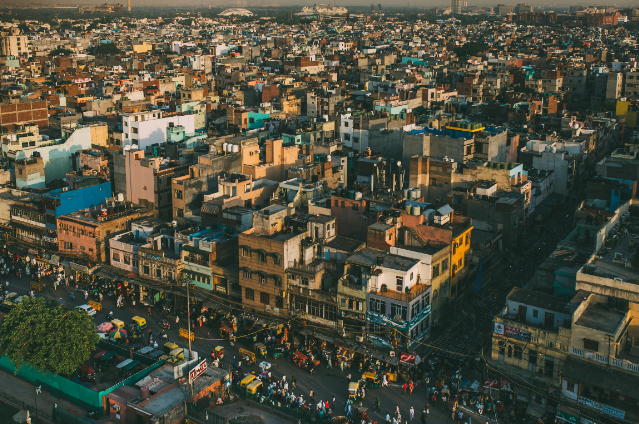
Whenever people talk about India, someone eventually brings up dirt, pollution, garbage, or crowded streets. The criticism is not completely wrong, but the way people talk about it often lacks context. India’s cleanliness problem is real, yet the stereotype built around it is far more extreme than reality itself.
A large reason behind the issue is the population. Cities were never built to carry this many people. Roads meant for a few thousand now carry millions every day. Sewage systems collapse under pressure, garbage piles faster than it can be collected, and rivers become dumping grounds because infrastructure grows slower than the population using it.
Air pollution has become one of the biggest concerns. In cities like Delhi, winter no longer feels like winter alone. The sky turns grey with smoke from vehicles, factories, construction dust, and crop burning. People grow up breathing air that should never have been normal.
Waste management is another struggle. Many places still lack proper disposal systems, enough public bins, or strict recycling practices. Huge landfills stand beside cities like reminders of how quickly consumption is increasing. Rivers such as the Ganga and Yamuna suffer from industrial waste, sewage, and plastic dumped into them every day, even while people continue calling them sacred.
But blaming only the people is too easy.
Cleanliness is connected to education, poverty, and governance. A person worried about earning tomorrow’s meal is less likely to think about environmental responsibility. Civic sense cannot grow properly when public systems themselves are weak. Children are taught formulas in schools, but very little about public responsibility, waste segregation, or environmental ethics.
At the same time, the internet has made the “dirty India” image stronger than it actually is. One slum, one polluted street, or one overflowing drain gets photographed and shared across the world as if it represents the entire country. Very few people show clean villages, improving cities, or communities, trying to change things.
India has still made progress. Campaigns like Swachh Bharat pushed sanitation into the national conversation. Toilets were built in rural areas, awareness increased, and people slowly began speaking about cleanliness more openly than before. The change is incomplete, but it exists.
The truth is simple: India’s cleanliness problem should neither be denied nor exaggerated. It deserves honesty instead of mockery. A country this large, unequal, and rapidly growing was always going to struggle with sanitation and pollution. The challenge now is whether people and governments are willing to treat public spaces with the same care they expect inside their own homes.
Cleanliness is not only about sweeping roads. It is about discipline, planning, education, and respect for shared spaces. And until that mindset becomes common, no campaign alone will be enough.
Sources :
- Source: The Times of India https://share.google
- India cities dominate world air pollution list https://share.google
- Source: Down To Earth https://share.google