
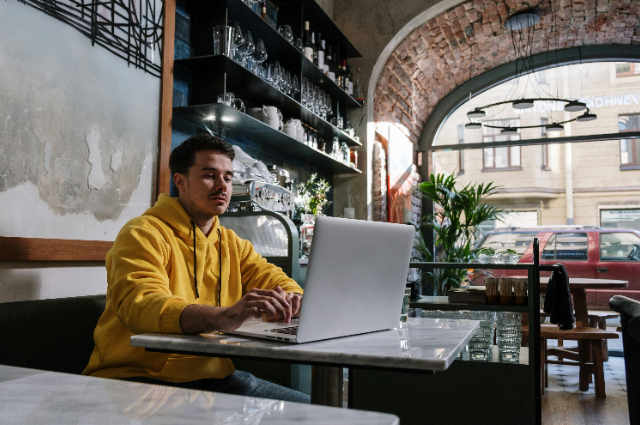
There was a time when travel meant stepping into a place and slowly learning its rhythm the smell of street food, the sound of local languages, the way evenings settled over unfamiliar streets. Today, travel has changed. With laptops and Wi-Fi, many people don’t just visit places anymore; they live and work there, sometimes for months. These are the digital nomads, a growing group that blends work with constant movement.
At first glance, the idea sounds exciting. Who wouldn’t want to work from a beach café or a quiet hill town? But beneath the surface, a different story is unfolding. One where the presence of digital nomads is quietly changing, and sometimes erasing, the identity of the very places they admire.
The Rise of the Digital Nomad Lifestyle
The shift began slowly but picked up speed after the pandemic. Remote work became normal, and suddenly, people were no longer tied to offices. Countries began offering special visas to attract these workers, hoping to boost their economies.
For many young professionals, this lifestyle offers freedom. They can explore new cultures, meet people from across the world, and avoid the routine of a fixed life. Social media plays a huge role here; pictures of laptops next to coconut drinks or scenic mountain views create an image that feels both aspirational and achievable.But what looks like freedom from one angle can feel like pressure from another.
When Tourism Turns Into Long Term Presence
Unlike tourists who stay briefly, digital nomads often settle in one place for months. They rent apartments, frequent local cafés, and become part of everyday life but not quite in the way locals do.
This longer stay means a stronger impact. Rents begin to rise as landlords realize they can charge more to foreigners earning in stronger currencies. Local residents, who have lived there for generations, suddenly find it harder to afford their own neighborhoods.
Places that were once quiet and community driven start changing. Small shops turn into co working spaces. Traditional homes become rental apartments designed for short term stays. The town begins to reshape itself, not for its residents, but for outsiders.
The Disappearing Local Culture
One of the biggest ironies of digital nomadism is this: people travel in search of “authentic” experiences, but their presence often makes those experiences disappear.
When enough outsiders gather in one place, the culture begins to adapt. Restaurants adjust menus to suit global tastes. English replaces local languages in everyday interactions. Festivals become more about performance than tradition, curated for an audience rather than lived by a community.
Over time, the uniqueness of the place starts to fade. It begins to look like everywhere else, a mix of similar cafés, similar aesthetics, similar lifestyles. The very charm that attracted people in the first place slowly disappears.
Economic Benefits but for Whom?
Supporters of digital nomadism often point out its economic advantages. Nomads spend money on housing, food, transport, and experiences. In theory, this should help local businesses grow.
And in some cases, it does. Certain sectors like hospitality and tourism benefit directly. New cafés open, and some locals find jobs catering to this new demand.
But the benefits are not evenly distributed. While business owners might profit, everyday residents face rising costs. Essential services become more expensive. In extreme cases, locals are pushed out of their own areas, forced to move to less developed parts of the town.
The result is a kind of imbalance is where a place becomes economically active but socially strained.
A New Kind of Inequality
Digital nomads often come from countries where incomes are higher. Even an average salary from abroad can feel like a fortune in smaller towns or developing regions.
This creates a visible gap. What is affordable for a nomad may be expensive for a local. Over time, this difference changes how spaces are used. Cafés, apartments, and even markets start catering to those who can pay more.
It’s not always intentional, but it creates a quiet form of inequality. Locals may begin to feel like outsiders in their own hometowns, watching their spaces change in ways they didn’t choose.
Can Travel Be Responsible?
This doesn’t mean that digital nomadism is entirely harmful. Like any trend, its impact depends on how people approach it.
There are ways to travel more responsibly. Staying in locally owned accommodations instead of large chains can help. Learning basic phrases in the local language, respecting customs, and supporting traditional businesses can make a difference.
Most importantly, being aware of one’s impact matters. It’s easy to think of travel as a personal experience, but it always affects others.
Finding a Balance
The challenge is not to stop people from traveling or working remotely. The world is more connected than ever, and that’s not going to change. The real question is how to balance mobility with respect for local communities.
Some places are already trying to manage this. Policies on rental limits, taxes for foreign workers, and protections for local housing are being introduced in different parts of the world. These steps may not be perfect, but they show that awareness is growing.
For digital nomads themselves, the answer may lie in slowing down not just in how long they stay, but in how deeply they engage. Instead of treating places as temporary backdrops, they can try to understand them as living communities.
The Future of Travel
Travel has always shaped places, but the scale and speed are different now. With technology making movement easier, the responsibility that comes with it becomes greater.
Digital nomads are not villains, but neither are they neutral. Their choices matter. Every café they choose, every apartment they rent, every interaction they have contributes to the story of a place.
The question is not whether digital nomads are erasing towns but whether they are willing to notice the changes they bring.
Because in the end, travel is not just about what we take from a place. It’s also about what we leave behind.
References
- Khawas, A., Kumar, P., & Kumar, S. (2025). Study on digital nomads and urban change in Delhi.
- Research on digital nomads causing housing pressure in Dali, China.
- Study on the impacts of digital nomads in Chiang Mai, Thailand.
- Odrowąż-Coates, A. & Odyniec, K. (2025). Digital nomads and social structures.
- MDPI (2025). Digital nomads and their impact on local economies and culture.