
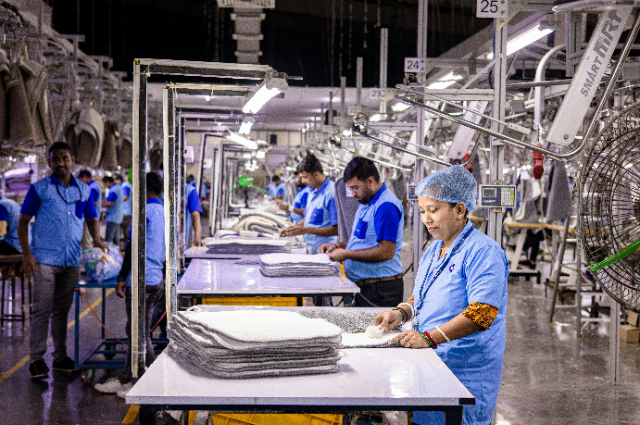
If you trace India’s industrial journey over the years, a pattern quietly repeats itself. Worker protests rise, gain attention, and then fade only to reappear somewhere else. From the factory belts of Manesar in Haryana to the busy industrial sectors of Noida, the story feels familiar. The locations change, the companies change, but the issues remain almost the same. It creates a cycle that India has seen many times, yet hasn’t fully addressed.
The Noida Protests: More Than Just Chaos
In April 2026, Noida witnessed intense protests by factory workers. What started as a peaceful demand soon turned into clashes with police, damaged property, and blocked roads. To an outsider, it looked like sudden unrest. But for the workers, it was a result of long frustration that had been building for months.
At the centre of the protest was the issue of wages. Workers were earning around ₹13,000 a month, while in neighbouring Haryana, wages had been increased to nearly ₹19,000. This difference created a strong sense of unfairness. Workers began to question why their labour was valued less despite doing similar work.
But wages were not the only concern. Long working hours, lack of proper overtime pay, and poor working conditions also played a role. These are not new complaints; they have been heard in different industrial areas again and again.
Looking Back at Manesar
To understand Noida better, it is important to remember Manesar. The industrial hub became widely known after major worker unrest in the early 2010s, especially in automobile factories. Those protests were serious and forced national attention on labour issues.
At that time, many believed it would bring lasting change. But more than a decade later, the similarities between Manesar and Noida are clear. In both places, workers faced low wages, job insecurity, and weak communication with management. The protests followed almost the same path and ignored concerns leading to sudden escalation.
Rising Costs and Stagnant Wages
One of the biggest reasons behind such protests is the gap between income and expenses. Daily life has become more expensive. Food, rent, travel, and basic needs now cost much more than before. However, wages for many workers have not increased at the same pace.
This creates constant financial pressure. Workers are forced to manage their lives with limited income, and over time, frustration builds. When they see others earning more for the same work in nearby regions, that frustration grows even stronger.
The Reality of Contract Labour
Another important factor is the widespread use of contract labour. Many factories hire workers on short-term contracts to reduce costs. While this benefits companies, it creates insecurity for workers.
Contract workers often earn less and receive fewer benefits. They also live with the fear of losing their jobs easily. Because of this, they hesitate to raise their voices individually. But when problems continue for too long, collective protests become their only option
When Communication Breaks Down
A common issue in many industrial disputes is the lack of communication. Workers often do not have a proper system to express their concerns. Complaints are delayed or ignored, and there is little direct dialogue with management.
Over time, this creates a gap between workers and authorities. When people feel unheard, they look for stronger ways to get attention. Protests become not just about demands, but about being noticed.
From Protest to Violence
In Noida, the protest escalated after a few days and turned violent. Clashes with police led to injuries and arrests, and tear gas was used to control the situation.
Such escalation is often not planned. It happens when emotions run high and trust is already broken. Unfortunately, once violence begins, the focus shifts away from the workers’ issues. The discussion changes from their demands to the damage caused, and the real problems remain unresolved.
Government Action: Too Late
After the protests, authorities announced several measures, including weekly offs, better overtime pay, and a proper complaint system. These steps were necessary and provided some relief.
However, they also raise an important question that why do these solutions come only after protests? If these changes had been introduced earlier, the situation might not have reached such a tense point.
This pattern of reacting after a crisis, instead of preventing it, keeps repeating itself across different regions.
Growth vs Worker Welfare
India is aiming to grow as a global manufacturing hub. Industrial areas like Noida and Manesar are central to this goal. They generate jobs, attract investment, and support economic growth.
But growth cannot ignore the people who make it possible. When workers feel neglected or exploited, it affects productivity and stability. Protests disrupt industries and create uncertainty, which ultimately harms the economy as well.
Breaking the Cycle
The repeating pattern from Manesar to Noida shows that the issue is not limited to one place. It is a larger structural problem. Solving it will require consistent effort, not temporary fixes.
Workers need fair wages that match living costs. They need secure working conditions and a system where their voices are heard regularly. Industries and authorities must focus on communication and prevention rather than waiting for unrest to happen.
A Pattern India Must Change
The story of worker protests in India is no longer surprising; it has become predictable. That itself is a concern. Each new protest is a reminder that the deeper issues are still unresolved.
India now faces a choice. It can continue dealing with protests as they come, or it can address the root causes behind them. The second option is more difficult, but it is the only way to break this cycle.
Until then, the journey from Manesar to Noida will keep repeating itself in new places, with new workers, but the same old struggles.
References
- Moneycontrol – Coverage on Noida factory workers’ protest and wage demands.
- Firstpost – Report on labour unrest and minimum wage differences between states.
- Ministry of Labour and Employment, India – Data on minimum wages and labour laws.
- The Hindu – Analysis of labour issues, contract workers, and industrial unrest in India.
- Hindustan Times – News coverage of Noida protest, clashes, and traffic disruptions.