
A Life Changed in 2013
In March 2026, the Supreme Court of India gave a decision that made many people stop and think not just about law, but about life itself. The case of Harish Rana was not just another legal matter. It was about pain, hope, and a difficult question: how long should life be continued when there is no chance of recovery?
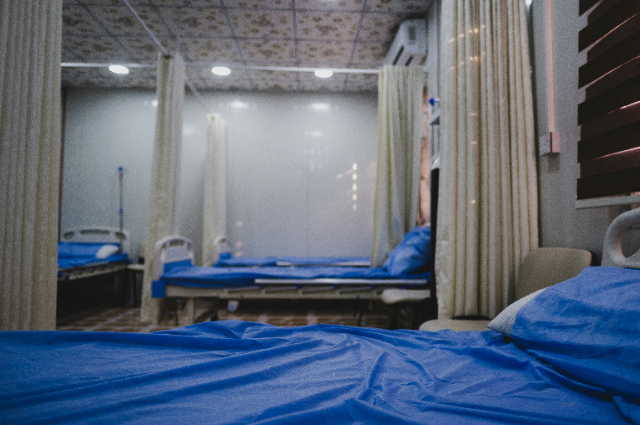
Harish Rana’s story began in 2013 when he fell from a building. The accident did not take his life, but it changed it completely. He went into a Persistent Vegetative State (PVS), a condition where a person is alive physically but has no awareness or response. For 13 long years, he remained like this.
Living Between Life and Death
All these years, he survived only because of medical support, feeding tubes, fluids, and continuous care. His condition did not improve. There was no sign of recovery. He was alive, but not living in the true sense.
A Family’s Silent Struggle
His parents stood by him through everything. But watching their son in the same condition for over a decade was not easy. It was painful, exhausting, and emotionally draining. Every day was a reminder of what they had lost.
The Decision to Approach the Court
After years of waiting and hoping, his parents decided to approach the Supreme Court. They requested permission to stop the life-support treatment. This was not a sudden decision it came after years of helplessness. They believed their son deserved peace, not prolonged suffering.
What the Supreme Court Said
On 11 March 2026, the Supreme Court gave its verdict. A bench of Justices J.B. Pardiwala and K.V. Viswanathan allowed the withdrawal of life-sustaining treatment. Even the judges admitted how sensitive the matter was. At one point, they questioned themselves, asking, “Who are we to decide who lives or dies?”
After careful thought, they gave permission. This became a historic moment because, for the first time, the Court actually allowed passive euthanasia in a real case.
Understanding Passive Euthanasia in Simple Terms
In India, euthanasia is of two types, active and passive. Active euthanasia means directly causing someone’s death, like giving a lethal injection. This is illegal.
Passive euthanasia is different. It means stopping medical treatment that is artificially keeping a person alive. The person is then allowed to die naturally.
What the Law Earlier Allowed
The legal journey started with the Aruna Shanbaug case in 2011, where the Supreme Court first allowed passive euthanasia under strict rules. Later, in 2018, the Common Cause judgment recognised the “right to die with dignity” as part of the right to life. In 2023, the Court made the process slightly easier by simplifying guidelines.
Even after all this, passive euthanasia mostly stayed on paper. It was allowed in theory, but rarely used in real life.
Why This Case is Different
The Harish Rana case changed that. It showed that the law can actually be applied in real situations. It turned a legal idea into a real decision that affected a real family.
Challenges in the Current System
The process is still not simple. Doctors, medical boards, and authorities all have to agree. Multiple approvals are required to make sure the decision is right.
While these rules are meant to prevent misuse, they also make things difficult for families who are already suffering. Not everyone has the knowledge or resources to go through such a long process.
A Step Taken by Karnataka
In January 2025, the Karnataka government took an important step. It allowed terminally ill patients the right to die with dignity through a state circular. This showed that awareness about this issue is slowly increasing in India.
How Other Countries Handle It
Many countries, like the Netherlands, Belgium, Canada, and New Zealand, have clear laws about euthanasia. In India, we mostly depend on court decisions instead of proper laws. This makes the process less clear and sometimes harder to follow.
The Bigger Question: Life or Dignity?
This case makes us think deeply. Is life just about breathing, or is it about living with dignity? Should treatment continue even when there is no hope?
Different people have different views. Some believe life should be saved at any cost. Others feel dignity is more important than just staying alive.
A More Human Approach
The Harish Rana case is not just a legal decision; it is a human story. It shows the pain of a family, the limits of medicine, and the role of law in such situations.
This judgment may become a turning point in India. It shows that the right to die with dignity is not just an idea, but something that can be given in real life.
In the end, it reminds us that sometimes, letting go is not giving up it is an act of compassion.
References:
- Supreme Court of India, Harish Rana v. Union of India, Judgment dated 11 March 2026.
- Supreme Court of India, Aruna Ramachandra Shanbaug v. Union of India, (2011).
- Supreme Court of India, Common Cause v. Union of India, (2018) – Right to Die with Dignity and Living Will.
- Supreme Court of India Guidelines on Withdrawal of Life-Sustaining Treatment (WLST), 2023.
- Government of Karnataka Circular on “Right to Die with Dignity”, issued on 30 January 2025.
- Articles and reports on euthanasia laws in India and internationally (Netherlands, Belgium, Canada, New Zealand).