
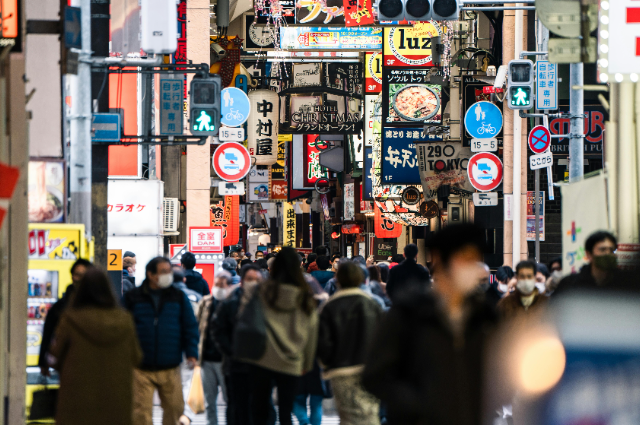
Stand in almost any major city today, and you’ll notice something strange: people aren’t always looking at the buildings, the streets, or even the sky. They’re looking for a sign. Not a direction board, but a bold, oversized, perfectly placed name, the kind that says, “Take a picture here.” Somewhere along the way, cities stopped being just places to explore and became places to pose. Welcome to “Logo Land,” where signs often become more famous than the landmarks themselves.
The most obvious example is the Hollywood Sign. It wasn’t built to be iconic. It started as a temporary advertisement for a housing project. Yet over time, it turned into a global symbol of ambition, cinema, and dreams. Many visitors to Los Angeles feel satisfied just seeing the sign from a distance. The actual studios, the craft of filmmaking, those become secondary. The sign carries the entire idea of Hollywood in a few bold letters. This is the power of visual identity. And in today’s world, it’s everywhere.
When Cities Become Brands
Cities today compete like products. They need attention, tourism, and global recognition. And what works better than a simple, striking visual?
That’s why so many places now create large public signs. The I Amsterdam Sign became one of the most photographed spots in Amsterdam, even though the city itself is filled with canals, museums, and centuries of history. People lined up not for the architecture, but for the letters.
It’s not hard to see why. A sign is easy. It gives you a clear message: you are here. It’s also social media-friendly. In a single frame, it proves your location without explanation.
This shift has quietly changed how cities design themselves. Public spaces are no longer just functional or aesthetic; they are performative. They are built to be seen, shared, and remembered through images.
The Influence of Corporate Logos
It’s not just city names. Corporate branding has taken over urban landscapes in a way that’s hard to ignore.
Walk through areas like Times Square in New York City, and you’ll realise that the buildings themselves almost disappear behind giant screens and glowing advertisements. The experience is less about architecture and more about immersion in a sea of logos.
Brands like McDonald's or global tech companies use consistent visual identities across the world. Their logos act like anchors in unfamiliar cities. No matter where you go, you recognise them instantly. In a way, they provide comfort, but they also blur the uniqueness of different places.
Even modern landmarks are not free from this influence. In Dubai, the Burj Khalifa is often lit up with projections, brand campaigns, and national messages. It’s not just a building, it’s a massive screen, constantly communicating something.
Simplified Tourism
Travel today is faster, more visual, and often more superficial. People want to experience as much as possible in a short time, and more importantly, they want to show that experience.
Signs make that easy. You don’t need context or explanation. A single photo with a well-known sign is enough to tell your story.
This is why cities across the world have started installing giant name displays. From beaches to mountains, from airports to city centres, these signs act like checkpoints of tourism. You arrive, you click, you move on.
But something gets lost in this process. When travel becomes about collecting photos, the deeper layers of a place are its history, culture, and everyday life that can fade into the background.
What We Lose Along the Way
There’s nothing wrong with taking pictures. The problem begins when the sign becomes the only experience. A landmark is meaningful because of its story. A fort speaks of battles, a temple of faith, a street of daily life. But a sign often tells you very little beyond a name.
Imagine visiting a historic city and spending most of your time at a photo spot. You leave with a perfect picture, but without understanding what makes the place unique. It’s like reading the title of a book and skipping the entire story.
Over time, this can change how cities are preserved and presented. Instead of protecting meaningful spaces, there may be more focus on creating “Instagrammable” ones.
Why Signs Work So Well
To understand this trend, you have to look at how people think today. Attention spans are shorter. Visuals are more powerful than text. Simplicity is preferred over complexity.
A sign fits perfectly into this mindset. It is immediate, clear, and requires no effort to understand. It also creates a sense of participation; you’re not just seeing the place, you’re inside the frame with it.
There’s also an emotional side. Signs often represent belonging. When you stand next to a city’s name, it feels like you’ve become a small part of it, even if only for a moment.
Can Signs and Stories Coexist?
The idea isn’t to remove signs or reject modern design. Signs can be beautiful, meaningful, and even artistic. The real challenge is balance.
Cities can design signs that reflect their culture instead of just displaying their names. Materials, colours, and styles can connect to local traditions. A sign doesn’t have to be separate from a place; it can grow out of it.
At the same time, travellers can change their approach. Instead of stopping at the sign, they can treat it as a starting point. Walk beyond it. Talk to people. Notice details that don’t fit into a frame.
Because the truth is, the most memorable parts of a place are often the ones that can’t be captured in a single photo.
Beyond the Frame
“Logo Land” is a reflection of our times. It shows how much we value visibility, recognition, and simplicity. It also reveals how easily depth can be replaced by surface.
Yet, there’s still hope in how we choose to experience the world. The Hollywood Sign became iconic because it came to represent dreams, struggles, and stories, not just letters on a hill. Maybe that’s the lesson. A sign becomes powerful when it stands for something real.
So the next time you find yourself in front of a giant city sign, go ahead and take the picture. But then, put your phone down for a while. Look past the letters. Because the place you came to see is still there, waiting quietly, patiently, beyond the logo.
References
- UNWTO – for basic ideas about tourism and how places attract visitors.
- BBC – simple articles on cities, travel, and modern culture.
- National Geographic – easy reads on places, landmarks, and travel trends.
- Hollywood Sign – example of how a sign became more famous than the place.
- Times Square – shows how logos and ads dominate city spaces.