
The recent observations of the Bombay High Court have highlighted a serious contradiction in Maharashtra's education policy. The state government has been strongly promoting Marathi and has made it compulsory in all schools from Class 1 to Class 10. English medium, CBSE, ICSE, and international schools have all been told that Marathi must be taught. Schools that fail to follow this rule can be fined up to ₹1 lakh.
At the same time, the government issued two orders that could have led to the closure of hundreds of Marathi medium schools, especially in rural areas.
The High Court questioned this contradiction in simple but powerful words. If the government wants to protect Marathi, why is it taking steps that threaten the schools where Marathi is the main language of teaching?
The Court's Important Observation
While hearing petitions filed by several unaided schools, the Bombay High Court openly criticized the Government of Maharashtra.
The judges said that on one hand, the State was insisting that Marathi should be given importance throughout Maharashtra. On the other hand, its own actions were likely to close Marathi schools.
This observation struck a chord with many people. A language cannot be preserved only through rules and fines. It survives because children learn, read, and speak it every day in classrooms.
What the Government Orders Said
The controversy began with two Government Resolutions (GRs) issued on April 1 and April 2, 2025.
These resolutions stated that several unaided schools would no longer be eligible for grant-in-aid from the government. The schools were told to apply under the Self-financed Schools Act before April 30. If they did not apply, their recognition would automatically be cancelled.
For schools in cities, becoming self-financed may be difficult but possible. For schools in villages, where most parents cannot afford high fees, this was a major threat.
More Than 750 Schools Were Affected
The High Court noted that the policy would affect 433 primary schools and 324 secondary schools.
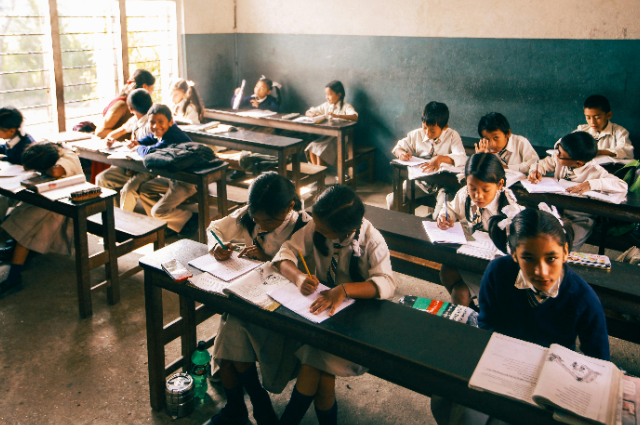
Most of these institutions are Marathi medium schools located in rural Maharashtra. These schools serve children from farming families, daily wage workers, and low-income households.
In many villages, there is no alternative nearby. If the local school closes, students may have to travel long distances or may be forced to leave school altogether.
Why Marathi Medium Schools Matter
Marathi medium schools are much more than ordinary educational institutions. They allow children to study in their mother tongue, which helps them understand lessons better. They introduce students to Marathi literature, poetry, history, and local culture. They help children feel connected to their roots.
For decades, these schools have educated generations of students who later became teachers, writers, government officers, and professionals.
If such schools disappear, Maharashtra does not just lose classrooms. It loses an important part of its cultural identity.
Marathi Made Compulsory in All Schools
The state government's recent decision to make Marathi compulsory in all schools was welcomed by many people.
The idea was simple: every child living in Maharashtra should know the state's language and understand its culture.
This goal is meaningful. Marathi has a rich literary tradition and is closely tied to the history of the state.
But the High Court's question was impossible to ignore. What is the point of forcing elite schools to teach Marathi if the traditional Marathi medium schools are being pushed toward closure?
Concerns Ignored by the Government
The judges said that the government had failed to consider several important issues before issuing the resolutions.
Could these schools survive without financial support? Could poor families afford increased fees? What would happen to teachers and staff? Would nearby schools have enough space for displaced students? And would children still be able to continue their education in Marathi? According to the court, these crucial facts were "totally ignored."
Violation of Natural Justice
The schools also argued that the government had decided without giving them a chance to present their concerns.
The High Court agreed and said this violated the principles of natural justice. In simple terms, this means that authorities should hear the affected parties before making decisions that could seriously harm them. The schools were not given a fair opportunity to explain their situation.
Relief Granted by the Court
The High Court ruled that the two Government Resolutions would not apply to the schools that had approached the court.
It directed the government to remove their names from the list attached to the resolutions and allowed them to continue functioning without any coercive action. This order brought immediate relief to thousands of students, teachers, and parents.
A Bigger Message About Education
This case is about more than one legal dispute. It raises an important question about how governments should support language and education.
Promoting Marathi is a good and worthwhile goal. But true support means protecting the schools that have taught the language for generations, especially in villages and small towns.
Languages are not preserved by announcements alone. They survive in classrooms, in textbooks, and in the voices of children learning in their mother tongue.
Final Thoughts
The Bombay High Court's remarks were both practical and deeply meaningful. A government cannot claim to protect Marathi while allowing Marathi medium schools to disappear. It cannot fine schools for not teaching Marathi while pushing Marathi schools toward closure.
If Maharashtra truly wants to preserve its language and culture, it must support the institutions that have quietly carried this responsibility for decades.
The best way to honour Marathi is not only to make it compulsory in every school, but also to ensure that Marathi medium schools remain open, strong, and accessible to every child who depends on them.
References:
- thehindu.com – Reports on the Bombay High Court's observations regarding the Maharashtra government's policy affecting Marathi-medium schools.
- indianexpress.com – Coverage of the court proceedings and the impact of the Government Resolutions on unaided schools in Maharashtra.
- hindustantimes.com – News reports on Maharashtra's decision to make Marathi compulsory in all schools from Class 1 to 10.
- Bombay High Court. nic. in– Official source for court orders and judgments.
- maharashtra.gov.in – Official website for Government Resolutions and education policy notifications.
. . .