
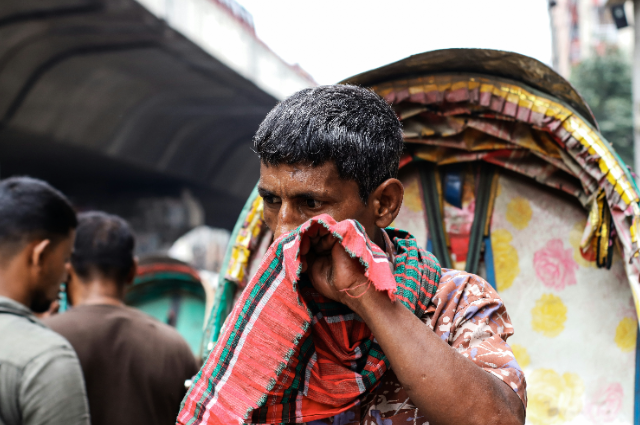
Every summer in India arrives with a familiar warning: temperatures will soar, cities will simmer, and the most vulnerable will struggle the most. But beneath the headlines about record-breaking heat lies a quieter, harsher truth: heat is not experienced equally. It exposes inequality in its most physical form.
For some, relief hums behind the steady buzz of an air conditioner. For others, survival depends on a packet of ORS, a shaded corner, and hope for clouds that may never come. This is not just about the weather. It is about who has the power to escape it.
The Two Indias of Summer
Step into any upper-middle-class home in peak May. Curtains drawn, air conditioners running, refrigerators stocked with cold drinks. The outside world exists, but only faintly, filtered through glass windows and insulated walls. Heat, here, is an inconvenience.
Now step outside. A delivery worker pedals through hot winds, his face wrapped in cloth. A construction labourer lifts bricks under a burning sun. A street vendor fans himself with a newspaper, hoping customers still show up. For them, heat is not seasonal discomfort; it is a daily test of endurance.
India’s economic divide becomes most visible when temperatures rise. Cooling, something that should be a basic necessity in extreme heat, becomes a privilege. The rich respond to heat by switching something on. The poor respond by pushing through it.
Cooling as a Luxury
Air conditioning in India is still far from universal. While urban penetration is rising, a significant portion of the population either cannot afford it or cannot sustain the electricity costs it brings. Even fans, which are far more common, become ineffective when temperatures cross 45°C.
In many homes, particularly in rural areas or urban slums, coping mechanisms are basic: wet cloths, earthen pots, sleeping on rooftops, or staying hydrated as best as possible. ORS (Oral Rehydration Solution) becomes a lifeline because it is cheap, accessible, and often the only defence against dehydration. But ORS is not a solution; it is a survival tool.
The Invisible Cost of Heat
Heatwaves do not just cause discomfort; they quietly reshape lives. Productivity drops, incomes fall, and health risks increase. Daily wage workers face an impossible choice to work under dangerous conditions or lose income. For many, there is no choice at all.
Heat-related illnesses like heatstroke, dehydration, and exhaustion disproportionately affect those who cannot escape outdoor work. Hospitals see a surge in such cases every summer, yet these numbers rarely capture the full picture. Many cases go unreported, especially in rural areas.
Children and the elderly are particularly vulnerable. In homes without proper ventilation or cooling, nights offer little relief. Sleep becomes difficult, and exhaustion accumulates day after day.
Cities That Trap Heat
Urban India adds another layer to the crisis. Cities like Delhi, Ahmedabad, and Nagpur become “heat islands,” where concrete traps heat, and temperatures remain high even after sunset. The absence of green spaces, poor urban planning, and dense construction amplify the problem.
Ironically, those living in the most poorly planned areas, often in informal settlements, suffer the worst effects. Tin roofs, cramped spaces, and a lack of airflow turn homes into ovens.
Meanwhile, gated communities invest in better insulation, backup power, and centralised cooling systems. The gap widens not just in income, but in lived experience.
Climate Change: Turning Up the Heat
The frequency and intensity of heatwaves in India are increasing, and climate change is a major driver. What was once considered extreme is becoming normal.
But climate change does not affect everyone equally. It magnifies existing inequalities. Those with resources adapt faster, installing better cooling systems, shifting work hours, or even relocating. Those without are left to endure worsening conditions with limited options.
In this sense, heat is not just an environmental issue; it is a social justice issue.
The Myth of “Adjusting”
There is a common narrative in India that people “adjust.” That resilience is enough. But resilience should not be romanticised when it is forced.
Telling people to drink more water, stay indoors, or avoid peak hours ignores the realities of those who cannot afford to follow such advice. A delivery worker cannot “avoid peak hours” if that is when demand and income are highest.
Similarly, advising people to install cooling solutions without addressing affordability misses the point entirely. The problem is not a lack of awareness; it is a lack of access.
Small Solutions, Big Gaps
Government and local initiatives have attempted to address heat risks. Heat action plans in cities like Ahmedabad have introduced early warnings, public awareness campaigns, and cooling centres. These are important steps. But they often fall short in scale and reach.
Public cooling spaces are limited. Access to clean drinking water is still inconsistent in many areas. Power cuts during peak summer further worsen conditions, even for those who have fans or coolers. The gap between policy and lived reality remains wide.
Rethinking Heat as a Right
If extreme heat is becoming a regular part of life, then protection from it must be treated as a basic right, not a luxury.
This means rethinking urban design , more trees, better ventilation, and reflective building materials. It means investing in affordable cooling solutions, not just high-end air conditioning. It means ensuring reliable electricity and water access.
It also means recognising workers who face the worst conditions ,construction workers, delivery personnel, and street vendors and creating safeguards for them. Adjusted work hours, shaded rest areas, and mandatory hydration breaks should not be optional.
Beyond Survival
The phrase “Rich buy AC, poor buy ORS and pray for rain” captures a painful truth. One group manages heat, the other survives it. But survival should not be the goal.
As temperatures continue to rise, the question is not whether India can handle the heat. It is whether it can do so fairly.
Because a society where comfort depends on income is one thing. But a society where survival depends on it , that is something far more serious.
The heat is rising for everyone. But until relief is accessible to all, summer in India will remain not just a season, but a stark reminder of inequality.
References:
- Shah, A., Kim, R., & Subramanian, S.V. (2026). Heat, health and inequality in India.
- De Bont, J. et al. (2024). Impact of heatwaves on mortality in India.
- Indian Express. (2025). Heat action plans in India.
- NDTV. (2025). Heatwave deaths underreported.