
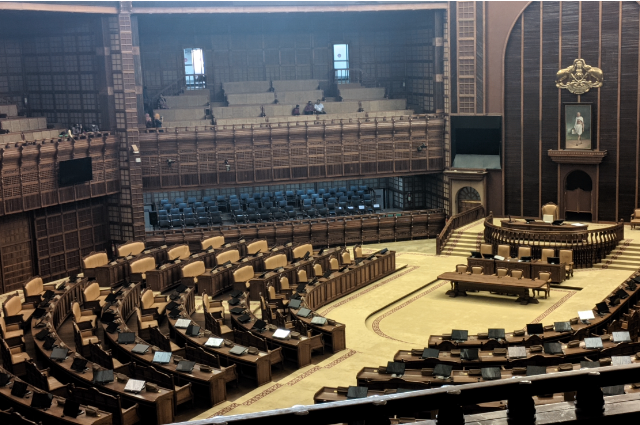
The 2026 Women’s Reservation Bill and its partner, the Delimitation Bill, did far more than just debate gender parity; they sparked a deep-seated identity crisis for Indian federalism. At the centre of this storm is Kerala, a state that has long been a poster child for social progress and demographic responsibility. Now, in a strange twist of political irony, Kerala finds itself potentially being "penalised" for the very success it was once encouraged to achieve—effective family planning. While the legislative package aimed to finally reserve 33% of seats for women, the way it tied those quotas to a massive redrawing of electoral boundaries left many wondering if the South was being traded away for the North’s growing numbers.
The legislative architecture was ambitious, to say the least. The government introduced the 131st Amendment to fast-track the Nari Shakti Vandan Adhiniyam, a law that had been stuck in the pipes for decades. To make space for women without forcing male incumbents out of their seats, the Bill proposed expanding the Lok Sabha from 543 members to a massive 816 or 850. By shifting the goalposts and using 2011 Census data instead of waiting for a post-2026 count, the government hoped to overhaul the map of Indian democracy in time for the 2029 elections.
However, this "one person, one vote" logic hits a wall when it meets the history of population control in India. Since 1976, seat allocations had been frozen based on the 1971 Census to ensure that states doing the hard work of stabilising their populations weren't rewarded with a loss of political power. Lifting that freeze now feels like a betrayal of a state like Kerala. If the Lok Sabha had stayed at its current size but redistributed seats based on 2011 figures, Kerala would have seen its count drop from 20 seats to 15. Even with the government’s proposed expansion to over 800 seats, Kerala’s relative influence would still take a hit, with its proportional share of the House sliding from 3.68% to roughly 2.7%.
For southern critics, the math feels like an insult. Kerala contributes significantly to the national GDP and tax revenue, yet its reward for demographic success appears to be a smaller seat at the table. This has led to a growing outcry against what some call "taxation without adequate representation," fearing that a population-heavy North will eventually hold a unilateral say over the country’s future, including the election of the President.
The Union government, led by Home Minister Amit Shah, tried to calm these fears by focusing on absolute numbers rather than percentages. Shah argued that under the 816-seat model, no state would lose the seats it currently holds; in fact, the southern block’s total count would rise from 129 to 195. He dismissed the North-South divide as a narrative meant to fracture the country, asserting that every state, from Lakshadweep to Uttar Pradesh, holds equal weight in the eyes of the Constitution. Yet, the reassurance failed to bridge the gap, as the opposition remained wary of a "backdoor" centralisation of power.
Ultimately, the grand plan collapsed in the Lok Sabha on April 18, 2026. The 131st Amendment failed to reach the special majority of roughly 360 votes needed for a constitutional change, securing only 298. The problem wasn't a lack of support for women’s reservation—almost everyone agreed on that—but rather the "secretive" and "non-democratic" way the government bundled the quotas with the volatile issue of delimitation. Without the constitutional amendment, the linked Delimitation and Union Territories Bills were also shelved, leaving the entire project in a state of suspended animation.
Looking ahead, it is clear that a simple mathematical formula won't fix India’s federal jitters. Experts have suggested a "hybrid model" for seat allocation—one that considers economic contribution and demographic performance alongside raw population numbers. Others argue for strengthening the Rajya Sabha to give every state an equal voice, similar to the US Senate, or simply decoupling the women’s quota from the map-making process entirely.
The 2026 impasse serves as a reminder that democracy is about more than just counting heads; it’s about honouring the compact between states. Until a balance is found that rewards rather than punishes success, the question of whether Kerala is being penalised for its progress will remain a major hurdle for any future reform. For now, the dream of 33% reservation for women remains tied to a map that India isn't quite ready to redraw.
RESOURCES
- https://scroll.in
- https://www.visionias.in
- https://www.drishtiias.com
- https://vidhilegalpolicy.in
- https://prsindia.org
- https://www.pib.gov.in