
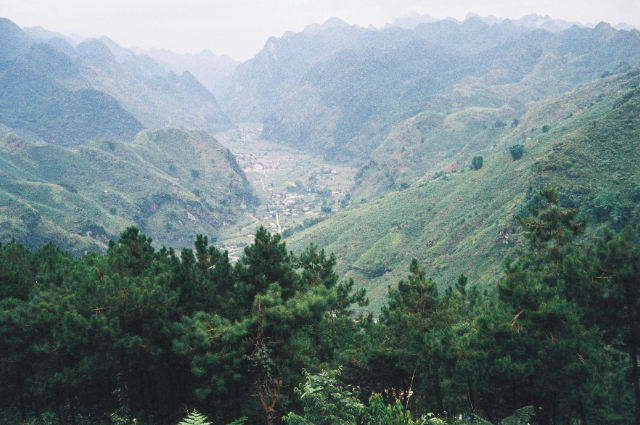
In the lush green landscapes of Manipur, geography has always been more than just a backdrop. It has shaped identity, politics, and now, painfully, conflict. The state is often described as a bowl, with a central valley surrounded by hills. This formation reflects where its people live. The Meitei community mainly occupies the Imphal Valley, while the Kuki-Zo and Naga tribes reside in the surrounding hills. For years, this was simply a matter of geography. But since May 2023, it has become something much more rigid—a divide that influences not just where you live but if you belong and whether you feel safe. What was once a natural landscape has hardened into a physical and psychological boundary. Movement between the valley and the hills has nearly stopped, making the land feel like a line that cannot be crossed. Since the conflict began, more than 260 lives have been lost, and over 60,000 people have been displaced. Today, geography does not just describe Manipur—it defines it.
At the heart of the crisis is the issue of land. The Imphal Valley, which includes districts like Imphal West, Imphal East, Thoubal, Kakching, and Bishnupur, serves as the political and economic center of the state. Surrounding it are the hill districts—Churachandpur, Chandel, Kangpokpi, Ukhrul—each governed by different administrative systems and land ownership laws. These differences, long managing to coexist, became fault lines when tensions erupted on May 3, 2023, after a Tribal Solidarity March. What followed was not just unrest but a complete breakdown of shared spaces. By 2026, the divide had deepened into what many now describe as near-total separation of communities. Security forces maintain buffer zones that physically separate the valley from the hills, and for most people, crossing into the “other side” is unimaginable. This separation is not just logistical; it is emotional. It has created a silence between communities that once coexisted, despite their imperfections.
In the valley, thousands of Meitei residents gather to protest, demanding justice for those killed. In the hills, Kuki-Zo communities hold their own vigils, building defensive structures and living with a constant sense of threat. Both sides grieve and feel unheard. In that shared pain, there is still distance.
Beyond political statements and security briefings is a more personal tragedy—the lives that have been quietly, brutally interrupted. On April 7, 2026, a bomb attack in Bishnupur district killed two young children and severely injured their mother. The incident sparked anger and grief throughout the Imphal Valley, leading to sit-ins and renewed demands for action. But beneath the outrage lies something deeper—a profound sense of helplessness, as lives continue to be lost in a conflict without a clear end.
The tragedy does not stop there. In relief camps, meant to be temporary shelters, entire families now live in prolonged uncertainty. In Imphal East, one family mourned the loss of a 7-year-old girl who had been raped and murdered. She had already been displaced once, forced to leave her home in Moreh three years earlier due to violence. For her, and many others, displacement was not a phase—it was a way of life. Her story isn't just about a crime; it's about what happens when safety disappears entirely.
Chief Minister Yumnam Khemchand Singh visited the grieving family, offering compensation and promises of justice. But the lingering question is far more difficult: what does justice mean in a place where returning home is no longer possible?
Even those responsible for maintaining peace are affected by the conflict. On April 10, 2026, Constable Mithun Mandal of the Border Security Force lost his life during a firefight in Ukhrul district. He was not from Manipur; he had come from West Bengal, serving in a land that was not his own, caught in a conflict that was not his to begin with. A stray bullet took his life during a clash between local groups. Yet, in a rare moment that crossed the divisions of the state, villagers and civil society members in Mongkot Chepu held a candlelight vigil in his memory. They spoke of him as someone who took bullets meant for others. In that moment, grief briefly transcended identity. It served as a reminder that even in conflict, humanity can still emerge—quietly, but meaningfully.
The geography of Manipur complicates the security situation further. The hills, dense and hard to navigate, provide cover for armed groups and illegal networks. In April 2026, security forces seized a large cache of weapons in Churachandpur and Chandel—rifles, mortars, and thousands of kilograms of suspected poppy seeds. The connection between conflict and the drug trade has deepened mistrust. Valley-based groups talk about “narco-terrorism,” while Kuki groups raise alarms about armed Meitei organizations. Between these competing stories, suspicion only grows.
In this environment, even information becomes fragile. Internet bans are frequently imposed to prevent misinformation, but they also cut people off—from news, from communication, and from a sense of normalcy.
Politically, the state has tried to move forward. After a period of instability and President’s Rule, Manipur returned to an elected government in early 2026, with Yumnam Khemchand Singh taking office as Chief Minister. In a gesture that carried both political and symbolic significance, he visited the home of a Kuki MLA in April—the first visit since the unrest began. The meeting was seen as constructive, even hopeful, and came with announcements of development projects aimed at promoting inclusivity. But gestures, important as they may be, cannot erase the harsh reality on the ground overnight. Protests continue. Demands remain unresolved. Trust, once broken, is hard to rebuild.
What Manipur reveals, perhaps more clearly than anything else, is how physical boundaries can slowly turn into emotional ones. The valley and the hills are no longer just parts of a landscape; they have become symbols of identity, fear, and belonging. The conflict is no longer solely about land—it is about what that land represents.
Yet, one question remains open. If geography has shaped Manipur’s past, does it have to define its future? Recent attempts at dialogue suggest there is at least some awareness that the current state of division cannot last. But awareness alone is not enough. What is needed is trust, patience, and the willingness to see beyond the lines drawn—both on the map and in the mind.
For now, the hills and the valley remain apart, two halves of a beautiful state connected only by their shared grief.
References:
- https://e-pao.net
- https://www.indiatodayne.in
- https://pucl.org
- https://www.indiatodayne.in
- https://www.youtube.com
- https://www.morungexpress.com
- https://organiser.org
- https://indianexpress.com/