
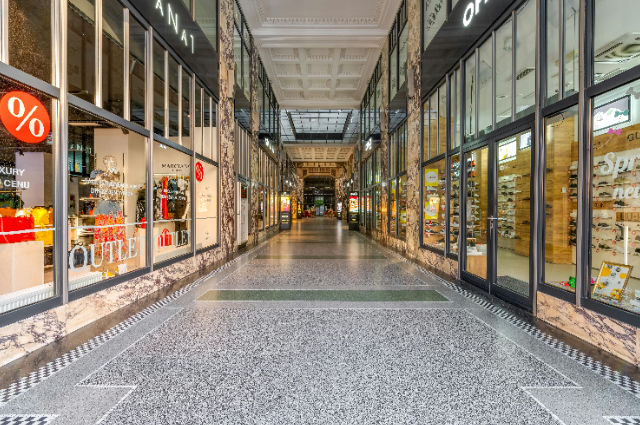
Have you ever walked into a shopping mall in an unfamiliar city and felt a strange sense of déjà vu? You see the same shiny floors, the same quiet noise of a climate-controlled atrium, and the same four or five jewellery stores in the same spots. Whether you are in New York, London, or Dubai, the experience often feels nearly the same. This is not just a coincidence of design; it is a well-planned, multi-billion-dollar strategy meant to make you lose track of where you are, how long you've been there, and eventually, your self-control.
To understand why every mall seems like a copy of the last one, we should look back to 1952, when the Austrian architect Victor Gruen was hired to design the first indoor, climate-controlled shopping mall in Edina, Minnesota. Gruen didn't intend to create a "trap". As a socialist, he imagined the mall as a European-style town center for American suburbs. In this lively hub, people could gather, socialize, and enjoy activities away from the "repulsive" car culture of the 1950s. His first significant project, Southdale Center, opened in 1956 and included a central plaza, natural light from large skylights, and even art installations. He wanted a space where shopping would be secondary to enjoyment and community interaction.
However, as the 1960s and 70s progressed, developers realized they could increase profits by removing community aspects and focusing on pure consumerism. By 1978, a disillusioned Gruen famously rejected his own creation, labeling modern malls "bastard developments" that had "destroyed our cities".
The strongest tool in a mall designer’s kit is a psychological effect now called the "Gruen transfer" or the "Gruen effect". This refers to the moment a shopper enters a mall and becomes overwhelmed by the "intentional clutter," "glitz," and "confusing layout," forgetting their original goal. You might enter intending to buy a single pair of socks, but once the Gruen transfer kicks in, your logical decision-making shifts to emotional, impulse-driven choices, leading you to buy those cute t-shirts that were on sale even though you didn't really need them.
Malls are meant to be "theatres of consumerism" that bombard your senses. Designers use soft, warm lighting to create a sense of "comfort and safety," which reduces your anxiety and encourages you to stay longer. Meanwhile, the air is filled with "alluring aromas" meant to stimulate hunger, and the background music is carefully selected to influence your mood and "flow" through the space. Crucially, malls often lack windows and have no clocks. By removing these outside cues, developers create a "timeless cocoon" where you lose track of time and what the weather is like outside. Every design choice—from the "winding routes" that prevent you from walking directly to your destination to the placement of "expresscalators" that whisk you past numerous shops—is made to keep you "engrossed in the retail experience".
These "traps" look identical nationwide mainly because of large real estate investment trusts like Simon Properties. Similar to a fast-food chain, these companies have refined a "winning formula" that they replicate everywhere. This "McDonald's Formula" favors big, national chains over local stores because these "national account relationships" tend to be more profitable and predictable for investors. Local retailers often struggle against enormous "occupancy costs". In addition to base rent, malls charge for "common area maintenance" (CAM), which covers everything from the air conditioning to the security guards. They may also require a "sales overage" fee, which is a percentage of the store's total profits. For a local business, such costs can take up to 60 percent of their revenue. Conversely, a national coffee chain can treat these expenses as a "marketing cost," resulting in a retail environment where the same ten brands occupy prime spots in every city.
Anthropologists call these interchangeable environments "non-places". This term, introduced by Marc Augé, describes a space of "transience" where people feel anonymous and lonely, missing the "local flavor" or historical significance needed to be a genuine "anthropological place". Malls, like airports and hotel rooms, are created to be "interchangeable," offering a feeling of "exceptional familiarity" that can be comforting to a weary traveler, but is ultimately shallow.
This global uniformity has led to the decline of "vernacular architecture," the traditional styles that once reflected a culture’s history and climate. Instead of buildings based in local traditions, we now see "massive skyscrapers cloning their way around the globe". When design is reduced to a "machine for living in" (or shopping in), beauty and uniqueness are sacrificed for "function" and "predictability".
The Death and Rebirth of the American Mall
While the classic suburban "ghostboxes" are deteriorating on cracked asphalt parking lots across America, the mall isn't finished; it is merely changing. Many are being transformed into "lifestyle centers" that aim to recreate the "Main Street" vibe Gruen originally envisioned, complete with faux-aged murals and outdoor fountains. Others are taking a more drastic route, becoming churches, medical facilities, community colleges, or even Amazon fulfillment centers.
In dense cities like Hong Kong, malls have become so integrated into the "urban fabric" that they are hard to miss. People live in apartment buildings above the malls, work in offices on upper floors, and travel through subway stations within them. You can spend an entire day—working, dining, and watching a movie—without ever leaving the "single megastructure". While this offers great convenience, some architects caution that the overall effect is to "turn the city into a shopping mall," where every public interaction is influenced by commercial interests.
The "Mall Trap" is a masterclass in behavioral manipulation. It uses our own biology against us, utilizing light, scent, and spatial disorientation to turn us into "impulse buyers". By grasping the "Gruen transfer" and the corporate "formulas" that shape these spaces, we can begin to view malls for what they truly are: highly efficient systems designed to extract our time and money.
Moving forward, the challenge for architects and communities is to reclaim a "sense of place". Whether it’s by supporting "vernacular architecture" or insisting that our retail spaces function as true "community hubs," we can seek more than just another identical grey box. The next time you sense that wave of mall-induced disorientation, remember that you are in a "maze" crafted by experts—and the first step to escaping the trap is realizing that it exists.
REFERENCES:
- https://en.wikipedia.org
- https://sahilist.substack.com
- https://en.wikipedia.org
- https://www.allbusiness.com
- https://www.theculturist.io