
The forty days between February 28, 2026, and April 9, 2026, will not be remembered as just another geopolitical conflict. They mark a clear rupture in our time, a moment when the belief in steady global progress was suddenly shaken and replaced by a far more uncomfortable reality. From the shores of the Levant to the heart of the Iranian plateau, the war spread the way wars always do—quietly at first, and then all at once. It did not remain confined to borders or battlefields; instead, it seeped into homes, disrupted economies, emptied classrooms, and settled uneasily in people’s minds. When history looks back at these forty days, the truth will not lie only in numbers or financial reports. It will lie in what those numbers represent: lives lost, trust fractured, and possibilities erased before they ever had a chance to exist.
War is often measured first in money because money is easy to count, and in this case, the figures are staggering. In just forty days, Israel estimated the cost of the conflict at $17.5 billion (54 billion shekels), with nearly $12.9 billion spent directly on military operations such as airstrikes, weapons, and mobilisation. Yet even this enormous figure is only a starting point, as it does not include reconstruction, long-term economic slowdown, or the cost of rebuilding lives that have been irreversibly altered. On the civilian side, another 13 to 14 billion shekels were spent managing immediate damage, with over 28,000 claims filed for destroyed homes and vehicles. Behind each claim lies a story of disruption, of a life paused or redirected. An additional 1 billion shekels had to be allocated to support workers who suddenly found themselves without income, highlighting how deeply the conflict affected everyday life.
Across the world, the United States spent $16.5 billion in just the first 12 days, and projections suggest that total costs may exceed $200 billion. But the true cost of war rarely remains confined to national budgets; it spills over into global systems, affecting countries far removed from the battlefield. Global markets reacted with immediate instability. Oil prices surged to nearly $120 per barrel, prompting the International Energy Agency to describe the situation as the largest disruption in oil supply in history. LNG prices in Asia rose by more than 140 per cent, while stock markets experienced sharp declines, from Pakistan’s historic 9.57 per cent single-day drop to South Korea’s 12 per cent fall, its worst since 2008. Even the Dow Jones reflected widespread uncertainty, falling as investor confidence weakened.
Commodities followed a similar pattern of volatility. Helium prices doubled, tungsten prices more than tripled, and gold—traditionally considered a safe asset—lost 28 per cent of its value during the turmoil. These shifts are not merely economic fluctuations; they are indicators of a deeper instability, revealing how quickly certainty can collapse and how fragile global systems truly are. Every dollar spent on war is, in some sense, taken from somewhere else—from healthcare systems that remain underfunded, from climate initiatives that require urgent investment, and from educational structures that shape future generations. In this way, war does not just consume resources in the present; it quietly borrows from the future.
Yet even these immense financial losses pale in comparison to the human cost, which is far more difficult to quantify and far more devastating to comprehend. In the span of forty days, more than 8,000 people were killed across the Middle East, turning statistics into a grim record of lives cut short. In Iran alone, fatalities exceeded 3,000, with some estimates placing the number at 3,636, including 1,701 civilians and at least 254 children. More than 10,000 people were injured, many of whom will carry the consequences for the rest of their lives.
In Lebanon, at least 1,830 people were killed, with 300 deaths occurring in a single day of bombardment. Israel reported 23 civilian deaths and 12 soldiers lost in operations, while the United States confirmed 13 military fatalities and over 300 wounded. Even countries not directly involved in the conflict, such as the UAE, Kuwait, and Saudi Arabia, reported casualties, demonstrating how far the impact of war can reach. And yet, large numbers have a way of dulling our emotional response, making it difficult to fully grasp the reality behind them.
It is often only when we focus on a single moment that the weight of the loss becomes impossible to ignore. On the first day of the war, February 28, a missile struck the Shajareh Tayyebeh girls’ school in Minab, Iran, killing between 165 and 175 people, most of them young girls between the ages of 7 and 12. What should have been an ordinary morning turned into the deadliest single strike of the conflict, leaving behind scenes that no statistic can adequately describe—blood-stained textbooks, schoolbags buried beneath rubble, and lives that had barely begun, suddenly brought to an end.
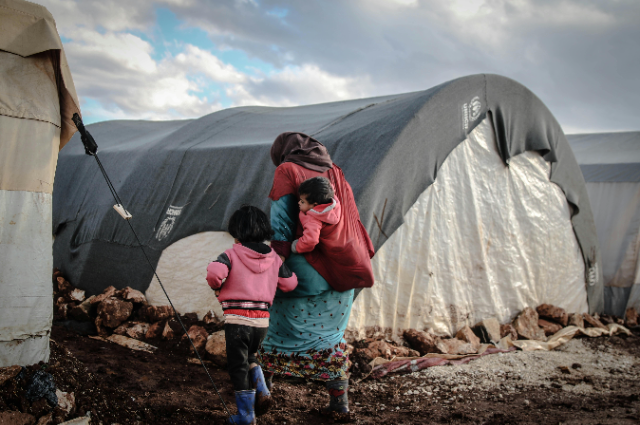
War, however, does not only take lives; it also uproots them. In Iran, up to 3.2 million people have been forced from their homes, while in Lebanon, over 1 million have fled. Across the region, more than 1.2 million children are now displaced, their lives defined not by routine or learning, but by uncertainty and fear.
The destruction of infrastructure has further deepened the crisis. In Iran, hundreds of schools, universities, and medical facilities have been damaged, while key industries will take months or even years to recover. Nuclear sites have been targeted, raising concerns about long-term environmental consequences, and a significant portion of the country’s naval fleet has been destroyed. Even access to water has been threatened, with desalination plants in Kuwait and Bahrain coming under attack, putting millions at risk.
Beyond the immediate region, the effects continue to ripple outward. Disruptions in fertiliser supply have driven global food prices up by 40 to 120 per cent, and the World Food Programme has warned that an additional 45 million people may face severe hunger. In countries far removed from the conflict, everyday life has begun to shift, with fuel shortages, panic buying, and energy crises becoming increasingly common.
Perhaps the most difficult loss to measure is the erosion of trust, which underpins the functioning of the international system. The war has strained relationships between nations, particularly between the United States and its allies, while also raising internal questions about accountability and decision-making. At the same time, rival powers have used the situation to reshape global narratives, portraying established actors as unpredictable and aggressive. Trust, once broken, is not easily restored, and without it, peace remains fragile and uncertain.
War is not only an act of destruction; it is also an act of limitation, closing doors that once seemed open and narrowing the possibilities for the future. The hope for a stable Middle East has been replaced by a deepening humanitarian crisis, while the use of flawed artificial intelligence in targeting has raised serious ethical concerns, particularly when outdated data has contributed to civilian casualties. Even the path toward resolving nuclear tensions has become more complicated, as the conflict risks pushing nations toward further militarisation, creating cycles of escalation that extend far beyond these forty days. In such a context, the belief that things can improve begins to fade, overshadowed by uncertainty and fear.
As a fragile truce begins to take shape, attention must shift from what has been lost to what must now be rebuilt. Restoring safety and dignity is essential, not only through rebuilding physical structures such as homes and schools, but by ensuring that people feel secure enough to return to them. Rebuilding trust, both between governments and within societies, is equally critical, requiring agreements that go beyond temporary pauses and move toward lasting solutions. Finally, restoring stability—economic as well as global—is necessary for a world that has been pushed to the edge of unpredictability.
These forty days have made one thing painfully clear: the cost of war is never limited to those who fight it. It spreads, lingers, and reshapes the world in ways that are not always immediately visible, but are always deeply felt. Money can be counted, and lives can be mourned, but trust, once broken, and possibility, once lost, are far harder to measure and even harder to restore. And perhaps that is the most urgent lesson of all, because if forty days can cause this much damage, the world simply cannot afford another forty.
References:
- https://www.theguardian.com
- https://www.booker.senate.gov
- https://www.aa.com.tr
- https://www.iea.org
- https://in.investing.com