
The announcement of a two-week ceasefire between the United States and Iran in early April 2026 was initially met with hope as a necessary pause in a rapidly escalating conflict. Brokered through intense diplomatic efforts led by Pakistan, the agreement aimed to stop direct hostilities, reopen the crucial Strait of Hormuz, and create space for wider negotiations. However, within hours of its start, flaws began to appear. Analysts, policymakers, and regional observers increasingly saw the truce not as a step toward peace, but as a temporary halt to violence, likely to fall apart under competing interests and unclear terms.
At the root of the skepticism is a major issue: the ceasefire lacks a common understanding. While Washington framed the agreement as a de-escalation with Tehran, Iran and its allies insisted it should apply to all areas of conflict, including Lebanon. This disagreement led to immediate consequences. Israeli attacks on Hezbollah positions in Lebanon, some of the deadliest in months, continued despite the ceasefire, reportedly killing hundreds in just minutes. Israel justified these actions by claiming they fell outside the agreement, while Iran condemned them as clear violations.
This difference is more than just semantics. It reflects deeper tensions in the region. For Israel, Hezbollah is an existential threat that cannot be paused for diplomacy. For Iran, Hezbollah is a crucial part of its deterrent strategy. As a result, ongoing Israeli actions in Lebanon could push Iran back into direct conflict, undermining the ceasefire’s core purpose. Experts note that any agreement that overlooks such a central issue was bound to be unstable from the start.
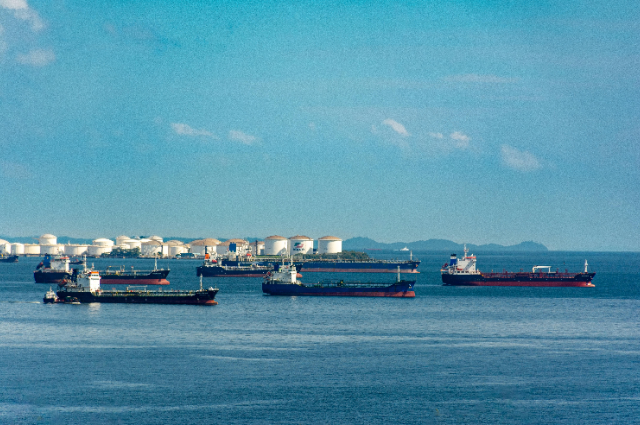
Further complicating the situation is the scenario in the Strait of Hormuz, a vital energy corridor. A key part of the ceasefire required Iran to reopen the strait to international shipping. However, access remains tightly restricted. Hundreds of vessels are stranded, with only a few able to pass under strict Iranian control. Reports suggest Iran has maintained control over transit and even proposed fees of up to $2 million per vessel, a move strongly criticised by U.S. officials.
From Tehran’s perspective, these measures are security precautions due to ongoing threats, including naval mines. But to international observers and energy markets, they signal continued coercion rather than true de-escalation. This situation has led to renewed volatility in global oil prices and increased fears about supply disruptions. The partial closure of the strait thus highlights both a symptom and cause of the ceasefire’s weakness, affecting economic, military, and legal aspects.
Iranian officials have gone further, claiming that the United States has violated multiple parts of the agreement. According to Iran’s parliamentary leadership, at least three of the ten proposed provisions have been broken, including Israeli military actions, incursions into Iranian airspace, and disputes over nuclear enrichment rights. These claims reveal another significant flaw: the absence of a clearly defined and mutually accepted framework.
Differences between the English and Farsi versions of the agreement have added to the confusion, especially on sensitive topics like nuclear policy. While such ambiguity is common in hurriedly arranged ceasefires, in this case, it has fostered grounds for mutual blame. Each side seems to be operating under its interpretation of the agreement, allowing both to claim compliance while accusing the other of violations. This situation erodes trust and raises the risk of escalation, particularly since military forces are on high alert.
Beyond immediate disputes, broader geopolitical factors further complicate the ceasefire’s future. The United States and Iran remain highly divided on critical issues, including Iran’s nuclear program, its support for regional militias, and the long-term security framework for the Middle East. The ceasefire does not address these underlying conflicts; instead, it postpones them. One analysis suggested that the agreement is “a short-term pause without clear resolution to long-term tensions.”
Meanwhile, political dynamics within both countries add another layer of uncertainty. In Washington, scepticism surrounds the ceasefire, with critics arguing that it does not meet key goals. In Tehran, hardliners may see the truce as a tactical retreat rather than a strategic shift. Domestic pressures can limit negotiators and encourage more confrontational attitudes, especially if either side senses weakness or non-compliance.
The role of third parties further complicates matters. Pakistan’s mediation has been crucial in achieving the ceasefire, but its ability to enforce compliance is limited. Additionally, European leaders have expressed cautious support, stressing the need for a broader agreement that addresses all conflict areas. But without direct influence over key players like Israel or Hezbollah, international efforts may be overshadowed by events on the ground.
Perhaps the most telling sign of the ceasefire’s fragility is the ongoing military and semi-military incidents. Reports of strikes on Iranian infrastructure, drone activity, and attacks on commercial vessels have continued even after the agreement started. Each incident, whether intentional or accidental, has the potential to provoke retaliation and completely derail the truce. In this environment, the margin for error is incredibly slim.
Energy markets, often reflecting geopolitical risk, have reacted accordingly. Oil prices have risen, signalling doubts about the stability of the ceasefire and the security of supply routes. Financial analysts warn that lasting instability could have ripple effects on global economies, especially in regions heavily reliant on Middle Eastern energy exports. Therefore, the economic implications extend far beyond the immediate parties involved.
When considering whether the ceasefire can hold, experts often refer to the idea of “mutual deterrence.” Both the United States and Iran have strong reasons to avoid full-scale war, given the potentially catastrophic outcomes. This common interest may help maintain the truce in the short term, despite ongoing violations and tensions. However, deterrence alone is an unreliable basis for peace.
Without clear rules, enforcement processes, and a shared vision for de-escalation, the ceasefire risks becoming a mere holding pattern rather than a route to resolution. The notion of a “ceasefire built on sand” fits well. Like a structure lacking a solid base, the agreement is vulnerable to shifting pressures, from military actions in Lebanon to strategic manoeuvres in the Strait of Hormuz, from differing interpretations of terms to broader geopolitical rivalries.
Each of these challenges alone would be difficult; together, they create a highly unstable environment for the ceasefire. The U.S.-Iran ceasefire of April 2026 is both a diplomatic success and a risky wager. It has temporarily stopped the direct conflict between two powerful rivals. Yet it has not resolved the deep-rooted issues that led to the war, nor has it created a strong framework for managing them.
Instead, it has highlighted the severity of these divisions, showing how quickly they can resurface even in supposed calm. Whether the truce collapses “before Friday,” as some experts warn, is ultimately less critical than the broader lesson it teaches: ceasefires lacking clarity, inclusivity, and enforcement are inherently weak.
The unfolding events in Lebanon, the ongoing tensions in the Strait of Hormuz, and the growing list of alleged violations all point to the same conclusion: this is not yet peace, but just a pause. For the ceasefire to last, it will need to grow into something more substantial: a thorough agreement that addresses the full range of regional dynamics, includes all relevant participants, and establishes accountability mechanisms.
Without such advancements, the current truce may soon become another episode in a long history of temporary halts in the Middle East and moments of calm that, like footprints in sand, are quickly washed away by the tides of conflict.
References: