
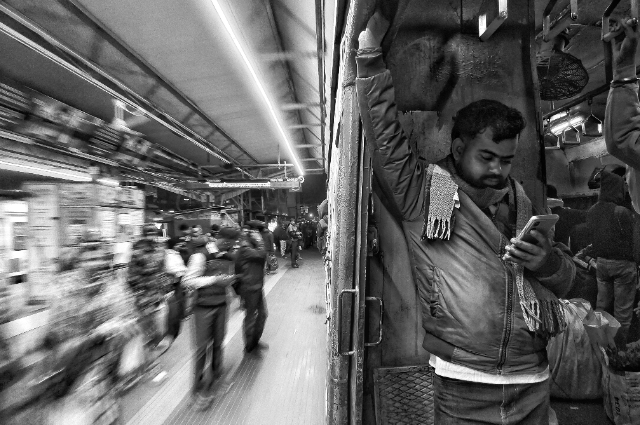
The local trains of Mumbai are often called the lifeline of the city because they carry millions of people every day. People from all walks of life jam into these f compartments to reach their offices or homes. On a rainy Tuesday night, this shared space turned into a scene of terror. A minor disagreement between two passengers over an open door quickly escalated into a horrific, violent attack. The tragedy resulted in the death of a young man and left regular commuters deeply worried about their safety on their daily travels.
The incident took place inside a first-class compartment of a fast local train running from Churchgate to Nalasopara. The train was moving between Andheri and Borivali stations under a heavy downpour of monsoon rain. As the wind blew hard, water began splashing inside the coach through the open doorway. Mayank Lohar, a twenty-two-year-old passenger, asked another commuter named Roshan Sachin Suvarna to close the train door to stop the rainwater from drenching everyone inside. This simple request quickly sparked a heated verbal argument between the two men.
According to statements given later during police interrogation, the verbal dispute quickly became physical. The conversation turned aggressive as tempers flared in the humid, crowded compartment. Witnesses mentioned that the argument reached a boiling point where blows were traded. Other passengers inside the coach intervened to support the young man who had asked for the door to be shut. The situation quickly became overwhelming for the attacker, who later claimed he felt deeply humiliated by the physical altercation and the fact that the crowd turned against him. Under the heavy influence of alcohol, his anger turned into deadly intent.
The attacker pulled a large knife out of his personal bag. Before anyone in the compartment could react or stop him, he lunged forward and stabbed Mayank Lohar multiple times in the chest and abdomen. The sudden violence stunned the remaining passengers into silence and panic. The young victim collapsed onto the floor of the train compartment, bleeding heavily from his deep wounds.
As the fast local train approached Borivali station at around eleven in the evening, the attacker prepared his escape. He did not wait for the train to come to a complete halt along the platform. While the heavy metal wheels were still rolling and grinding against the tracks, the man leapt out of the moving coach onto platform number six. He took advantage of the darkness and the confusion of the moving train to quickly slip past the station exit before anyone could grab him or alert the platform security guards.
The Government Railway Police and the Railway Protection Force were alerted almost immediately. When the train finally stopped at the platform, security officials rushed into the first class compartment within three minutes. They found the young victim unconscious on the floor. The railway authorities mobilised an emergency medical team with a stretcher and porters to carry him out of the train. By tw minutes past eleven, the bleeding young man was brought into the emergency medical room at Borivli station. Given the severe nature of his internal injuries, doctors recommended moving him to a bigger facility immediately. He was put into an ambulance and rushed to Shatabdi Hospital in Kandivali, but the doctors there tragically declared him dead on arrival.
The escape of the killer triggered an immediate and massive manhunt across the city railway network. The Government Railway Police formed multiple specialised investigation teams to track down the fleeing suspect. The police knew they had to work quickly before the killer could leave the city or hide out in a remote area. Investigators began scanning hours of closed-circuit television footage from Borivali station and the surrounding neighbourhood streets to trace the route the killer took after jumping from the moving train.
The surveillance footage proved to be a critical piece of evidence. The cameras captured the chilling moment the accused exited the station premises and blended into the suburban streets of Borivali West. Armed with clear images of the suspect's face, the police teams began knocking on doors and questioning local shopkeepers and residents. Within a short period, investigators identified the man as Roshan Sachin Suvarna, a resident of Mira Road who worked at an e-commerce platform warehouse.
The police successfully tracked down and arrested the accused, bringing him into custody. During his intense interrogation, the man confessed to the stabbing and explained that he had been carrying the large knife in his bag for four to five months. He claimed he kept it purely for personal protection, having picked it up from a workplace warehouse along with a smaller utility knife. He told the officers that the combination of heavy alcohol consumption and the sudden humiliation of being attacked by a group of passengers made him lose his mind and draw the weapon.
The investigation took a deeper turn when the police searched for the murder weapon. The accused initially claimed he threw the knife away into a random subway lane after escaping Borivali station. The police checked the nearby areas but could not find it. The breakthrough came when a local restaurant manager contacted the station police. A staff member from the restaurant had spotted a large knife lying in a small lane just outside the platform exits on the night of the crime. Recognising the weapon from news reports and viral video clips of the incident shared on social media, the restaurant workers kept it safe in a box and handed it over to the authorities. The recovered knife had a substantial blade measuring twelve centimetres. The police immediately sent it to the forensic science laboratory to verify if the bloodstains matched the DNA of the victim.
This tragic incident has raised major concerns among the public regarding the overall safety of ordinary citizens inside the suburban rail network. Many people are asking how a passenger managed to carry a large twelve-centimetre weapon into a train compartment without being checked by security personnel at the entry gates. This lack of active checking shows a serious flaw in station security protocols that puts thousands of lives at risk every single minute. If someone can walk onto a train with a deadly weapon so easily, it raises the terrifying question of what else is slipping past the station entrances undetected.
Furthermore, the fact that the attacker was able to leap from a moving train and instantly vanish into the darkness raises questions about the readiness of platform security. Commuters are demanding stricter baggage screening, functional metal detectors, and a larger presence of uniformed police officers inside train compartments, especially during late-night hours when passengers are most vulnerable. The presence of security should not just be limited to station entrances but must extend inside the coaches where citizens spend the majority of their travel time completely unprotected.
The reality that a simple argument over monsoon rainwater could lead to a public loss of life has left the entire city reflecting on the growing stress and anger issues among daily commuters. It forces civilians to think twice before speaking up or asking a fellow passenger to follow basic courtesy. When a reasonable request results in a fatal stabbing, it creates an environment of fear where people feel they must stay silent to protect their own lives. This fear destroys the sense of community that Mumbai commuters are famous for.
The court remanded the accused to police custody to allow detectives to complete their investigation. The police are now looking into the background of the attacker to see if he has any past criminal record or if he has used weapons to threaten people before. The family of the young victim remains devastated by the sudden loss, and his mother broke down in tears during the court proceedings. The police have promised a thorough investigation to ensure that the accused faces strict punishment under the new criminal laws of the country, but the collective trust of the travelling public will take a much longer time to heal.
References:
- https://www.thehindu.com
- https://timesofindia.indiatimes.com
- https://timesofindia.indiatimes.com
- https://timesofindia.indiatimes.com