
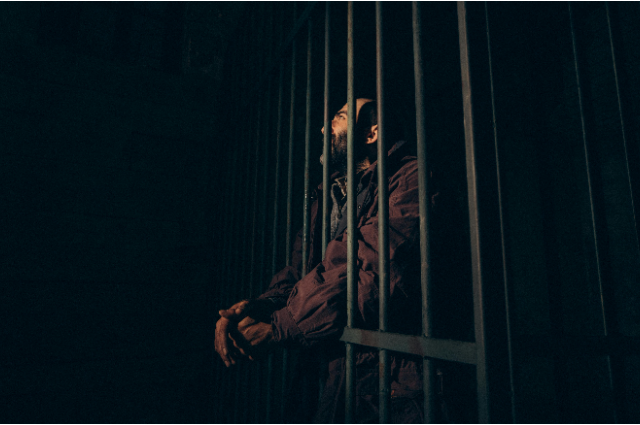
Hyderabad’s Chanchalguda Central Jail has spent nearly a century and a half as a place people feared. Built during the Nizam era in 1876, the prison has held political dissidents, convicted prisoners, undertrials awaiting hearings, and generations of people swallowed by India’s slow criminal justice system. On May 12, 2026, those same iron gates opened to the public in an entirely different way. The Telangana Prisons Department launched “Jail Anubhavam,” translated as “Feel the Jail,” an initiative that allows ordinary citizens to voluntarily spend 12 or 24 hours inside a simulated prison environment for a fee of ₹1,000 or ₹2,000. Participants sleep in barracks, eat prison-style meals from steel utensils, follow a rigid daily schedule, and experience controlled confinement under supervision. Alongside the programme, the Telangana Prisons Museum was inaugurated to showcase the history of prisons in the region, including records from the Nizam period and exhibits documenting prison labour during the construction of the Nagarjuna Sagar Dam.
The programme immediately captured public attention because it sits at the intersection of curiosity, morality, tourism, and state power. Videos of prison barracks spread rapidly across social media. Some people treated the initiative as dark humour. Others praised it as educational. Many critics saw something deeply troubling in the spectacle of incarceration becoming an experience available for purchase. The debate surrounding Chanchalguda’s “Feel the Jail” programme reveals something larger than public fascination with prisons. It exposes the enormous emotional distance between the Indian middle class and the people who actually inhabit Indian jails.
The Telangana government presents the programme as an awareness initiative rooted in reform. Officials argue that a short stay in prison-like conditions can create empathy and discourage criminal behaviour, especially among younger visitors. The museum attempts to place prisons within a historical narrative instead of reducing them to sites of punishment. Telangana Governor Shiv Pratap Shukla described prisons as institutions that should encourage introspection and rehabilitation. In theory, this aligns with a growing global shift toward correctional models focused on reform rather than vengeance. Across several countries, prison museums and immersive historical sites have emerged as spaces where visitors confront state violence, colonialism, political repression, and the human consequences of confinement.
There is also an economic dimension to the project. Telangana prison authorities have stated that the money generated through the programme will contribute toward prisoner welfare and rehabilitation initiatives. In a country where prison infrastructure remains underfunded and overcrowded, additional revenue for inmate welfare carries practical value. India’s prison system suffers from severe shortages in staff, medical support, mental healthcare, sanitation, and legal aid. According to recent prison statistics cited by the National Crime Records Bureau, prisons across India continue to function beyond capacity, while staffing gaps remain enormous. If a museum and controlled visitor programme can generate sustained public attention and financial support, some argue that it could improve material conditions for prisoners who remain largely invisible to the public.
Yet the emotional core of the criticism lies elsewhere. The experience offered at Chanchalguda is carefully designed, temporary, and fundamentally voluntary. Visitors enter knowing that someone outside is waiting for them. Their names are recorded as guests rather than accused persons. Their stay is protected by consent, social status, and financial ability. The iron bars remain symbolic because the fear that defines imprisonment never fully arrives. The certainty of release transforms the experience from captivity into simulation.
Real imprisonment in India operates through uncertainty. Undertrial prisoners often do not know when they will leave. Many have not been convicted of crimes. Many are waiting for hearings delayed by years. The legal system moves differently for the wealthy and the poor, and prisons reveal that inequality with brutal clarity. National prison data consistently shows that undertrials form the overwhelming majority of India’s prison population. Large numbers remain incarcerated because they cannot afford bail, lack legal representation, or become trapped inside procedural delays. For countless families, imprisonment is not a temporary educational exercise. It is an economic disaster that destroys livelihoods, interrupts education, deepens debt, and fractures social life.
Caste and class shape this reality profoundly. Dalits, Adivasis, Muslims, migrant workers, and economically vulnerable communities remain disproportionately represented inside Indian prisons. Numerous sociological studies and prison reports over the years have shown that incarceration in India mirrors social hierarchies outside prison walls. Those with money, social networks, and political access navigate the justice system differently from those without institutional protection. A wealthy person accused of financial fraud often experiences the legal system through lawyers, hearings, and media statements. A poor labourer accused of a petty theft case may experience it through overcrowded lock-ups, delayed hearings, and indefinite detention.
This is why the Chanchalguda museum raises an unsettling question: whose history is being told inside these walls? The exhibits reportedly include shackles, gallows, historical records, and narratives of prison labour during the construction of the Nagarjuna Sagar Dam. Those histories matter. Prison labour has long been tied to state-building projects in India and elsewhere. Yet a prison museum that discusses labour without confronting structural inequality risks becoming incomplete. If Dalits, Adivasis, and poor undertrials make up a large portion of India’s incarcerated population, their stories cannot remain peripheral. Their absence would transform the museum into a heritage space that preserves objects while muting human suffering.
Museums carry moral responsibility because they shape public memory. Visitors often trust museums to provide authoritative narratives about history and society. When prisons become museums, they also become political spaces where states explain incarceration to the public. The framing matters immensely. Does the museum foreground custodial violence, wrongful detention, caste discrimination, and judicial delay? Does it discuss how poverty influences access to bail? Does it include testimonies from former inmates and their families? Does it address the emotional devastation experienced by children whose parents disappear into prison systems? Without these perspectives, the museum risks presenting prison as administrative history rather than lived reality.
The language of “experience” itself deserves scrutiny. Modern tourism increasingly turns suffering into something consumable. Visitors tour concentration camps, disaster zones, slums, former plantations, and prisons seeking emotional engagement with difficult histories. Scholars describe this phenomenon as “dark tourism,” where people visit sites associated with death, violence, or tragedy. Such tourism can create meaningful reflection when handled ethically. It can also reduce trauma in spectacle when institutions prioritise novelty over accountability.
The reactions online reveal this tension clearly. Social media discussions surrounding Chanchalguda oscillated between jokes and discomfort. Some users compared the prison stay to a budget hotel experience. Others joked about getting imprisoned “for free” by committing crimes. Humour often emerges when societies encounter uncomfortable truths they struggle to process seriously. The jokes were revealing because they exposed how distant prison realities remain from middle-class life. For many online users, jail existed primarily through cinema, memes, and imagination rather than through direct social experience.
Yet for millions of Indians, prisons are not abstract. Families wait outside district courts hoping for bail hearings. Women travel long distances carrying food for incarcerated relatives. Children grow up visiting prisons during limited visitation hours. Undertrials lose years without conviction. Released prisoners return to communities carrying a permanent stigma that affects employment, housing, and social belonging. None of these realities can be recreated through a controlled overnight stay.
At the same time, dismissing the initiative entirely may oversimplify the issue. Public engagement with prisons in India has historically been minimal unless sensational crimes dominate headlines. Most citizens know little about prison conditions, correctional systems, or the lives of inmates. Invisibility often protects institutional neglect. If the Chanchalguda museum succeeds in forcing conversations about incarceration into mainstream public discourse, it could still hold value. The question is whether the state remains willing to extend that conversation beyond curated experiences into structural reform.
Meaningful prison reform requires confronting uncomfortable truths about India’s justice system. Overcrowding cannot be solved through museum tourism. Delayed trials cannot be addressed through symbolic awareness campaigns. Legal aid remains severely inadequate for many prisoners. Mental healthcare inside prisons remains neglected. Marginalised communities continue to experience disproportionate surveillance and criminalisation. Bail reform, faster hearings, improved legal representation, and accountability for custodial violence demand sustained political commitment.
A truly humanistic prison museum would place these realities at its centre. It would force visitors to confront the fact that many incarcerated people are legally innocent under the presumption of law because they remain under trial. It would ask visitors why freedom often depends on economic status. It would include stories from prisoners themselves rather than speaking about them from a distance. It would recognise that prison is never experienced equally across caste, religion, gender, and class.
The most powerful moment in the Chanchalguda experience may ultimately arrive when visitors leave. They walk back into ordinary life carrying the certainty of freedom. Real prisoners remain behind, waiting for hearings, appeals, and decisions controlled by systems far larger than themselves. Whether the museum becomes an instrument of empathy or a temporary spectacle depends on what visitors choose to see after they walk out. If the experience encourages citizens to question judicial delay, prison overcrowding, caste inequality, and the conditions faced by undertrials, it may serve a meaningful democratic purpose. If it becomes another consumable thrill packaged as awareness, the prison walls will continue to hide the people whose lives remain trapped behind them.
References: