
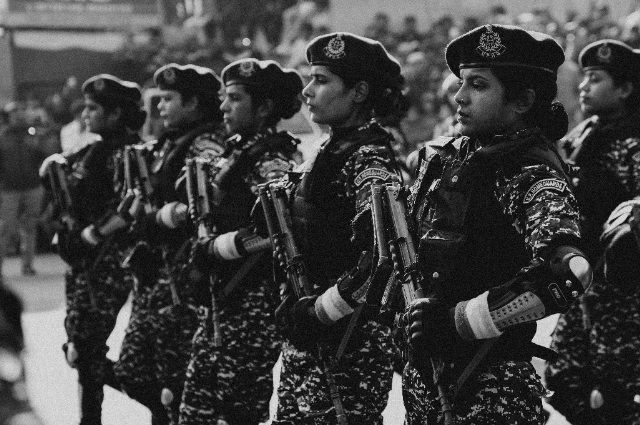
The landscape of the Indian military was irrevocably altered on May 7, 2025, when two women officers stood before a sea of microphones and cameras to brief the nation on a high-stakes military strike known as Operation Sindoor. Wing Commander Vyomika Singh and Colonel Sofiya Qureshi did not just deliver a tactical update; they delivered a message of profound social transformation. For the first time in the history of the Indian armed forces, the faces of official military authority were female. This moment was the culmination of decades of silent perseverance, personal sacrifice, and an unwavering commitment to a profession that, for much of its existence, did not have a place for them at the top. Their presence on that podium was not a gesture of tokenism but a hard-earned recognition of their individual brilliance and the collective resilience of women in uniform.
To understand the weight of this moment, one must look at the lives of the women who occupied that stage. Colonel Sofiya Qureshi represents a bridge between the deep-seated traditions of the Indian Army and the modern, technocratic future of warfare. Born in 1974 in Vadodara, she grew up in the shadow of her grandfather’s military service, inheriting a sense of duty that felt almost biological. Yet, her path was shaped by a unique blend of intellectual rigor and physical grit. While her father worked as a civil engineer and her mother taught mathematics, Sofiya pursued the complexities of biochemistry before finding her true calling at the Officers Training Academy. Her career has been defined by a series of "firsts" that were won in the face of skepticism. Whether she was developing the Army’s first mobile digital communication network in 2001 or leading a multinational contingent of eighteen countries in peacekeeping exercises, she was constantly proving that her gender was irrelevant to her competence.
The respect Sofiya commands is rooted in her ability to balance the cold logic of military strategy with the deep empathy required in humanitarian crises. During her deployment with the UN Peacekeeping Mission in the Democratic Republic of Congo, she was not just a soldier monitoring a ceasefire; she was a human being who personally intervened to reunite a child with her mother. This act earned her the gratitude of a local community and a Force Commander Commendation, but more importantly, it humanised the uniform. Her leadership was further solidified during the devastating floods in North-East India in 2024, where her expertise in managing critical communications saved lives in a landscape turned to chaos. The late General Bipin Rawat once remarked that she was chosen for her roles not because she was a woman, but because her shoulders were broad enough to carry the responsibilities of leadership. This distinction is vital to her reputation; she is a trailblazer who refuses to be defined by the glass ceilings she has shattered.
Beside her stood Wing Commander Vyomika Singh, a woman whose journey to the skies began not in a military barracks, but in a middle-class home in Lucknow. As the first in her family to join the armed forces, Vyomika had to build her own roadmap. Her name, meaning "daughter of the sky," became a self-fulfilling prophecy. Her early years in the National Cadet Corps ignited a passion for aviation that saw her commissioned into the Flying Branch in 2004. Over the next two decades, she logged more than 2,500 hours of flight time, often in the most unforgiving environments on the planet. Piloting Chetak and Cheetah helicopters through the thin air of Jammu and Kashmir, she learned that the mountains do not care about the gender of the pilot; they only care about skill.
Vyomika’s reputation is also forged in the fires of legal and social struggle. For a long period, women in the Air Force were denied permanent commissions, meaning their careers had an expiration date regardless of their talent. On December 18, 2019, that barrier was finally dismantled, and Vyomika was among those granted the right to serve as a permanent officer. This reform was a validation of her worth and a promise to the young women of India that their service could be a lifelong calling. Her courage is not limited to the cockpit; she has proven her mettle on the ground as well, leading a grueling 28-day rescue mission on a snow-bound peak in Arunachal Pradesh and scaling the heights of Mt. Manirang during an all-women mountaineering expedition. When she stepped onto the national stage for the Operation Sindoor briefing, she became an overnight icon, her social media following exploding as young women across the country saw a reflection of their own potential in her composed, confident demeanour.
The social significance of these two women goes beyond their individual accolades. In a society that has often relegated women to the background of national security discussions, their visibility is a powerful corrective. They represent a new era where strategic security and gender empowerment are no longer viewed as separate goals. By speaking directly to the nation about military outcomes, they have normalised the idea of women as the primary guardians of the state. This shift in perception is essential for the health of the institution itself, as it ensures that the best minds are utilized regardless of gender. The reputation they have built is one of quiet, unshakeable competence. They do not seek to be "women officers"; they seek to be officers who happen to be women, and it is through this lens that they have gained the profound respect of their peers and the public.
Their personal lives further humanise the high-pressure roles they occupy. Both women are married to fellow officers—Sofiya to Colonel Tajuddin Bagewadi and Vyomika to Group Captain Dinesh Singh Sabharwal, creating households where service is a shared language. This balance of family and duty disproves the outdated notion that a woman must choose between a professional military career and a personal life. They are mothers and wives as much as they are strategic thinkers and pilots. This multi-dimensional identity makes them more relatable to the modern Indian public, providing a holistic view of what it means to serve. Their legacy is not just the missions they completed or the medals they wear, but the cultural shift they have inspired.
Ultimately, the story of Operation Sindoor is the story of a nation maturing. When Colonel Qureshi and Wing Commander Singh briefed the media, they were rewriting the script of Indian military history in real-time. They stood there as proof that the barracks and the cockpit are meritocracies where bravery and intelligence are the only valid currencies. Their journey reminds us that progress is often slow and painful, requiring individuals to endure the weight of being "the first" so that others can simply be "the best." The respect they have garnered is a testament to their character, and their reputation is a beacon for every girl in a small town who looks at the sky and wonders if it belongs to her. Because of these women, the answer is now a resounding yes. They have moved the needle of social expectation, ensuring that the next time a woman briefs the nation on a military strike, it will not be seen as a historic first, but as a standard reflection of a modern, inclusive India.
References:
- https://www.mea.gov.in
- https://www.hindustantimes.com
- https://timesofindia.indiatimes.com
- https://www.sheinspiremagazine.com