
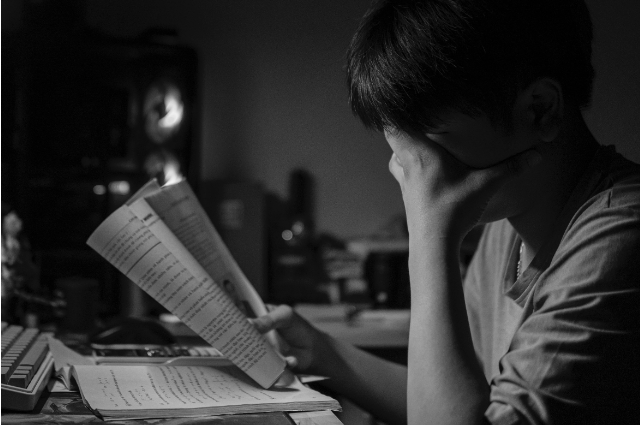
The obsession with academic overachievement in India is not merely a pursuit of excellence; it is a deeply embedded social currency that often functions as the sole measure of a person’s worth. In many Indian communities, a child’s rank in class is treated as a reflection of the family’s honour and social standing, transforming the educational journey into a high-stakes arena where the pressure to be "first" is a source of constant, trembling anxiety. This "topper" culture creates an environment where children feel their value is entirely conditional, leading them to view high marks not as a milestone of learning, but as a shield against disappointment or domestic volatility. When academic performance becomes a status symbol for the parents, the child is reduced to a trophy to be displayed or a project to be perfected, rather than being seen as a fragile, living being with emotional needs.
This fixation on external validation is compounded by a profound and dangerous stigma regarding mental health, which is frequently dismissed as a luxury or an unnecessary distraction from "real" work. In the traditional household structure, the emotional distress of a child is often misinterpreted as a lack of discipline or a sign of weakness, causing psychological struggles to be buried under the weight of expectations. Because a child’s worth is tied so tightly to a report card, admitting to fear, burnout, or depression is seen as a failure of character rather than a cry for help. This environment forces children to navigate a world where they must "earn" their place and safety through numbers, often feeling like outsiders in their own homes if they cannot meet the arbitrary standards set by a society obsessed with rankings.
The lethal consequences of this obsession were recently laid bare in the village of Deulgaon Raje, Pune, where nine-year-old Anamika Chavan was murdered by her own father, Shantaram Chavan. The tragedy was sparked by a simple act of desperation: Anamika had used a pen to alter her marksheet to show she had secured first place. This was not an act of malice, but a desperate attempt by a child to survive the crushing fear of disappointing her protector. When the forgery was discovered, her father did not offer a lesson in honesty; instead, he used a tree-cutting machine to take her life, and later attempted to burn her body to cover his crime. Anamika’s death is a brutal manifestation of a culture that values a numerical rank more than human flesh and blood.
The refusal to acknowledge the mental health of children is a collective failure that prioritises a numerical percentage over the actual life and spirit of the child. We must recognise that the relentless drive for "toppers" is killing the very essence of childhood, replacing curiosity with fear and joy with a desperate need for validation. It is a tragedy of our own making when a child believes that their only value lies in a piece of paper, and that any failure to achieve the top rank is an unforgivable sin. We have built a world where children are afraid to be human because we have taught them that being "second" is synonymous with being nothing. The cost of this obsession is far higher than any tuition fee; it is paid in the lost potential, the broken spirits, and the profound loneliness of children who believe they are only as good as their last exam.
Ultimately, we must dismantle the idea that our children are extensions of our own egos or instruments for our social mobility. They are independent souls who deserve to know that they are enough simply because they exist, regardless of where they stand in a classroom ranking. Until we strip away the stigma that prevents us from seeing their inner pain, we will continue to sacrifice their well-being at the altar of academic prestige. We owe it to them to create a world where a child never feels they must forge a marksheet or hide their true self just to feel safe in the arms of their family. Love should never be a prize for coming in first; it should be the ground they walk on, especially when they stumble.
References: