
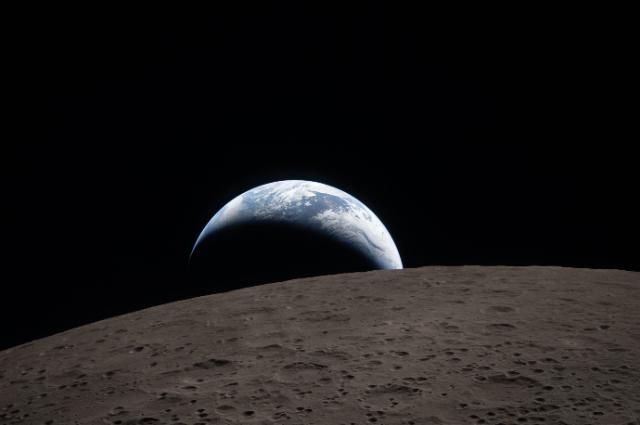
In April 2026, NASA sent humans back toward the Moon with the Artemis II mission. This event was not just a scientific achievement; it felt like a quiet change in how we view the Moon, both on paper and in our minds, laws, and power dynamics. The Moon, once a distant marvel and source of poetry, is slowly becoming something more familiar and complicated, a place shaped and conquered by human goals. For centuries, the Moon belonged to everyone and yet to no one. It inspired myths, influenced tides, and encouraged poetry across cultures. Scholars call it a "global commons," similar to the open seas or the atmosphere, shared, unclaimed, and free of borders. However, missions like Artemis II mark a change in how humanity relates to the Moon. This mission does not land astronauts on the surface, but it sets the stage for long-term human presence. It tests life support systems, deep space travel abilities, and readiness for ongoing exploration. Over time, permanence changes what a place means. A spot we visit remains a mystery, and a spot where we prepare to stay becomes a resource.
This change is not just about technology; it’s deeply political. A clear example is the Artemis Accords. These agreements, signed by many countries, outline principles for lunar exploration. They focus on cooperation, transparency, and peaceful use. However, they introduce the idea of "safety zones", which are areas designed to prevent interference between missions. This is reasonable in theory, but history shows similar patterns. Safety zones can turn into zones of control. What begins as a practical measure can signal priorities, presence, and informal ownership over time. These zones can still influence how we view territory without directly claiming land. At the same time, the Moon is becoming a centre for global competition. Countries are no longer working together in space as a single group. Instead, different blocs are forming. The United States and its partners are moving forward with the Artemis program, while China and Russia are developing their own plans for a joint lunar research station. This widening divide is likened to a new type of space race. Unlike the
Cold War competition, this is not just about pride. It focuses on positioning - who builds infrastructure first, who sets operational standards, and who secures long-term access to key areas. These areas matter more than expected. The Moon may seem vast and empty, but its most valuable regions are limited. For example, areas near the lunar south pole contain water ice deposits that could be turned into drinking water, breathable oxygen, and rocket fuel. These resources are crucial for supporting human life and facilitating further space travel. However, such areas are few and unevenly spread across the Moon. A small number of craters and elevated ridges (sometimes called "peaks of eternal light") are particularly important. This scarcity creates a familiar situation where resources are limited, and competition grows, and when competition increases, boundaries, whether formal or informal, start to take shape.
Amid these developments, there is also a human story emerging. The Artemis II mission has been framed as a step toward a more inclusive era of space exploration. Its crew reflects diversity in ways that earlier missions did not, highlighting an effort to better represent humanity. This is meaningful and shows progress in who can join these historic journeys. Yet representation does not always equal influence. Many countries lack the technology or funds to reach the Moon on their own. Therefore, they must partner with larger powers, accept established frameworks, and operate within systems they did not create. In this way, access to the Moon may seem open in theory, but it is unequal in practice. This brings up deeper questions about whether humanity is repeating old patterns. Throughout history, exploration often leads to expansion, followed by extraction. Legal frameworks and cooperative language have sometimes hidden competition for control and resources. The danger is not that the Moon will be overtaken by national borders, but that it will slowly reflect habits brought from Earth, habits of “claiming, prioritising, and competing”.
In many respects, the story of Artemis II is less about the Moon itself and more about what humanity brings to it. The Moon is becoming a mirror of our political systems, alliances, and ambitions. It is no longer just an empty space, but it is a canvas where we are starting to project familiar structures of power. The lines being drawn are not visible as borders yet, but they exist subtly through agreements, infrastructure, and strategic planning.
However, this moment is not without hope. The Artemis Accords, despite their shortcomings, represent an effort to create shared rules before conflicts arise. They stress peaceful use and cooperation, suggesting that humanity recognises the risks of unrestricted competition. The challenge is whether these principles can hold as tensions rise and more players join the scene. The Moon currently stands at a critical point. It is not yet a contested territory in the traditional sense, but politics have their eye on it. Each mission, agreement, and advancement adds to a growing framework that will define how we use and understand the Moon in the future. This process is gradual and almost invisible, but it is very significant. Artemis II doesn’t plant a flag on the lunar surface. Instead, it establishes an intention, which is the start of the authority threatening the moon. Intention can often be where territory begins. For now, the Moon remains a shared horizon, but whether it stays that way depends on the choices humanity makes in the future.
References :
- Reuters.com
- BBC
- NASA.gov
- paceNews.com
- TheHill.com
- PBS.com
- SkyNews.com
- KSNV.com
- ScientificAmerican.com
- Canadian Space Agency