
Mumbai moves with a sense of urgency that rarely pauses, and in a city where every minute carries weight, even a short delay can ripple into something far more disruptive, shaping the day of thousands who depend on its roads to function without interruption.
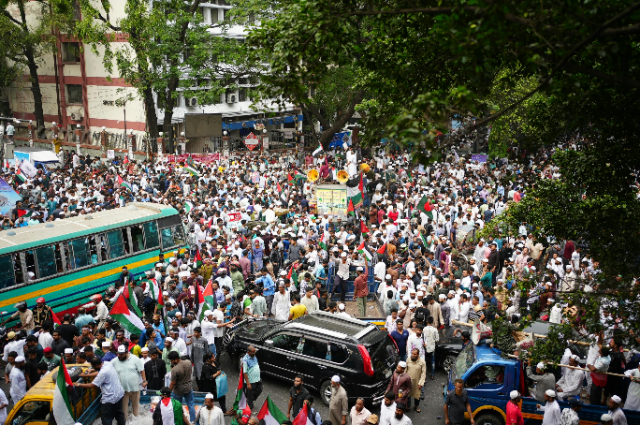
On an otherwise ordinary afternoon in Worli, this delicate rhythm faltered as a political rally, organised to demonstrate support for the Women’s Reservation Bill, expanded across key roads and brought traffic to a standstill, leaving commuters stranded in long, unmoving lines of vehicles while the message of empowerment echoed through loudspeakers.
For those participating in the rally, the moment carried visibility, purpose, and political significance, since it formed part of a broader national conversation around representation and inclusion, yet for those caught in the congestion it created, the experience felt detached from those ideals, because the immediate reality was one of frustration, delay, and helpless waiting.
Among the many individuals affected that day was a woman attempting to reach her child, and as minutes stretched into an uncertain stretch of time, the urgency of her situation grew sharper, making the surrounding spectacle feel increasingly disconnected from her needs.
As the standstill continued, her patience gave way to action, and instead of remaining confined within her vehicle like so many others around her, she stepped out and walked directly toward the center of the rally, where she confronted those leading it, raising her voice with a clarity shaped by urgency rather than preparation, questioning why public roads had been occupied in a manner that disregarded the everyday realities of the people who depended on them.
Her words, though spontaneous, carried a directness that cut through the noise of the gathering, transforming a routine demonstration into a moment of unexpected confrontation.
A video of this exchange quickly surfaced online, spreading across social media platforms and drawing widespread attention, as viewers responded to the rawness of her reaction and the situation that had provoked it, and although the woman herself remained unidentified, her presence resonated strongly, since she did not represent an organized group or a political position, but instead embodied a familiar frustration shared by countless city residents who often find themselves navigating disruptions beyond their control.
The symbolism of the moment began to take shape almost immediately, because a rally intended to amplify women’s voices had, in an unplanned turn, been interrupted by a woman asserting her own, and this contrast gave the incident a depth that extended beyond the specifics of the event itself.
While the protest aimed to advocate for structural change within political institutions, her intervention focused on the immediate impact of those seeking such change, highlighting a gap between intention and experience that rarely receives direct attention.
Public reaction reflected this complexity, as many expressed support for her actions, viewing her as someone who articulated a collective frustration that often remains unspoken, while others engaged in debates about tone, method, and the boundaries of acceptable dissent, yet even within these differing perspectives, there remained a shared recognition that the moment had captured something genuine and unresolved within the urban experience.
In cities like Mumbai, where infrastructure operates under constant pressure, the use of public space becomes a sensitive issue, and political demonstrations, although essential to democratic expression, often intersect with daily life in ways that create tension between visibility and disruption.
The Worli rally, like many before it, occupied this intersection, yet what distinguished it was the way in which that tension was brought into focus through a single act of defiance that neither followed a script nor sought approval.
The woman’s confrontation also introduced a practical dimension to the discussion, since she questioned the necessity of holding such a rally on a busy road when alternative spaces might have allowed the message to be conveyed without causing widespread inconvenience, and in doing so, she shifted the conversation from abstract rights to tangible choices, suggesting that the manner in which a protest is conducted carries consequences that cannot be separated from its purpose.
As the video continued to circulate, the incident began to take on a life beyond its immediate context, prompting conversations about civic responsibility, the limits of public tolerance, and the ways in which authority is exercised in shared spaces, while also raising questions about how individuals respond when those limits are tested.
The woman’s actions did not emerge from a position of power, yet they challenged those who held it, creating a moment in which the usual dynamics of control and compliance were briefly reversed.
The response from political circles added another layer to the unfolding narrative, as reports emerged of a complaint being filed against her, which in turn sparked criticism and concern about the implications of such a move, since it appeared to frame her reaction as misconduct rather than as an expression of legitimate grievance, and this development further deepened the debate around the boundaries of dissent and the risks associated with speaking out.
Within this evolving discussion, the phrase “The women’s rally finally found its woman” began to capture the essence of what had occurred, because it reflected the shift from collective representation to individual assertion, from organised messaging to lived experience, and from planned demonstration to spontaneous expression.
The rally had sought to speak on behalf of women as a group, yet in that moment, it was a single woman who gave the situation its most powerful and immediate voice.
Her presence disrupted the narrative in a way that could not be easily absorbed into the structure of the event, since she did not align with its format or its messaging, and yet she remained central to its meaning, illustrating how representation can sometimes overlook the very realities it aims to address.
By stepping into the rally, she did not reject its cause but instead challenged its execution, creating a distinction that resonated widely.
The incident also highlighted a broader pattern within urban life, where individuals often adapt to inconvenience without question, accepting disruptions as an inevitable part of living in a densely populated city, yet beneath that acceptance lies a reservoir of frustration that occasionally surfaces in moments such as this, when circumstances push someone to act rather than endure.
What made this particular moment significant was not only the action itself, but the way it connected with a wider audience, as people recognised elements of their own experiences within it, seeing in her response a reflection of situations they had encountered but never confronted.
This sense of shared understanding contributed to the rapid spread of the video and the intensity of the reactions it generated.
As the day came to an end, the rally dispersed and traffic gradually resumed its flow, allowing the city to return to its familiar rhythm, yet the impact of what had occurred did not fade as quickly, since the conversation it sparked continued to unfold across platforms and discussions, extending its reach beyond the physical boundaries of Worli.
In the days that followed, the incident remained a point of reference in conversations about civic life, serving as a reminder that public spaces are shared environments where decisions carry consequences for a wide range of people, and that the balance between expression and consideration requires constant negotiation rather than fixed assumptions.
Ultimately, the significance of the Worli protest lies in the way it reframed a familiar scenario, transforming a routine political demonstration into a moment of reflection on the relationship between power, representation, and everyday experience, while also illustrating how a single voice, when expressed with clarity and conviction, can alter the meaning of an entire event.
The woman at the center of this moment did not set out to become a symbol, nor did she seek recognition, yet her actions created a narrative that continues to resonate, because it speaks to a fundamental aspect of public life, where the right to be heard exists alongside the responsibility to listen, and where the spaces we share demand a balance that remains, even now, an ongoing challenge.
References :