
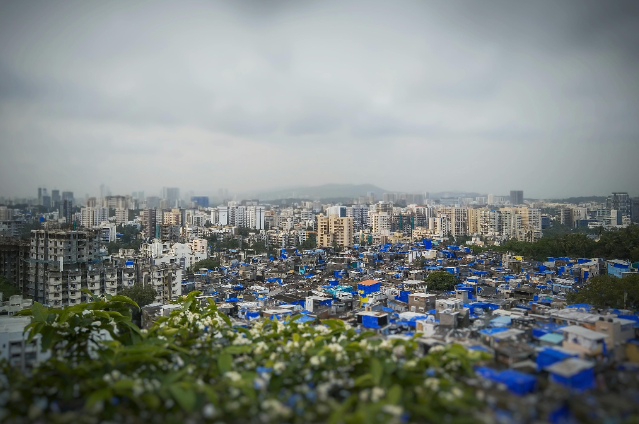
Travel writing and international media have long maintained a fixation on the sensory overload of the Indian subcontinent. Among these narratives, the critique of public cleanliness and odour is frequent. This observation is not entirely without basis, yet it represents only the surface of a deeply complex socio-economic reality. India exists in a state of intense contradiction. It is a nuclear-armed subcontinent with a booming digital economy and a space program that successfully reaches Mars, yet it simultaneously wrestles with basic waste management and environmental degradation. To truly understand why public spaces in India present such severe sanitation challenges, one must look past superficial stereotypes and examine the intersection of rapid urbanisation, historical infrastructure deficits, economic disparity, and the sheer pressure of sustaining one's life within the most populous nation on Earth.
The visible struggle with cleanliness in India is fundamentally a crisis of scale and rapid transition. Over the past few decades, the nation has experienced an unprecedented migration from rural villages to urban centres. Cities have expanded exponentially, swallowing adjacent land and attracting millions of citizens seeking economic advancement. However, municipal infrastructure was never designed to accommodate this influx. Many urban areas rely on drainage and sewage systems that date back to the colonial era, built for fractions of the current population. When millions of people occupy space without a corresponding expansion of underground sewage networks, wastewater treatment plants, or organised municipal garbage collection, the overflow inevitably spills into the public domain. The sensory impact that visitors note is the direct physical manifestation of a system operating far beyond its engineered capacity.
Economic inequality further complicates this landscape. While India possesses a rapidly growing middle class, a significant portion of the population still navigates intense poverty. In informal settlements and slums that lack municipal recognition, basic amenities like running water, private toilets, and door-to-door trash collection are absent. When survival depends on securing daily wages, the abstract concept of environmental preservation naturally becomes a secondary priority. For an individual without access to a toilet or a trash bin, the utilisation of public space for disposal is not a choice driven by a lack of civic pride, but rather a necessity dictated by an absence of alternatives. Wealthier nations developed their sanitation systems over centuries of gradual economic growth; India is attempting to implement these systems concurrently with massive population growth and limited municipal budgets.
This infrastructure deficit is most starkly illustrated by the state of municipal solid waste management. In many Indian cities, the current strategy for garbage disposal relies heavily on saturated landfills that resemble mountains. The Ghazipur landfill in New Delhi is a prime example of this crisis, serving as a towering monument to the gap between waste generation and processing capacity. Without widespread segregation of wet and dry waste at the household level, organic matter decomposes in open air, releasing methane and creating the distinct, heavy odours associated with municipal dumping grounds. While informal waste pickers perform an invaluable service by recycling plastics, metals, and cardboard, the sheer volume of daily waste far outpaces manual sorting. The resulting accumulation affects not only the visual landscape but also leaks into local ecosystems.
The crisis extends profoundly into the nation's water bodies. Rivers like the Ganges and the Yamuna hold immense spiritual and cultural significance for hundreds of millions of people, yet they are ecologically endangered. The paradox is striking; the same waters revered as sacred sources of life are subjected to immense volumes of untreated industrial effluents and municipal sewage daily. Upstream cities discharge chemical waste from manufacturing plants, while domestic sewage lines empty directly into the riverbeds. During religious festivals, the immersion of non-biodegradable offerings further strains the water quality. The natural self-purifying capacity of these massive river systems has been overwhelmed by the sheer volume of pollutants, turning vital waterways into stagnant conduits of waste that impact public health and agriculture downstream.
Simultaneously, air quality across northern India presents a severe environmental hazard that compounds the perception of a neglected environment. The thick smog that blankets cities like New Delhi, Kanpur, and Patna during autumn and winter is a multi-layered phenomenon. It is driven by vehicular emissions from millions of cars and motorcycles, dust from ceaseless construction projects, and industrial smoke. This urban pollution is then exacerbated by the seasonal burning of crop stubble by farmers in neighbouring agrarian states like Punjab and Haryana, who utilise fire as a rapid, low-cost method to clear fields for the next planting cycle. The resulting atmospheric stagnation traps particulate matter close to the ground, creating a dense, toxic haze that compromises respiratory health and reduces visibility for weeks at a time.
Despite the severity of these challenges, looking at India solely through the lens of environmental failure overlooks a massive, state-sponsored transformation. The launch of the Swachh Bharat Mission, or Clean India Mission, marked a significant shift in how the nation addresses public health and sanitation. This initiative represents one of the largest behavioural change campaigns in human history, focusing heavily on eradicating open defecation. By subsidising the construction of over one hundred million household toilets across rural and urban sectors, the program fundamentally altered the daily habits of hundreds of millions of citizens. Beyond the physical construction of infrastructure, the campaign utilised mass media, community monitoring, and school curricula to reshape societal norms around hygiene.
The success of such initiatives reveals that the problem is not an inherent cultural indifference to cleanliness, but rather a historic misalignment between private behaviour and public infrastructure. Indian households are traditionally maintained with a high standard of personal hygiene and cleanliness; the threshold of the home often marks a sharp boundary where personal responsibility ends and public space begins. This disconnect is partly a legacy of historical social structures that assigned the task of waste removal to specific marginalised communities, absolving the broader public of a sense of shared ownership over communal spaces. Overcoming this cultural inertia requires consistent education and, crucially, the visible provision of public waste bins and reliable municipal collection to prove to citizens that their civic efforts will not be undermined by systemic neglect.
Furthermore, international critiques of India’s cleanliness often lack critical context and rely on selective media narratives. Western nations frequently export their own consumer waste to developing countries or rely on carbon-heavy lifestyles that contribute disproportionately to global climate change, yet their well-funded municipal systems keep this degradation hidden from public view. India’s environmental struggles are highly visible because they occur in the open, shared spaces of a densely populated nation. Comparing the cleanliness of a country with an average income level still firmly in the developing bracket to wealthy European or North American nations with centuries of established infrastructure is an inherently flawed evaluation.
To move forward, India is increasingly recognising that sustainable cleanliness requires decentralised, technologically advanced solutions rather than just building more toilets or expanding landfills. Cities are beginning to invest in waste-to-energy plants, mechanised sweeping, and strict enforcement of single-use plastic bans. Citizen-led movements and neighbourhood waste segregation programs are gradually bridging the gap between municipal incapacity and civic duty. The transition is slow and uneven, marked by successes in certain metropolitan sectors and persistent failures in others, but the trajectory is undeniably moving toward systemic reform.
Ultimately, the cleanliness paradox of India is an ongoing struggle against the constraints of time, geography, and resource distribution. The country is attempting to lift millions out of poverty, industrialise its economy, and implement modern environmental standards all at the same time under the intense gaze of global media. The odours and waste that characterise its public spaces are not symptoms of a cultural defect, but rather the friction points of a massive nation evolving at breakneck speed. Acknowledging the gravity of the pollution and sanitation crisis is essential for public health, but it must be paired with an appreciation for the scale of the challenge and the genuine progress being made to resolve it.
References:
- https://timesofindia.indiatimes.com
- https://scroll.in
- https://india.mongabay.com
- https://www.iqair.com
- https://swachhbharatmission.ddws.gov.in
- https://cpcb.nic.in