
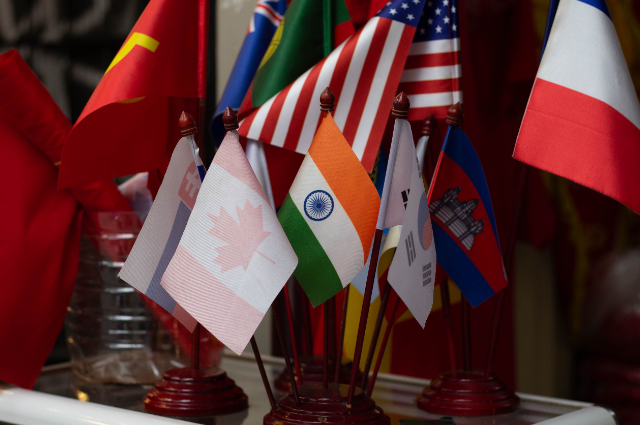
Every year, the leaders of the most powerful wealthy countries in the world gather together for a special meeting. This meeting is called the Group of Seven summit. People usually just call it the G7. The countries that belong to this club are the United States of America, the United Kingdom, France, Germany, Italy, Japan, and Canada. If you look at the pictures from these meetings over the past few years, you will almost always see the Prime Minister of India, Narendra Modi, standing right in the middle of the group. He smiles, shakes hands, and talks with all the world leaders. This looks very normal until you realise one important fact. India is not a member of the G7. India does not have a vote in this club, and it is not one of the official seven nations that make up the group.
This creates an interesting puzzle for anyone who watches global politics. Why does the leader of India spend so much time and energy going to a meeting for a club that his country does not belong to? The answer to this question tells us a lot about how the world is changing today. It shows us how power is moving from the West to the East. It also shows us how India is using its growing strength to become a bridge between different parts of the world. By looking closely at why Narendra Modi attends these meetings, we can understand the new rules of international relations and how India plans to navigate them.
To understand why this happens, we first need to look back at history and see what the G7 actually is. The group was started in the middle of the nineteen seventies. At that time, the world was going through a lot of economic trouble. There were big problems with oil prices, and the global financial system was unstable. The leaders of the richest democratic countries decided they needed a private place where they could sit down and talk about these big money problems. They wanted to coordinate their actions so they could keep the global economy stable. When it began, these countries really did control most of the wealth and industrial power on the planet. They represented the heart of the Western world, along with Japan in Asia. They shared the same ideas about free markets, trade, and democratic government.
For a long time, this small club could make decisions that affected the entire world because they had all the money. If the G7 agreed on a financial plan, the rest of the world usually had to follow along. But as the decades passed, the world began to change in a very big way. The old rich nations started to grow more slowly. At the same time, countries in Asia and other parts of the world started to grow very fast. New factories were built, new technologies were developed, and millions of people lifted themselves out of poverty. The balance of global wealth began to shift.
Today, the G7 countries are still very rich, but they do not hold the same absolute power that they used to hold fifty years ago. Together, they now represent less than half of the global economy. They also represent only about ten percent of the total population of the world. This means that a tiny group of people in the West is trying to make rules for the whole world. The leaders of the G7 realised that if they only talked to each other, their club would slowly lose its meaning. They knew they could not solve global problems like climate change, economic crises, or health emergencies by working alone. They needed to talk to the countries where the growth was actually happening. This is why they started inviting guest countries to their meetings. They call this the outreach part of the summit.
Among all the guest countries in the world, India has become the most important one for the G7. There are many reasons why the rich nations feel they cannot have a successful meeting without India. The most obvious reason is size. India is now the country with the largest population in the world. It has more than one billion four hundred million people. A country that big simply cannot be ignored. More importantly, India has one of the fastest-growing economies in the world. It is currently the fifth largest economy on the planet, and experts believe it will soon become the third largest, passing countries like Germany and Japan. When the G7 wants to talk about the future of global trade, energy, or technology, any plan they make will fail if a country as massive as India is not part of it.
There is also a very big political reason why the G7 wants India at the table, and that reason is China. Over the last few decades, China has become an economic and military giant. For many of the G7 nations, especially the United States, China is seen as a major rival and a potential threat to the global order. The Western nations are very worried about how much control China has over global manufacturing and trade. They realise that China makes too many of the things that the world relies on, from basic goods to advanced technology. If a conflict happens, or if China decides to stop selling certain items, the Western economies could face terrible problems.
To protect themselves, the G7 countries are trying to change where they buy their goods. They want to move their factories and supply chains out of China and into other nations that they trust more. This is where India comes into the picture. India has a huge workforce, a stable government, and a very large domestic market. The West sees India as the perfect alternative to China. By helping India grow its manufacturing sector, the G7 hopes to reduce its dependence on Chinese factories. When the G7 invites Narendra Modi to their summit, they are sending a message to the world that they want to build deep, long-lasting economic ties with India. They want to talk about how they can invest money in Indian infrastructure, how they can build factories there, and how they can secure rare materials that are needed for things like electric car batteries and solar panels.
While the G7 has clear reasons for inviting India, Narendra Modi has equally clear reasons for accepting the invitation and flying to Europe or Japan every year. For India, attending the G7 is a matter of national pride and global status. It shows the citizens of India and the rest of the world that India is no longer just a developing country that has to follow rules made by others. Instead, India is now seen as a major global power that helps make the rules. Standing equal with the leaders of America, Britain, and France gives India massive diplomatic prestige. It changes how other countries treat India in business deals and international discussions.
However, Modi does not go to the G7 just for the nice photos. He goes because it serves India's core foreign policy goal, which is known as strategic autonomy. This is a fancy way of saying that India wants to be independent and make its own choices without being forced into an alliance by any superpower. India has a unique history of non-alignment. During the Cold War, when the world was divided between the United States and the Soviet Union, India refused to take sides. India wanted to be friends with both sides and focus on its own development. That basic philosophy still guides Indian foreign policy today, even though the world has changed.
Today, India lives in a world with multiple centres of power. India is a very active member of groups that do not include Western nations. For example, India is a founding member of BRICS, a group that includes Brazil, Russia, China, and South Africa. India also belongs to the Shanghai Cooperation Organisation, which is focused on security in Asia and includes countries like Russia and China. At the same time, India maintains a very close relationship with the United States and Europe. By attending the G7 summit, Modi shows that India can walk in both worlds. India can sit down with Russia and China one week, and then sit down with America and France the next week. India does not belong to any single camp. Instead, it looks out for its own national interest in every situation. This ability to talk to everyone makes India a very valuable player in global diplomacy.
Another major reason why Modi attends the G7 is to act as the voice of the Global South. The Global South is a term used to describe the developing nations of Asia, Africa, and Latin America. Many of these countries are poor, and they feel that the international system is unfair to them. They believe that rich Western countries make all the decisions about global finance, climate change laws, and trade agreements without thinking about how those decisions hurt poorer nations. For example, when rich nations focus on climate change, they often tell poor nations to stop using coal or oil. But poor nations argue that they need cheap energy to lift their people out of poverty, just like the rich nations did in the past. They need money and technology from the rich world to make the switch to clean energy.
Narendra Modi has positioned himself as the leader who can bring these concerns directly to the richest boardrooms of the world. When he speaks at the G7 outreach sessions, he does not just talk about India. He talks about food security for Africa. He talks about high debts that are crushing small island nations. He talks about making vaccines and medicines affordable for everyone. Because India is large and powerful, the G7 leaders have to listen to Modi when he speaks. He uses his position at the G7 to force the rich nations to think about the rest of humanity. This makes India highly respected among developing nations, which in turn increases India's global influence.
We must also look at what happens behind the scenes at these summits. The G7 summit is not just about the big group meetings where leaders give speeches. A large part of the value comes from the smaller, private meetings that happen on the sidelines. These are called bilateral meetings, where two leaders sit down in a quiet room to discuss specific issues between their two countries. When Modi goes to the G7, he uses the opportunity to meet one-on-one with multiple leaders in a single weekend. This saves a huge amount of time and travel.
During these side meetings, real business gets done. For instance, at recent summits, Modi has held extensive talks with leaders like the French President Emmanuel Macron to discuss advanced defence deals, purchasing military aircraft, and working together on security in the Indian Ocean. He has met with leaders from the United Kingdom and Canada to talk about trade pacts and how to make it easier for Indian students and professionals to work abroad. He has also met with leaders from outside the G7 who were invited as guests, such as the President of the United Arab Emirates, to discuss energy security and investments. These face-to-face conversations help build personal trust between leaders. In world politics, personal trust can be the difference between solving a problem quickly or letting it turn into a major dispute.
Of course, this diplomatic balancing act is not always easy. It requires a lot of skill, and it can create tensions. The G7 countries are often at odds with some of India's other friends. The most striking example of this is Russia. Since the conflict in Ukraine began, the G7 nations have placed heavy economic penalties on Russia and have tried to isolate it from the rest of the world. They want every country to stop buying Russian oil and gas. India, however, has refused to stop its trade with Russia. In fact, India increased its purchase of Russian oil because it was sold at a discount, which helped keep energy prices low for Indian consumers. The G7 nations were not happy about this choice, and they have used past meetings to try to pressure India to change its stance.
When Modi goes to the G7 in these difficult moments, he stands his ground. He explains clearly that his first duty is to his own people, many of whom are still working hard to escape poverty. He argues that India cannot afford to pay sky-high prices for energy just to satisfy a Western political strategy. At the same time, he uses these meetings to speak up for peace, famously telling world leaders that the current era is not an era of war. Because India is so important to the G7 strategy against China, the Western leaders usually accept India's position, even if they disagree with it. They prefer to have India close to them, even with differences, rather than pushing India away.
Ultimately, Modi's attendance at the G7 shows that formal membership in an international organisation is no longer the only thing that matters. In the past, you were either in the club or you were out. Today, global power is much more fluid. India does not need to be an official member of the G7 to enjoy the benefits of the group. In fact, not being a member might actually be an advantage. If India were a full member, it might be expected to agree with every statement the group makes, which could damage its relationships with countries like Russia or developing nations in Africa. By attending as a permanent guest, India gets the best of both worlds. It gets a seat at the table with the richest nations, it gets to influence their choices, and it gets to protect its own independent foreign policy.
The story of Modi and the G7 is a story about a changing world. It is a world where old clubs are finding out that they can no longer run the planet by themselves. It is a world where a rising nation can use its economic growth, its large population, and its strategic location to command respect from the most powerful leaders on earth. As long as the G7 needs a strong partner in Asia to balance China and secure global supply chains, they will keep sending invitations to New Delhi. And as long as India wants to expand its global reach and maintain its independent voice, Narendra Modi will keep taking his place in the front row of the global stage.
References:
- https://www.indianarrative.com
- https://asiatimes.com
- https://www.vajiraoinstitute.com
- https://en.wikipedia.org