
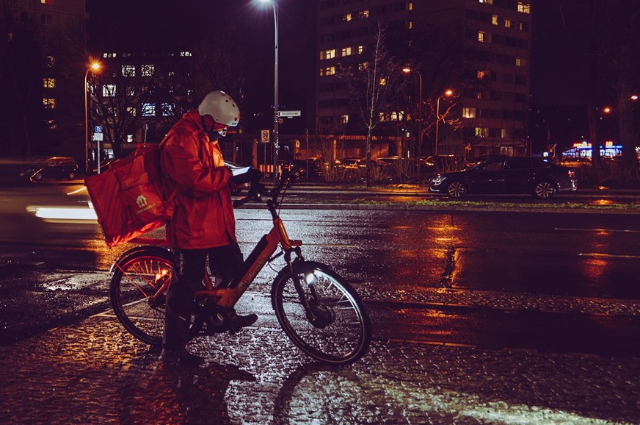
Image by wal_172619 from Pixabay
At 2:17 a.m., the streets of the city had almost fallen silent.
A thin young man in a faded yellow delivery jacket sat outside a twenty-four-hour pharmacy, rubbing his tired eyes while waiting for an order confirmation to appear on his cracked phone screen. His motorcycle engine coughed weakly beside him. The fuel indicator blinked red. He had not eaten a proper meal since morning.
Still, he refreshed the app again. One more order meant another two hundred rupees. Another two hundred rupees meant his sister’s surgery moved one step closer.
For customers awake at that hour, he was just another delivery rider trying to beat the timer flashing on their screens. But behind the helmet and insulated delivery bag was twenty-four-year-old Ravi Kumar, a man who had been working nearly eighteen hours a day for the past three weeks to save his younger sister’s life.
Three weeks earlier, Ravi’s world had changed inside a crowded government hospital. His sister Pooja, a nineteen-year-old college student, had collapsed during class after complaining of severe abdominal pain for days. Doctors later diagnosed a serious gallbladder infection that required immediate surgery. Though the operation itself was not extraordinarily expensive by private hospital standards, the total cost of medicines, scans, tests, and post-surgery treatment crossed an amount Ravi could never have imagined arranging alone.
Their father had died five years earlier from a stroke. Their mother stitched clothes for neighbourhood families, earning barely enough to cover rent and groceries. Pooja’s education had already been financed through borrowed money from relatives.
Ravi became the family’s only dependable source of income. Before the medical emergency, he worked normal shifts for a food delivery platform, averaging ten hours daily. The earnings were modest, but manageable. He could pay rent, recharge the electricity meter, and occasionally save small amounts for his sister’s studies.
But emergencies do not wait for savings. The day doctors handed him the estimated surgery expenses, Ravi increased his working hours immediately. Ten-hour shifts became fourteen. Fourteen became eighteen. Soon his entire life was reduced to maps, traffic signals, delivery timers, and incentive targets. Every morning began before sunrise.
At 5 a.m., while most of the city still slept, Ravi was already online, waiting near tea stalls for breakfast orders. By afternoon, the summer heat turned the roads into waves of burning air. Sweat soaked through his jacket as he rode continuously between restaurants, apartment complexes, office buildings, and hospitals.
The app rarely stopped sending notifications.
Accept the order.
Pick up food.
Deliver in twelve minutes.
Customer waiting.
Late delivery warning.
Peak-hour bonus unlocked.
The system rewarded speed and punished delay. A rider who rejected too many orders risked losing incentives. A rider who slowed down earned less. Every minute carried financial consequences.
To customers, food delivery apps promised convenience and speed. To workers like Ravi, those same promises often translated into relentless pressure.
India’s gig economy has grown rapidly over the past decade, with millions depending on app-based jobs for survival. Companies advertise flexible work opportunities and independence, attracting students, migrants, and unemployed youth searching for quick income. But behind the advertisements lies a difficult reality many workers quietly endure.
Most delivery riders are not salaried employees. Their earnings depend heavily on the number of deliveries completed, customer demand, fuel prices, and platform incentives. During good weeks, earnings appear reasonable. During slow periods, workers struggle to survive.
Meanwhile, expenses never stop increasing. Fuel prices rise. Vehicle maintenance becomes unavoidable. Traffic fines accumulate.
Phones break.
Rain damages motorcycles.
Medical emergencies destroy whatever little savings exist.
For Ravi, every obstacle now carried emotional weight. He was no longer riding only for money. He was racing against time.
One evening, during heavy rain, he slipped while turning near a flooded intersection. His bike skidded across the road, tearing his jeans and bruising his left knee badly. The food containers inside the delivery bag burst open.
The customer demanded a refund. The platform deducted compensation from Ravi’s earnings. That night, sitting under a flyover with rainwater dripping from the edge of his helmet, Ravi quietly calculated whether he could still afford his sister’s medicines for the week.
He did not tell his mother about the accident. He simply returned online and accepted the next order.
The psychological burden of gig work is often invisible because workers are expected to continue smiling through exhaustion. Customers usually encounter riders only for a few seconds — at gates, elevators, or doorsteps. Few notice trembling hands, sleepless eyes, or rainwater drying on their jackets.
Yet many delivery workers spend entire days surviving on tea and cheap snacks because proper meals consume both time and money.
Ravi was one of them.
Sometimes he skipped lunch completely to complete incentive targets during peak hours. On particularly difficult days, he parked near petrol stations at midnight and slept sitting on his motorcycle for twenty-minute intervals before accepting another order.
His body slowly began to protest.
Frequent headaches.
Back pain.
Burning eyes.
Constant fatigue.
But exhaustion had become a luxury he could not afford.
Meanwhile, Pooja’s surgery date moved closer. Inside hospital corridors, Ravi maintained the appearance of calm confidence. He reassured his mother repeatedly that everything would be arranged on time. He avoided discussing bills in front of Pooja because he feared she would blame herself for the family’s suffering.
One afternoon, while delivering food to a private hospital, Ravi watched a wealthy family casually pay an amount larger than his monthly income for a single medical procedure. He later admitted to a friend that the moment left him feeling invisible.
Not because he envied them. But because he realised how brutally unequal survival could become. Despite the emotional and physical strain, Ravi eventually arranged enough money through nonstop work, small loans, and borrowed contributions from relatives.
Pooja’s surgery was successful.
For the first time in weeks, Ravi slept peacefully outside the recovery ward, still wearing his delivery uniform. But the victory came at a cost. A few days later, Ravi fainted while waiting for an order pickup near a restaurant. Severe dehydration, sleep deprivation, and physical exhaustion had finally overwhelmed him. Ironically, the man who spent weeks delivering comfort and convenience to others had ignored his own collapsing health.
His story is not unique. Across major cities, thousands of delivery riders continue working under similar conditions every day. They race through dangerous traffic during storms, festivals, heatwaves, and late-night hours so modern urban life can function with uninterrupted convenience.
Society celebrates technological efficiency, but rarely pauses to examine the human cost hidden beneath it.
Customers applaud ten-minute deliveries.
Investors celebrate app growth.
Platforms compete for faster service.
But somewhere between those achievements are workers stretching their bodies and minds beyond healthy limits simply to survive another month.
The gig economy has undeniably created employment opportunities for millions. For many workers, it provides immediate income when traditional jobs remain unavailable. However, flexibility without protection can quickly become exploitation.
Without stable wages, healthcare security, insurance support, or regulated working hours, many gig workers operate in a system where survival depends entirely on endurance.
And endurance has limits. Today, Ravi still works as a delivery rider.
His sister has returned to college. Their financial situation remains fragile, but stable enough to continue moving forward one month at a time. Occasionally, when customers thank him warmly or offer drinking water during hot afternoons, he smiles genuinely.
Small acts of kindness matter more than most people realise. Yet his story leaves behind uncomfortable questions society cannot continue ignoring.
How many workers are sacrificing their health to sustain the convenience economy? How many families survive one medical emergency away from collapse? And how long can a system dependent on invisible exhaustion continue calling itself opportunity?
For customers, it may only be another notification saying, “Your order has arrived.” For riders like Ravi, it is another kilometre between survival and collapse.