
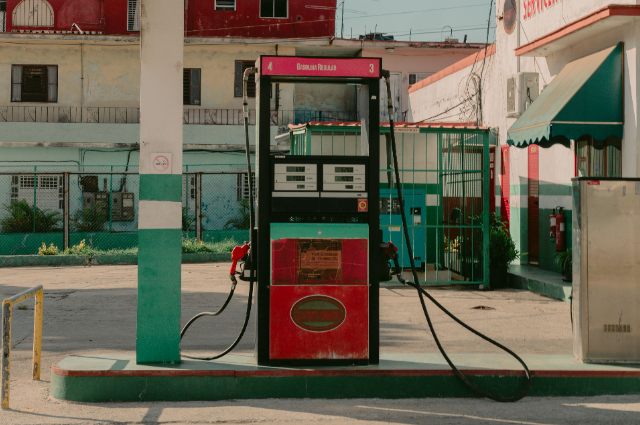
A smaller number on the fuel pump does something to you. After a few years of petrol sitting above a hundred rupees a litre, anything that promises to knock fifteen or twenty rupees off feels like a small mercy, and you tend to believe it before you have worked anything out. That something now has a name in India: E100, near-pure ethanol, freshly cleared for use and slowly turning up at pumps. The price on the board will be lower. Whether the drive actually costs you less is a separate matter, and it comes down, almost entirely, to a single number nobody in the government has finalised yet.
What E100 Actually Is
Start with the name, which is a bit of a lie. E100 isn’t actually a hundred per cent ethanol. For safety reasons, the Indian version lands at around 93 to 95 per cent, with a little petrol and a few solvents stirred in to help cold starts and to give the flame some colour, since pure ethanol burns almost invisibly. Think of it as the top of a ladder India has been climbing for about ten years. The bottom rung is E20, twenty per cent ethanol, which is what comes out of every petrol pump in the country today and has done since April 2025. A few rungs up is E85, eighty-five per cent ethanol, which went on sale in Delhi this June, on World Environment Day, at ₹82.12 a litre, roughly twenty rupees under petrol. E100 is the top of it.
What the excited headlines tend to skip is that you can’t simply use the stuff. E20 is fine in more or less any modern petrol car. E85 and E100 are not. They need a proper flex-fuel vehicle, with fuel lines ethanol won’t eat through, bigger injectors, and a sensor that reads the blend and quietly retunes the engine as you drive. Put E100 in an ordinary petrol car, and you are looking at corrosion and a repair bill. And the cars that can take it have only just arrived here, Maruti’s flex-fuel WagonR, a handful of Hero bikes — along with the few dozen pumps that actually sell it.
The Energy Problem
Here is where the maths starts to misbehave, and it comes down to chemistry. Ethanol just doesn’t hold as much energy as petrol, litre for litre — about two-thirds as much. And an engine cares about energy, not volume; it turns joules into kilometres, not litres into kilometres. So a litre of ethanol can’t carry you as far as a litre of petrol, and that’s simply that. On E100 it works out to something like twenty-five to thirty per cent fewer kilometres from every litre you buy. A flex-fuel engine built to make the most of ethanol’s high octane, higher compression and all, can win some of that back. A basic one can’t. Either way the penalty is real, and it is exactly the bit the pump display declines to mention: the price per litre falls, but so does the distance each litre gets you.
Doing the Sum
Numbers make it real, so let us run some. Picture a car that does twenty kilometres to the litre on petrol. On E100, knock off thirty percent and it is now doing about fourteen. You drive a thousand kilometres in a month, nothing dramatic. On petrol at ₹102, that is fifty litres, about ₹5,100. On E100 at the ₹85 the government has been floating, the same thousand kilometres needs roughly seventy-one litres, which comes to about ₹6,070. So you saved seventeen rupees on every litre and still finished the month nearly a thousand rupees worse off.
It sounds like a trick, and in a way it is — a trick of which number you are looking at. The pump shows you rupees per litre. Your wallet only ever felt rupees per kilometre. The mileage drop hides in the gap between the two, and the cheaper-looking litre quietly costs you more ground.
The Seventy Percent Rule
Brazil worked this out a long time ago. They have been running cars on ethanol for fifty years, and their drivers carry a rough rule in their heads when they pull in to fill up: ethanol is only the cheaper choice once it falls below about seventy percent of the petrol price. The reasoning is just the mileage gap turned around — if you need roughly thirty percent more litres to cover the same road, the fuel has to be at least thirty percent cheaper before you have so much as broken even.
Run that against Indian petrol at ₹102, and the line sits around ₹71 a litre. The price the Centre has been mulling for E100, somewhere in the ₹82 to ₹87 band, call it eighty to eighty-five per cent of petrol, sits well on the wrong side of it. At those numbers, the average private driver doesn’t come out ahead; they come out a little behind. A few voices in the industry have talked about ₹65 to ₹70 instead, which would duck under the line and flip the whole thing. Which of those two prices the government actually settles on is, for most households, the difference between saving and losing.
The Costs Before the First Litre
And honestly, the per-litre comparison is the kind version, because it pretends the fuel is the only thing you pay for. It isn’t. A flex-fuel car costs more to build, and you are the one who covers that — anywhere from twenty thousand rupees to a full lakh over the petrol version of the same model, depending on whose estimate you trust. A saving of a few hundred rupees a month, even a real one, takes years to earn a premium like that back. And then you have to find the fuel. Right now E100 and E85 are sold at a few dozen outlets; the plan is five hundred by the end of this year and five thousand by the end of next — and five thousand is still barely five percent of India’s petrol stations. Owning one of these cars today means routing your trips around where the fuel happens to be, which is not a thought that has ever crossed a petrol driver’s mind.
Who the Saving Is Really For
None of which makes E100 a bad idea. It just means the payoff probably isn’t where the pump price makes you think it is. The real case for ethanol was never your monthly fuel bill — it was the country’s. Every litre India brews at home is a litre of crude it doesn’t have to buy from abroad, and for a country that imports most of its oil and winces each time the global price twitches, that adds up quickly. The raw material is sugarcane, surplus grain and a growing amount of maize, so the money flows to farmers; the petroleum ministry reckons a real shift to flex-fuel could put thousands of crores into rural pockets and soak up farm gluts in the bargain. And ethanol burns cleaner than petrol. These are genuine wins. They just mostly land with the treasury, the farmer and the air rather than with you, standing at the pump, watching the litres climb.
And that is the quietly awkward part. Through the mileage penalty, the driver is, in effect, chipping in for a public good — and at the prices on the table just now, chipping in at a small loss rather than a gain.
The Answer at the Pump
So: can a lower pump price actually mean spending more? At the numbers India is looking at right now, yes, and easily. Fill up with E100 at ₹85 next to petrol at ₹102, and you will watch a cheaper figure climb on the display and still hand over more to reach the same place. It turns into a real bargain for the household only if the price slips under roughly seventy per cent of petrol, and India hasn’t decided to put it there yet. Until it does, the cheapest-looking fuel on the forecourt might just be the dearest way to drive.
References
- Autocar India — “All you need to know about E85 and E100 fuels.” https://www.autocarindia.com
- ChiniMandi — “Centre weighs 15-20% cheaper E100 fuel as India gears up for flex-fuel vehicle launch.” https://www.chinimandi.com
- Autopunditz — “India Clears E100 Fuel Regulations: What the Move Means for Cars, Consumers and the Ethanol Economy.” https://www.autopunditz.com
- Business Connect India — “E100 Fuel Vs Petrol: Key Differences, Benefits, Challenges & Future Scope In India.” https://businessconnectindia.in
- PSU Watch — “Explainer: What is Ethanol 100, or E100 fuel? And what is its retail price?” https://psuwatch.com
- carbike4u — “E85 Fuel in India: Everything You Need to Know in 2026.” https://carbike4u.com