
A family sits down to eat watermelon at half past one in the morning. By five, all four of them are vomiting. By nightfall, all four are dead.
Abdullah Dokadia, 44. His wife, Nasreen, 35. Their daughters Ayesha, 16, and Zainab, 13. A businessman, a homemaker, and two school-going girls. They lived in Ghari Mohalla on Ismail Kurte Road in Mumbai’s Pydhonie area, the old, dense heart of South Mumbai, where everyone knows everyone and fruit is bought from carts in the street.
On the night of April 25, 2026, they hosted five relatives for dinner. The guests ate, talked, and left around 1 am. After they left, the family cut a watermelon. They ate it together. Within four hours, all four of them were on the floor. The doctor who first reached them said they had lost control of their limbs. They had to be carried in bedsheets because they could not walk. Neighbours rushed them to the hospital. The hospital could not save them.
That was twelve days ago. What began as a suspected case of food poisoning has since turned into something far darker. And the questions it has raised about what we eat, who sells it to us, and how little anyone is watching are questions that every person in this country should be sitting with.
The Night That Killed a Family
Here is the timeline, as pieced together by investigators and family statements.
On the evening of April 25, the Dokadias hosted a small dinner. Five relatives came over.
Everyone ate. Nobody fell ill.
The guests left at around 1 am. After they left, the four family members, Abdullah, Nasreen, Ayesha, and Zainab, sat together and ate watermelon. Abdullah had reportedly purchased the fruit from a vendor somewhere in the Null Bazar area earlier that day.
By 5 am on April 26, all four were violently ill. Vomiting. Diarrhoea. Stomach cramps. The symptoms came on fast, and they came on hard. Neighbours were alerted. The family was rushed to the hospital. But the damage was already done. All four died within hours of each other. An accidental death case was registered at the JJ Marg Police Station.
The five dinner guests, who had eaten the mutton pulao but not the watermelon, were completely fine. Not one of them reported any symptoms. That detail alone narrowed the window. Whatever killed the Dokadia family entered their bodies between 1 am and 5 am. And the only thing they consumed in that window was the watermelon.
Green Organs and a Rat Poison Called Zinc Phosphide
When the post-mortem examinations were conducted at JJ Hospital, the forensic team found something that stopped them. The brains, hearts, and intestines of all four victims had turned green.
Medical literature is clear: this kind of organ discolouration is not consistent with routine food poisoning or bacterial infection. It points to toxic exposure. To chemicals. To something that should not have been inside a human body.
For eleven days, the investigation hung in uncertainty. The state Food and Drug Administration said no direct link between the deaths and the watermelon had been established. Some media reports claimed that traces of morphine had been found in Abdullah’s body. The police said they were awaiting the final forensic report. The city speculated. Social media panicked. Watermelon sales across parts of Mumbai collapsed. Vendors who normally sold the fruit disappeared from their usual spots.
On May 7, the Kalina Forensic Science Laboratory confirmed what the green organs had already been screaming: zinc phosphide. A chemical compound used in rat poison. It was found in the viscera samples of all four victims — in their stomach contents, liver, kidneys, spleen, bile, and abdominal fat. And it was found in the watermelon.
Zinc phosphide is a common rodenticide. Cheap. Widely available. When swallowed, it reacts with stomach acid to release phosphine gas, a highly toxic substance that attacks multiple organ systems simultaneously. It can kill within hours.
Forensic investigators believe the poison may have been mixed into or sprinkled onto the cut fruit, though the exact method remains unclear. Investigators also noted that much of the poison had been expelled through vomiting, making initial detection difficult. It took the Kalina FSL eleven days and multiple rounds of testing to confirm what had happened.
The Man From Null Bazar
Before his condition worsened on the morning of April 26, Abdullah reportedly told someone that he had purchased the watermelon from a vendor in the Null Bazar area. That is the last useful lead the police have had about the source of the fruit.
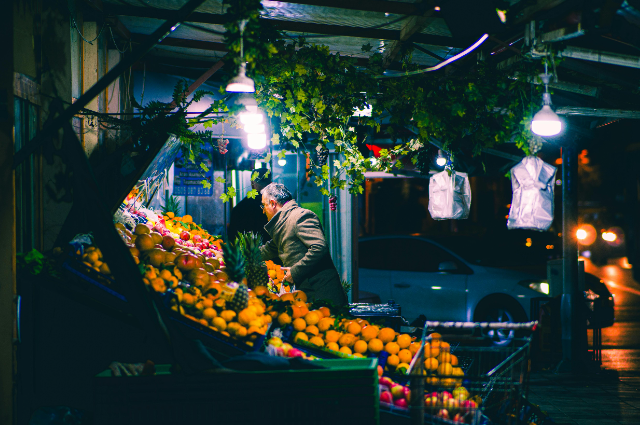
Null Bazar is not a single shop. It is one of the oldest and densest market areas in South Mumbai. Hundreds of vendors. Carts lined up against each other. No receipts. No licenses displayed. No CCTV on most stretches. Finding one specific watermelon seller in Null Bazar is, as the police themselves have acknowledged, close to impossible.
The specific vendor has not been identified. In the aftermath of the deaths, watermelon vendors in the area disappeared from their usual spots. Whether they left out of fear, guilt, or simply because business dried up, nobody knows.
A separate detail has surfaced in the investigation and has been partly walked back. Initial reports indicated that Abdullah Dokadia had been a key witness in a 2019 fraud case involving a real estate developer, with a crucial hearing scheduled in 2026. This raised the question of whether the family had been deliberately targeted. However, Senior Police Inspector Raees Shaikh later clarified to the media that Abdullah had only acted as a mediator in a Section 498A domestic matter and that this angle had been examined and ruled out. The investigation remains open.
Police are exploring three scenarios: accidental contamination of the fruit during storage or transport, deliberate tampering, or something else entirely. No clear motive has emerged. No suicide note was found. No evidence of family disputes has surfaced.
The Poison That Hides in Plain Sight
Zinc phosphide is not a rare or hard-to-find substance. It is sold openly in markets across India as rat poison. It costs almost nothing. It looks like a grey-black powder. It has no strong smell. Sprinkled onto a piece of cut fruit, it would be virtually undetectable to someone eating in the dark at half past one in the morning.
It is something a farmer uses to protect his grain store. And that is precisely what makes it terrifying.
In February 2026, a video circulated on social media showing a fruit vendor in Mumbai allegedly applying a rat-poison-like substance to fruits to prevent rodent damage. The video was unverified, and its authenticity could not be confirmed. But it pointed to a practice that food safety experts have flagged for years: in the absence of routine, rigorous inspection of fresh produce sold in open markets.
India’s food safety infrastructure for unorganised fresh produce markets is, to put it plainly, almost non-existent.
The Food Safety and Standards Authority of India regulates packaged and processed food with reasonable effectiveness.
But a watermelon sold from a cart in Null Bazar? There is no cold chain. No traceability. No record of where the fruit was grown, how it was transported, where it was stored, or what chemicals it may have come into contact with. When four people die from eating a watermelon, the police cannot even find the man who sold it. That is not a gap in the system. That is the absence of a system.
The Fear that followed
Within days of the Dokadia deaths, watermelon sales across parts of Mumbai dropped sharply. Vendors reported customers returning fruit. WhatsApp forwards warned people not to eat watermelon.
The FDA had to issue a public statement clarifying that no evidence had been found linking watermelon as a fruit to poisoning, and that the issue was likely contamination of a specific batch.
The panic was understandable but misdirected. The watermelon did not kill the Dokadia family. The zinc phosphide inside it did. And the real question is not whether watermelon is safe to eat. The real question is whether India has any reliable way of knowing what has been done to the food on its street carts, in its wholesale markets, and in the long, unmonitored chain between the farm and the family that cuts it open at midnight.
For the five relatives who sat in the Dokadia house that night, ate the mutton pulao, laughed, talked, and went home, the randomness of survival must be unbearable. They ate everything the family ate. Except for the watermelon. They lived. The family did not. Four people. One fruit. An entire life erased before sunrise.
What We Still Do Not Know
The investigation is still ongoing. The Kalina FSL report has confirmed zinc phosphide. But how it got into the watermelon remains unanswered. Was the fruit contaminated at the farm, during transport, at the vendor’s cart, or inside the Dokadia home? Was this an accident, a crime, or something in between? The morphine traces found in Abdullah’s body — were they from prior medical treatment, or something else? These questions have not been resolved.
The watermelon vendor from Null Bazar has not been found. In a market that runs on cash, has no receipts, and where sellers change spots daily, he may never be found. The police know this. The family’s surviving relatives know this. And that, perhaps, is the most disturbing part of this story. Not that four people died. But the system through which they bought the food that killed them is designed in a way that makes tracing the source nearly impossible.
Abdullah Dokadia ran a mobile accessories shop. Nasreen was a homemaker. Ayesha was sixteen. Zainab was thirteen. They had guests over for dinner. They said goodbye to their relatives. They sat together and ate watermelon. By morning, every one of them was gone.
Somewhere in Null Bazar, a vendor who sold a watermelon on the afternoon of April 25 has not come forward. Four green organs sit in a forensic lab. And a family that was alive twelve days ago is now a case number at the JJ Marg Police Station.
This is an evolving case. The answers, when they come, may not bring comfort. But they must come. Because the Dokadia family did not die from eating watermelon. They died from a system that has no idea what is in the food it sells.
References
- WION — “Mumbai family death mystery deepens: Rat poison found in watermelon and victims’ bodies” (May 8, 2026). https://www.wionews.com
- Organiser — “Rat poison in watermelon killed family of four in Mumbai — Forensic report confirms” (May 8, 2026). https://organiser.org
- The Week — “Mumbai family deaths: Watermelon not the culprit; what green discolouration of internal organs indicates” (May 2, 2026). https://www.theweek.in
- Organiser — “Mumbai Watermelon Deaths Case: Mystery deepens, police rule out old case link; Vendor yet to be found” (May 2, 2026). https://organiser.org
- LatestLY — “Mumbai ‘Watermelon Death’ Case: Was the Dokadia Family Targeted? Know How a 2019 Fraud Case Could Link to Pydhonie Family Deaths” (May 4, 2026). https://www.latestly.com
- Republic World — “It’s Rat Poison, Not Watermelon: Fresh Twist in Mumbai Family Death Mystery Takes Chilling Turn After 11 Days” (May 7, 2026). https://www.republicworld.com
- Pune Pulse — “Mumbai Family Death Mystery Solved 11 Days Later” (May 7, 2026). https://www.mypunepulse.com
- Organiser — “Mumbai Watermelon Death: Forensic finds abnormal discolouration of internal organs; Probe extends to past criminal cases” (May 1, 2026). https://organiser.org
- Goethe University (2024) — “Fifty shades of green and blue: autopsy findings after administration of xenobiotics.” https://www.ncbi.nlm.nih.gov
- India.com — “Rat poison detected in watermelon after deaths of four-member Mumbai family” (May 8, 2026). https://www.india.com