
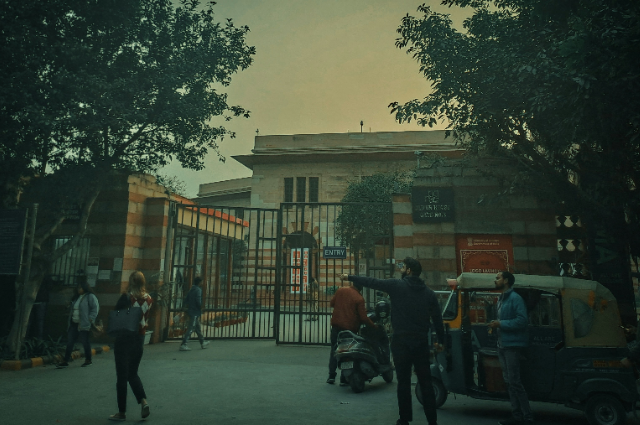
An eight-year-old went to school on the last morning before the summer holidays, and he never really came home. Almost a fortnight later, after a coma he did not wake from, Ayush Kumar Nath died. In the weeks that followed, a private school in south Kolkata found itself at the centre of a police case, with angry crowds at its gates and a set of questions that no grieving family should ever have to ask.
Ayush was a Class III student at Maharishi Vidya Mandir, a school in the Bansdroni area on the southern edge of the city. What his family says happened to him on May 13, and what the school insists happened, have become two very different accounts of the same few hours. A Kolkata Police investigation is now trying to work out which of them the evidence will bear out, which means that, for the moment, much of this story is an allegation rather than a settled fact. One thing, though, is beyond dispute: a child is dead.
The Last Morning
May 13 was the last working day before the summer break. By the family’s account, Ayush had only just returned to class after six days away, and from early in the day, he had been telling his teachers that he felt unwell. His father, Ashish Kumar Nath, says the boy asked to be sent home and was instead kept in the classroom, seated for hours on the last bench by the windows, and that the family knew nothing of how bad things had become until he fell on the stairs.
The fuller version of the family’s allegation, the one that has travelled widely since, is harsher still. In it, Ayush was refused permission to leave, told to put his head down on the desk, and kept there period after period in a hot corner of a room whose fan was not working, all, while the May heat was difficult to manage. The school disputes this sequence of events, and none of it has yet been tested against CCTV footage or the other evidence the police are gathering. For now, it is the account of a family that is convinced its son failed.
The Fall on the Staircase
What is less disputed is how the morning ended. At around half past eleven, as classes were let out and children streamed towards the exits, Ayush fell on a staircase and struck his head. Staff moved him to a bench near the principal’s office, and only then, his father says, was the family told. By the time they reached the school, the father had said, the boy’s head had already been washed clean; there was no blood left to see, but the head had swollen, and the forehead had turned blue.
By the time Ayush reached SSKM Hospital, he had slipped into a coma. The doctors’ early assessment pointed to bleeding inside the brain, and a postmortem examination was later ordered, its findings meant to feed directly into the police inquiry. He never woke. On May 25, after nearly two weeks in hospital, Ayush Kumar Nath died.
A Death, and a Complaint
The family lodged a complaint at the Netaji Nagar police station, and a case was registered under the Juvenile Justice Act and a section of the Bharatiya Nyaya Sanhita (the new criminal code) that deals with causing death by negligence. For Ashish Nath, the grief has been sharpened by what he calls silence from the people who had charge of his son. After Ayush died, he says, neither the school management nor the principal reached out to the family, and the class teacher would not speak to them about what had happened.
What the School Says
The school’s account is very different, and it deserves to be weighed with the same seriousness as the family’s. Maharishi Vidya Mandir has denied any negligence. In statements carried by several outlets, it has been said that Ayush seemed normal and well for most of the day and complained of discomfort only around the time school was letting out, at which point staff attended to him at once and handed him safely to his father. Much of what is circulating online, the administration says, is rumour and misinformation, and it has insisted that it is cooperating fully with the police.
The principal, Susmita Chakraborty, pushed back more sharply, rejecting the idea that her staff had neglected a child in their care and asking, in effect, why the boy’s parents would want to defame the school. Two readings of the same morning now sit side by side, and only the investigation can tell them apart.
The Investigation
That investigation is now underway. Police have detained and questioned three people connected to the school, the principal and the class teacher among them, and have secured CCTV footage from inside and outside the premises. The investigating officer, Abhijit Adhikari, has said the recordings, together with witness statements, medical records and the postmortem report, will be used to piece together exactly what happened on May 13, and that going through the footage carefully will take time. What those cameras did or did not capture across the morning may, in the end, matter more than any single person’s word.
A City’s Unease
Whatever the evidence eventually shows, the case has already set off a public reckoning. Parents and guardians gathered at the school gates to demand accountability, and the death has carried well beyond Bansdroni, into the Bengali and national press. Some of the anger belongs to this family and this school alone. Some of it is older and wider than that: a familiar unease about how schools respond when a small child, in the thick of a heatwave, keeps saying that something is wrong.
The Questions That Outlive the Case
Whatever the footage finally shows, the case has fixed attention on a gap that no postmortem can close. What is a school actually obliged to do when an eight-year-old keeps saying he is unwell? At what point does discomfort turn into an emergency, and whose job is it to make that call: to pick up the phone to a parent, to walk a child to a doctor instead of to a back bench? The investigation will settle the question of legal responsibility. The harder question sits underneath it, and it belongs to every school rather than this one alone: how a place trusted with children manages to notice, in time, that one of them is in real trouble.
Ayush Nath went to school on the last day before the holidays and never made it down a flight of stairs. His family wants to know why. So, more and more, does the city.
References:
- The Telegraph (Kolkata): “Class 3 student dies, parents file ‘negligence’ case, Bansdroni school denies laxity.” https://www.telegraphindia.com
- The Logical Indian: “Kolkata School Horror: 8-Year-Old Boy Dies After Allegedly Being Denied Leave Despite Feeling Unwell.” https://thelogicalindian.com
- Millennium Post: “Student dies after falling ill at Netaji Nagar school; complaint registered.” https://www.millenniumpost.in
- News The Truth: “Parents Protest Outside Naktala’s Maharishi Vidya Mandir School after Class III Student’s Death.” https://newsthetruth.com
- Sangbad Pratidin: “Class 3 Student Ayush Nath’s Tragic Death Sparks Outrage in Kolkata.” https://www.sangbadpratidin.in