
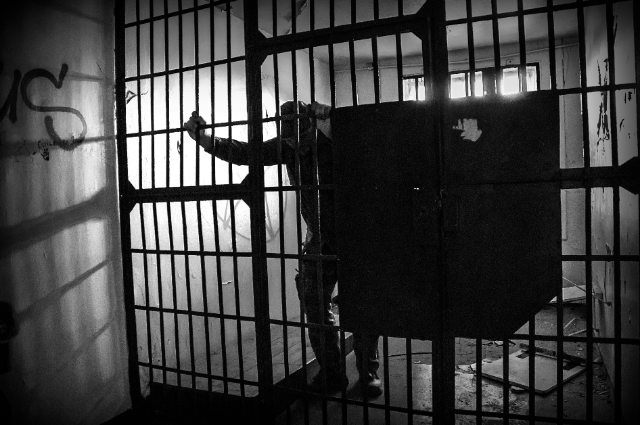
A father walks into a police station to ask why his son has been picked up. He does not walk out alive. His son, who came looking for him, does not walk out alive either.
This is not a metaphor. This is what happened to P. Jayaraj (59) and J. Bennix (31) on the night of June 19, 2020, in a small town called Sathankulam in Tamil Nadu’s Ramanathapuram district. Their supposed crime? Keeping their mobile phone shop open a few minutes past the permitted lockdown hours. The CBI would later confirm that no such violation even took place. A false case had been registered against them.
What followed was a night of torture so relentless that the inspector in charge reportedly told his subordinates to start again whenever the screaming stopped.
What followed after that, the outrage, the investigation, a trial dragged through five different judges over nearly six years, is a story India has seen too many times.
A story of a system that knows how to punish. But not how to protect.
We are raised to believe that the police are our first line of safety. We tell our children to run to a man in khaki if they are ever in danger. But the Sathankulam case sits with a different question altogether. What happens when the khaki itself becomes the danger? Nine officers, from an inspector down to a constable, have now been sentenced to death for torturing and killing a father and son inside their own police station. The verdict made legal history. But it also made something else painfully clear: how many things had to go wrong, how many people had to look away, before two men could die in custody over a shop that was allegedly kept open too late.
India’s Legal Safeguards Against Custodial Violence
India’s relationship with custodial violence is almost as old as its police system itself. The Indian Police Act of 1861 was a colonial creation. It was built to control, not to protect. More than 160 years later, we still have not fully replaced it. For most of independent India’s history, if a person died in police custody, there was no separate law to deal with it. Custodial torture was not recognised as a distinct offence.
The first real push came in 1996 when the Supreme Court, in D.K. Basu v. State of West Bengal, laid down eleven guidelines for how arrests should be conducted. Things like preparing an arrest memo, getting a medical examination done every 48 hours, and informing the family immediately. The Court said very clearly that custodial violence “strikes a blow at the Rule of Law.” That was almost 30 years ago. These guidelines are still not consistently followed across the country.
India signed the United Nations Convention Against Torture in 1997. It has still not ratified it. A Prevention of Torture Bill was passed by the Lok Sabha in 2010. It died without ever reaching the Rajya Sabha. The Prakash Singh judgment of 2006 gave seven clear directives for police reform. Most states have barely implemented them. In 2023, we replaced the entire criminal law framework with the BNS, BNSS, and BSA. But one thing did not change — you still need government permission to prosecute a public servant. That one provision has been a shield for offending officers for decades.
The Crime: June 2020, Sathankulam
On the evening of June 19, 2020, Jayaraj was at his mobile accessories shop near the Kamarajar statue when Sub-Inspector Balakrishnan showed up to enforce lockdown timings. What happened next was not enforcement. According to the CBI’s 2,427-page chargesheet, Jayaraj had made some remark about police behaviour earlier. The arrest was retaliation, not procedure. When his son Bennix heard and rushed to the station, he too was pulled in. Neither father nor son was allowed to leave after that. Lawyers and friends who gathered outside were turned away.
From about 7:45 pm on June 19 to the early hours of June 20, both were beaten inside the station. Lathis. Iron rods. Their clothes were stripped off during the assault. Inspector S. Sridhar, the Station House Officer, allegedly told his men to “teach Bennix a lesson” and kept pushing them to hit harder whenever there was a lull. Even police volunteers inside the station joined in. When the floor was covered in blood, the two victims were made to wipe it clean with their own clothes.
The autopsy findings were devastating. Jayaraj had at least 17 injuries. Bennix had 13. Both had severe blood loss. DNA samples taken from the walls of the station, the floor, the toilet, the lathis, and the SHO’s room all matched Jayaraj and Bennix.
The morning after, the police took them to the local government hospital. Both were bleeding profusely. Bennix had to change six lungis because of the rectal bleeding. And yet, the doctor on duty, Dr Vinila, certified both of them as “fit for remand.” They were then taken to the Sathankulam Judicial Magistrate, D. Saravanan. He did not step down from his balcony. He did not examine them. He did not speak to them. He simply waved the police away and sent them to Kovilpatti sub-jail, about 100 kilometres from Sathankulam. On June 22, Bennix died at 9 pm. Jayaraj died the next morning at 4:30 am. A father and his son. Dead in four days. Over a shop.
The Aftermath: From Outrage to Investigation
The moment Jayaraj died, the streets of Sathankulam erupted. Shopkeepers blocked roads. People demanded murder charges. MLA Anita R. Radhakrishnan joined the protests. M.K. Stalin, then Leader of the Opposition, demanded answers from Chief Minister Palaniswami. K.S. Alagiri, the TNCC president, called for a CBI probe.
The whole thing was made more explosive by the timing; George Floyd had been killed by police in America barely a month earlier, and the world was already on fire about police brutality. Retired Supreme Court Justice Markandey Katju said publicly that what happened in Thoothukudi was “worse than the Nirbhaya case.”
On June 24, the Madurai Bench of the Madras High Court stepped in on its own, taking suo motu cognisance. Justices P.N. Prakash and B. Pugalendhi ordered the autopsy to be videographed by three expert doctors and did something no court had done before; they ordered the Sathankulam police station locked to preserve evidence.
When a judicial magistrate investigating the station reported that a constable had threatened him, the High Court started contempt proceedings. On July 7, the state government handed the case to the CBI. The CBI set up camp in Madurai and investigated the pandemic.
They arrested ten officers. They filed a chargesheet on September 26, 2020, running over 2,000 pages, under Sections 120-B, 302, 342, 201, 182, 193, 211, 218 and 34 of the IPC. One of the ten accused, Special Sub-Inspector Pauldurai, died of COVID-19 during the investigation. The “Friends of Police” programme, a community policing initiative whose volunteers had allegedly taken part in the beatings, was scrapped.
The Trial and Verdict: “Rarest of Rare”
The trial went on for nearly six years. Five judges handled it. 135 witnesses were listed, 105 examined. 116 documents were put before the court. One of the most important moments in the trial was the testimony of Constable R. Revathi, a woman head constable who was posted at Sathankulam station that night. She told the court she had never seen anything like it. She confirmed the torture. She described the violence. Her statement became the backbone of the prosecution’s case, and she has since been recognised as the whistleblower who made this verdict possible.
On March 23, 2026, Judge G. Muthukumaran of the First Additional District and Sessions Court, Madurai, convicted all nine. Guilty under Sections 342, 195, 211, 218, and 302 read with 109 and 34 of the IPC. On April 6, 2026, came the sentence: double death penalty for each officer. One for Jayaraj. One for Bennix. Total fine of ₹1.40 crore to be paid as compensation to the family. Inspector Sridhar alone was fined ₹15 lakh. The convicted officers: Inspector S. Sridhar, Sub-Inspectors P. Raghu Ganesh and K. Balakrishnan, Head Constables S. Murugan and A. Samadurai, Constables M. Muthuraj, S. Chelladurai, X. Thomas Francis, and S. Veilumuthu.
The judge called it “rarest of rare” under the framework of Bachan Singh v. State of Punjab (1980) and Machhi Singh v. State of Punjab (1983). He said the accused were “educated, mentally sound, salaried government employees” who knew exactly what they were doing.
He compared it to the George Floyd killing and said this was not an Indian problem alone; it was a global one. He said life imprisonment would not be enough. The punishment had to reflect the conscience of society.
Public Response and the Debate It Sparked
The verdict hit hard. Kamal Haasan, Rajya Sabha MP and Makkal Needhi Maiam founder, said the brutality shook the conscience of society. He praised the family of Jayaraj and Bennix for refusing to give up, and credited the CBI for building a watertight case. But he also said something that complicated the celebration. He said he is personally opposed to the death penalty. That even those guilty of crimes this terrible should get life imprisonment with hard labour, no concessions, no parole. He then asked a question that sat uncomfortably with everyone: “By engaging in such inhuman acts, how great a punishment have they inflicted on their own innocent families?” He also demanded that the doctors and officials who tried to cover up the crime be held accountable, too. Not just the ones who swung the lathis.
The political fallout was immediate. TNCC president K. Selvaperunthagai demanded that AIADMK leader Edappadi K. Palaniswami publicly apologise, accusing his government of trying to bury the case by claiming the deaths were from natural causes. With Tamil Nadu Assembly elections approaching, Sathankulam has become a live political issue again. Human rights activist Henri Tiphagne called the verdict a wake-up call and pushed for something India has avoided for decades: a standalone anti-torture law.
India signed the UN Convention Against Torture in 1997. It has not ratified it in 29 years.
But not everyone saw the verdict as a turning point. Legal journalist V. Venkatesan raised a fair question: Does the death penalty actually fix anything?
India still does not have a law that treats custodial torture as a separate offence. The CBI had to use regular murder charges under the IPC because there was nothing more specific available. If an anti-torture law had existed, the trial might have been faster and sharper. There were also serious problems with the evidence. CCTV footage from the police station had been erased. The case moved forward only because of independent evidence, a local shopkeeper’s testimony, and, most crucially, the courage of Constable Revathi.
The Numbers That Haunt Us
Here is where the Sathankulam verdict stops being a victory and starts being a mirror. Between 2014 and 2022, the NHRC received around 20,000 complaints of custodial death across India. The number of prosecutions that followed: zero.
In Tamil Nadu alone, 490 deaths were reported in judicial or police custody between 2016 and 2022, according to data presented in Parliament. And the NHRC’s own submission in 2026 showed that only one case of disciplinary action had been recommended in Tamil Nadu over the past five years.
What This Case Tells Us
The thing about the Sathankulam case that stays with you is not the nine officers. It is everyone else. The doctor who looked at two men soaked in their own blood and wrote “fit for remand” on a piece of paper. She has never been prosecuted. The magistrate who could not be bothered to walk down from his balcony, who waved two dying men into a sub-jail 100 kilometres away without even speaking to them. He has never faced an inquiry. The jail superintendent who admitted two visibly broken men and raised no alarm. Never questioned. At every single point where the system was supposed to catch this, the medical check, the magisterial review, the jail admission, it did not just fail. It looked the other way.
This was never just about nine men with lathis. This was about a system that made space for them.
The convicted officers will appeal to the Madras High Court. That process could take years. For J. Parsi Jayaraj’s daughter and Bennix’s sister, the wait that began six years ago is not over.
The real question this case leaves behind is not whether nine officers deserved the death sentence. A court has answered that. The real question is whether India can reform itself enough to make sure the next Jayaraj and Bennix are protected before they are harmed. Not avenged after they are gone.
Until that happens, the Sathankulam verdict will be exactly what it is. A rare exception. Not a new rule.
And the distance between exception and norm is the distance between justice promised and justice delivered.
References
- LiveLaw — “Sathankulam Custodial Deaths Case: Madurai Court Awards Death Penalty To All Nine Police Officers” (April 6, 2026). https://www.livelaw.in
- Bar and Bench — “Sathankulam custodial deaths: Madurai court awards death penalty to 9 police personnel” (April 6, 2026). https://www.barandbench.com
- SCC Online Blog — “‘Rarest of the Rare’: Death penalty to 9 Police Officials in Sathankulam Custodial Deaths Case” (April 8, 2026). https://www.scconline.com
- Outlook India — “Death Sentence For Nine Policemen: Satankulam Verdict Exposes Tamil Nadu’s Blind Spot” (April 6, 2026). https://www.outlookindia.com
- The Leaflet — “Sathankulam Horror: A Conviction and a Reminder on India’s Long March to Custodial Justice” (April 2026). https://theleaflet.in
- The Federal — “Sathankulam case raises brutal question: Who protects citizens from police?” (April 2026). https://thefederal.com
- ThePrint — “9 Tamil Nadu cops convicted over father-son custodial death in Covid: A look back at Sathankulam case” (March 2026). https://theprint.in
- News Today — “Sathankulam verdict: Custodial brutality disturbing, says Kamal” (April 7, 2026). https://newstodaynet.com
- 9. DT Next — “Kamal Haasan reacts to Sathankulam verdict, urges action against custodial cover-up” (April 7, 2026). https://www.dtnext.in
- The Week — “Who is Constable Revathi? Whistleblower, whose testimony led to landmark verdict on 2020 Sathankulam custodial murder case” (April 8, 2026). https://www.theweek.in
- News Today — “EPS should apologise over Sathankulam case: TNCC chief” (April 7, 2026). https://newstodaynet.com
- Wikipedia — “Death of P. Jayaraj and J. Bennix.” https://en.wikipedia.org
- OneIndia — “Death Penalty in Sattankulam Case: A Breakthrough in India’s Custodial Death Crisis or a Rare Exception?” (April 2026). https://www.oneindia.com
- 1Insights on India — “Custodial Death in India: Causes, Data, Supreme Court Guidelines & Reforms (2026)” (April 8, 2026). https://www.insightsonindia.com
- Indian Kanoon — “D.K. Basu vs State Of West Bengal (1996).” https://indiankanoon.org
- Free Press Journal — “Sathankulam Custodial Deaths: 9 Policemen Sentenced To Death, Verdict Raises Questions On Police Reforms” (April 7, 2026). https://www.freepressjournal.in