
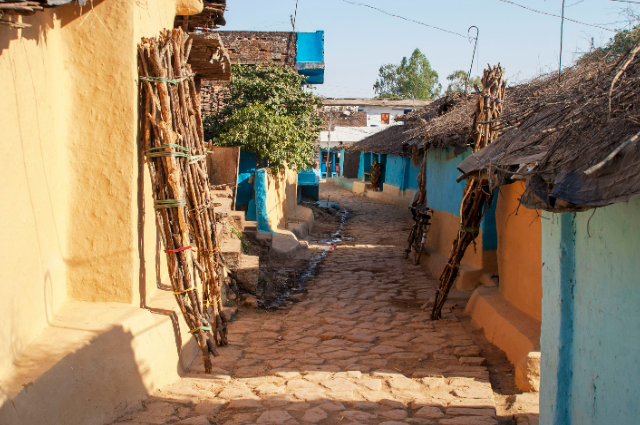
A five-year-old girl steps out of her house on a warm September afternoon in Bhopal. She tells her grandmother she is going to collect a book from the nearby anganwadi centre. She will be back in fifteen minutes, she says. She never comes back.
What followed was a crime so brutal that a trial court judge who later observed that if the law permitted a punishment harsher than death, the accused would have deserved it.
What followed that was the trial, the appeals, the stays. This is a story; India has seen too many times.
A story of a legal system that knows how to punish, but struggles to deliver closure.
In India, we are raised on the belief that justice delayed is not justice denied. It is a comforting thought. But comfort is a luxury that belongs to those who are waiting from a distance. Those who are spectators.
For the families who live inside that delay, who mark every hearing date on a calendar, who relive the worst day of their lives with every adjournment, for them, delay is not neutral. It is its own kind of sentence.
The case of Atul Nihale v. State of Madhya Pradesh forces us to sit with that discomfort. It is a case that made legal history under India’s new criminal laws, earned unanimous condemnation from two courts, and yet as of today remains unresolved.
The Evolution of India’s Laws Against Sexual Violence
India’s laws on sexual violence haven’t always looked like they do today. Most of the change has come only in the last decade and often after public outrage.
For most of independent India’s history, cases of sexual assault including those against children were prosecuted under the Indian Penal Code (IPC) of 1860.
The definitions were limited. The punishments were often inadequate.
That changed with the implementation of the Protection of Children from Sexual Offences (POCSO) Act in 2012
The Act was India’s first law specifically designed to protect children below the age of 18 from sexual assault, sexual harassment, and pornography.
It introduced child-friendly procedures for reporting, evidence recording, and trial.
It mandated the establishment of Special Courts for speedy hearings of cases.
The POCSO Act was a landmark, but it was only the beginning.
On December 16, 2012 just weeks after the POCSO Act came into force, the brutal gang rape and murder of a 23-year-old girl on a moving bus in Delhi shook India to its core. The case, which came to be known as the Nirbhaya case, triggered nationwide protests and forced the government to act quick, rarely seen in Indian legislative history.
Within weeks, the Justice J.S. Verma Committee was constituted, and within 29 days after reviewing over 80,000 public submissions it submitted its recommendations.
The result was the Criminal Law (Amendment) Act, 2013, commonly known as the Nirbhaya Act. This law broadened the definition of rape to include penetration by objects and other body parts, introduced new offences such as stalking, voyeurism, and acid attacks, and provided for the death penalty in cases where the victim dies or is left in a persistent vegetative state.
But even after these sweeping reforms, crimes against children continued to rise.
The 2018 Kathua rape case involving the kidnapping, drugging, gang rape, and murder of an eight-year-old girl in Jammu , again exposed the limitations of the existing framework. In response, the Criminal Law (Amendment) Act, 2018 was passed, extending the death penalty to all cases of rape where the victim was below 12 years of age. The POCSO Act was amended in 2019 to raise the minimum punishment for penetrative sexual assault from seven years to ten
years, and to introduce the death penalty for aggravated penetrative sexual assault. The message was clear: these crimes had the severest possible punishment.
Then, in 2023, India took yet another step. The entire law framework, the IPC, the Code of Criminal Procedure, and the Indian Evidence Act was replaced by a new set of laws: the Bharatiya Nyaya Sanhita (BNS), the Bharatiya Nagarik Suraksha Sanhita (BNSS), and the Bharatiya Sakshya Adhiniyam (BSA). These laws came into effect on July 1, 2024, just months before the crime.
The Crime: September 2024, Bhopal
On September 24, 2024, a five-year-old girl from Bhopal’s Shahjahanabad neighbourhood stepped out of her house to collect a book from a nearby anganwadi centre. She told her grandmother she would be back in fifteen minutes. She never returned. Her family searched the neighbourhood, growing more desperate by the hour. When all efforts failed, they filed a missing person complaint at the Shahjahanabad police station. A search operation was launched, involving technical surveillance and a dog squad.
Two days later, on September 26, police officers following a foul odour reached a flat in Bajpai Nagar, Eidgah Hills. The flat belonged to Atul Nihale, a 30-year-old labourer. When officers arrived, Nihale’s mother Basanti Bai and sister Chanchal attempted to prevent them from entering, claiming the smell was caused by dead rats and that they had recently cleaned the floor with phenyl. The police entered anyway. Inside the bathroom, in a white plastic water tank, they found the child’s body. It was already in a state of decomposition.
The body was sent to AIIMS Bhopal, where a forensic team of three doctors conducted the autopsy. Their findings were devastating: the child had been subjected to brutal sexual assault, her private parts had been attacked with a sharp weapon, and the cause of death was injuries to the pelvic region. The death was ruled homicidal.
For Atul Nihale this was not his first crime.
At the time of this crime, five criminal cases were already pending against him. Yet he was free, unsupervised, and living in the same neighbourhood as his victim.
After interrogation, Nihale confessed. He also told the police that his mother and sister had helped him hide the evidence. Police recovered the victim’s clothes and the knife used in the attack. DNA analysis confirmed Nihale’s involvement beyond any doubt. The prosecution’s case was built on the testimony of witnesses and forensic evidence.
The Trial Court: A Historic Triple Death Sentence
On March 10, 2025, Bhopal’s Special POCSO Court delivered its verdict. Additional Sessions Judge and Special Judge Kumudini Patel convicted Atul Nihale and sentenced him to a triple death sentence, the first of its kind in Madhya Pradesh under the newly enacted BNS.
The death sentences were awarded separately under three provisions of the POCSO Act and BNS
Beyond this, Nihale was also sentenced to double life imprisonment (until natural death) under two additional charges and seven years of rigorous imprisonment under yet another.
The court’s observations were unflinching. Judge Patel noted that the accused was “extremely cruel and bestial” and said that if a punishment harsher than death existed in law, Nihale would have deserved it.
The court questioned how any society could claim to uphold human rights if children could not safely step outside their homes.
The defence attempted to introduce a 2015 medical prescription suggesting that Nihale was mentally unwell. However, a court-ordered panel of doctors examined the convict and found him mentally fit to stand trial. The argument was rejected. Co-accused Basanti Bai and Chanchal were each sentenced to two years of imprisonment for destroying evidence.
The court also ordered compensation of Rs 4 lakh for the victim’s family. Special Public Prosecutor Divya Shukla argued the case on behalf of the state.
The High Court: “Rarest of Rare” Confirmed
On January 22, 2026, the Madhya Pradesh High Court at Jabalpur heard both the criminal appeal filed by Nihale and the statutory reference for confirmation of the death sentence. A Division Bench of Justices Vivek Agarwal and Ramkumar Choubey dismissed the appeal and confirmed the capital punishment. The Bench described the crime as a “barbaric act of a depraved mind” and categorised it firmly within the “rarest of rare” framework established by the Supreme Court in Bachan Singh v. State of Punjab (1980) and Machhi Singh v. State of Punjab (1983).
The High Court rejected all arguments, including those based on the convict’s socio-economic background and marital status, citing his prior criminal record as proof of an unreformable character. The Bench observed that the brutality of this crime was so extreme that even imagining it was enough to send shivers down one’s spine.
The Supreme Court Stay: Justice Suspended
On March 10, 2026, Nihale’s legal team carried the matter to the Supreme Court. A three-judge bench comprising Justices Vikram Nath, Sandeep Mehta, and N.V. Anjaria granted leave to appeal and stayed the execution of the death sentence.
The Court ordered the Bhopal Memorial Hospital and Research Centre to conduct a comprehensive psychological evaluation of the convict through a specialised team, with findings to be submitted within twelve weeks. The Court also permitted mitigation investigator Devika Rawat, from the Square Circle Clinic at NALSAR University of Law, to interview Nihale in prison and prepare an investigation report. Jail authorities were directed to ensure that these interviews were conducted confidentially. The next hearing was scheduled after sixteen weeks.
The stay, while legally standard in death penalty appeals and consistent with Supreme Court practice, has reignited a difficult conversation.
Two courts had examined the evidence. More than 10 witnesses had testified. DNA analysis had left no room for doubt, their report was crisp.
And yet, the sentence remains suspended, with the final hearing still months or maybe years away.
Public Response and the Debate It Sparked
The Supreme Court’s stay has drawn sharp reactions from child rights advocates, legal commentators, and the general public. Child rights activist Dr. Priya Sharma, responding to the stay, urged the apex court to fasttrack the proceedings, stating that victims’ families need closure and that prolonged stays have jolted public faith in the justice system. Legal analysts have noted that while the Supreme Court’s commitment to reviewing death sentences is constitutionally sound and necessary to prevent injustice, the practical effect is that cases like this one can take years to reach finality, leaving families in trauma.
The Kailash Satyarthi Children’s Foundation (KSCF), which has tracked the implementation of the POCSO Act, has highlighted the broader systemic challenges.
The Foundation’s analysis of POCSO court data found that case backlogs have huge implications for the original promise of the POCSO Act: a promise of swift, child-centric justice.
The debate around the death penalty itself remains unresolved. The Justice Verma Committee, set up after the Nirbhaya case, had recommended against the death penalty for rape, arguing that it failed to serve as a deterrent. Critics have also pointed out that the inclusion of the death penalty in the POCSO Act may actually discourage reporting, since in the majority of child sexual abuse cases the offender is known to the victim, often a family member, neighbour, or employer.
The Numbers That Haunt Us
The Nihale case cannot be understood in isolation from the broader crisis of child safety in India. According to NCRB data for 2023, a total of 1,77,335 cases of crime against children were registered across the country, marking a 9.2% increase over the previous year. The crime rate stood at 39.9 per one lakh child population, up from 36.6 in 2022. Madhya Pradesh ,the state where this case unfolded , topped the national list with 22,393 cases. Between 2014 and 2022, crimes against children in India increased by over 80%, rising from 89,423 to 1,62,449 registered cases.
On the judicial side, the picture is equally troubling.
The government has set up 758 Fast Track Special Courts, including 412 exclusive POCSO courts, which have collectively disposed of over 1.69 lakh cases since inception. Yet the gap remains vast.
What This Case tells us
The Atul Nihale case sits at the intersection of several urgent questions. It is the first case in Madhya Pradesh to result in a triple death sentence under the new BNS. It moved through the trial court and High Court with what, by Indian standards, was remarkable speed, conviction within six months of the crime, High Court confirmation within ten months of conviction. The evidence was overwhelming. The judicial reasoning was detailed . And yet, finality remains elusive.
India has spent the last decade building a strong legal architecture to deal with crimes against children. From the POCSO Act of 2012 to the Nirbhaya-era amendments of 2013, from the 2018 expansion of the death penalty to the 2019 POCSO amendments, from the replacement of the IPC with the BNS in 2024, the laws have grown sharper, the punishments harsher, the intentions clearer.
But laws alone do not protect children. Implementation does. Speed does.
For the family of the five-year-old girl who walked out of her house on a September afternoon in Bhopal and never came home, the legal system’s promise of justice is still a promise.
The courts have spoken. The evidence has been weighed. But the law, with its appeals, stays, mitigation reports, psychological evaluations, continues to prolong it And the family continues to wait.
The real measure of a nation’s commitment to its children is not the severity of its laws on paper. It is how quickly those laws are enforced in reality .
Until that gap closes, the legal machinery gets swift
India’s promise to its citizens will remain, a work in progress.
References
- ANI News — “Madhya Pradesh: Man gets triple-death sentence for rape-murder of 5-yr-old girl in Bhopal” (March 18, 2025). https://aninews.in
- The Print (PTI) — “Rape-murder of minor: Man gets ‘triple’ death sentence; court says he deserves greater punishment” (March 18, 2025). https://theprint.in
- The Hans India — “MP High Court upholds death sentence in rape-murder of minor girl in Bhopal” (January 23, 2026). https://www.thehansindia.com
- LiveLaw — “Supreme Court Stays Death Sentence Of Man Convicted For Rape-Murder Of 5-Year Old Girl In Madhya Pradesh” (March 10, 2026). https://www.livelaw.in
- Wikipedia — Criminal Law (Amendment) Act, 2013 (Nirbhaya Act). https://en.wikipedia.org
- Wikipedia — Protection of Children from Sexual Offences Act, 2012. https://en.wikipedia.org
- Factly.in — “POCSO cases increased by 30% in 5 years while pendency rate in Courts crossed 94%” (June 2022). https://factly.in
- Civilsdaily — “10 years of POCSO: An analysis of India’s landmark child abuse law” (November 2022). https://www.civilsdaily.com/
- Dainik Jagran English — “Supreme Court Stays Execution in Bhopal Child Rape-Murder Case” (March 10, 2026). https://english.dainikjagranmpcg.com