
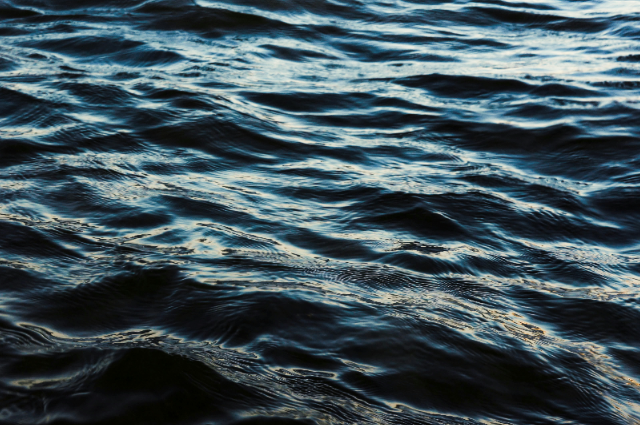
In early August 2026, a farmer named Pranjivan Sadariya walked out to his field in Virparda village, in Gujarat’s Morbi district, and found water spilling over the rim of his well. Nothing had been thrown in. No pump was running. The well itself was only about three months old, eighteen feet deep, sitting quietly in the middle of ordinary farmland. And yet the water inside it was moving back and forth in steady, visible waves, the way the sea moves, not the way a bucket of water sits still. It kept going for days, calmed for one afternoon, and then started again. Crowds gathered. Drivers on the nearby highway pulled over. And, almost immediately, one word began circulating online that any geology student would recognise: seiche.
A Word for Something Genuinely Strange
To understand why that word came up at all, it helps to know what a seiche actually is, because it describes something genuinely strange that has nothing to do with wind. The waves you see at a beach are driven by wind dragging across the surface of open water, piling it up into a rolling pattern that keeps travelling as long as the wind keeps blowing. A seiche is different. It happens inside an enclosed or partly enclosed body of water, a lake, a harbour, a swimming pool, even a bathtub, when something briefly pushes the whole body of water to one side. Once that push stops, the water does not simply settle back to flat. It sloshes, swinging from one end of its container to the other and back again, at a rhythm set by the size and shape of the basin itself, the same way a wave in a bathtub keeps rocking gently after you climb out.
What makes seiches worth knowing about is what can trigger that initial push from very far away. The seismic waves from a large, distant earthquake can ripple through the ground and briefly tilt or jolt a lake or a well thousands of kilometres from the epicentre, just enough to set that sloshing going without anyone nearby feeling the earthquake itself. It is a well-documented phenomenon: swimming pools in Louisiana were recorded sloshing after the 1964 Alaska earthquake, and Scandinavian fjords have shown seiche activity linked to quakes on the far side of the planet. In parts of rural India, there is even an old folk observation that well water can “boil” or churn before a distant tremor arrives, which is very likely an early, unscientific naming of exactly this effect.
The Earthquake That Wasn't There
So a shaking well is not, on its own, an unreasonable thing to suspect an earthquake behind, and the villagers in Morbi were not being unscientific to wonder. What makes this particular case more interesting, though, is that when officials actually checked, the earthquake explanation did not hold up. Gujarat’s Institute of Seismological Research reviewed the seismic record for the region and found no tremors that could account for what was happening in Virparda. District Geologist J.S. Vadher visited the site directly and reported no evidence of any tectonic fault or underground movement nearby. Whatever was moving that water, it was not an earthquake.
What Was Actually Happening Underground
What the geologists proposed instead is quieter, and in its own way just as interesting. The weeks before the well began moving had brought heavy monsoon rainfall to the region. Rain that heavy does not stay on the surface; a great deal of it works its way down into the ground, recharging the aquifer that feeds a well like this one. As that water pushes down through cracks and pore spaces in the underlying rock, it can trap and compress pockets of air and gas that were sitting in those spaces. Under enough pressure, that trapped air has to go somewhere, and the path of least resistance is often straight up, through the water column of the nearest well. As bubbles of compressed air force their way upward through standing water, they do not rise smoothly. They push, surge and release in a way that can set the whole surface rocking, over and over, for as long as the pressure underground keeps building and releasing. One resident even noted that the well had been connected by pipe to nearby road drainage, which may have been feeding extra water, and extra trapped air, into the system faster than usual.
Officials were careful to describe this as a preliminary finding rather than a final one. The Gujarat Groundwater Research Institute was asked to carry out a fuller study and file a detailed report, and the District Collector, Swapnil Khare, urged people not to let rumour get ahead of the science while that work was underway.
The Same Water, Two Very Different Stories
It is worth sitting for a moment with how differently this reads once you know the mechanism, because the water in the video looks the same either way. A seiche driven by a distant earthquake and a well disturbed by rain-recharged, gas-releasing groundwater would look almost identical to an onlooker: the same steady rocking, the same water climbing the sides and spilling over, the same eerie sense that something is moving without anything visibly touching it. The physics underneath, though, is entirely different. One is the ground itself passing on the memory of a shudder that happened somewhere else, days or oceans away. The other is monsoon rain, working its way underground and quite literally coming up for air.
Either explanation would have made a fine answer to the mystery. What makes the real one satisfying is that it needed no earthquake at all, no unseen force from far away, just the ordinary, immense weight of a season’s rain finding its way down through rock, and the air that rock had been holding onto finding its way back up. The well in Virparda was never haunted, and it was never really an omen. It was doing, in its own small and startling way, exactly what a monsoon asks the ground beneath a farm to do every single year, only this time, for a few days, everyone happened to be watching closely enough to see it.
References:
- Business Today: “Gujarat's Morbi 'waving well' mystery: Experts explain why water moved for days like ocean waves.” https://www.businesstoday.in
- IBTimes UK: “Morbi Shaking Well Explained: Geologists Confirm Groundwater Recharge, 'Not Seismic Activity'.” https://www.ibtimes.co.uk
- WION: “VIDEO: Mysterious well in Gujarat's Morbi found generating waves, ripples, Here's what geologists suggest.” https://www.wionews.com
- Gulf News: “Gujarat's Viral 'Wave Well': Rippling Water Phenomenon Puzzles Locals, Geologists Launch Probe.” https://gulfnews.com
- Curly Tales: “Gujarat Has A Haunted Well? Viral Video Of Mysteriously Shaking Well Sparks More Questions Than Answers.” https://curlytales.com